
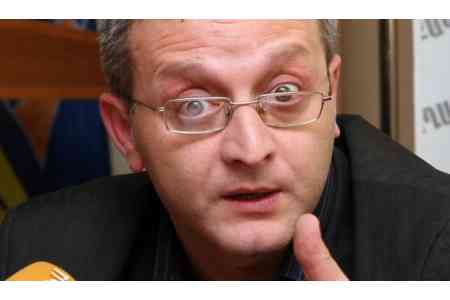
ArmInfo.Criminalizing freedom of expression during the pre-election period is not a manifestation of power, but rather a reflection of the government's political incompetence and its fear of its own society, as stated by political scientist Suren Surenyants, leader of the Democratic Alternative party in a Facebook post. He was referring to the one-month arrest of a 55-year-old woman from Akhuryan on charges of allegedly "inciting violence".
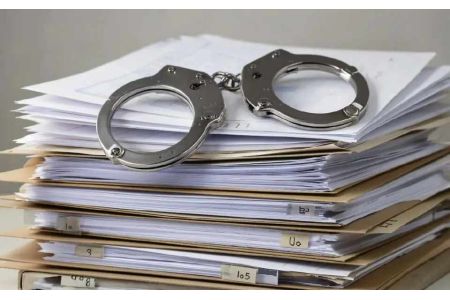
The woman reportedly approached the police herself to identify the author of a fake post made under her name. The post in question contained a "call to violence" directed at Prime Minister Nikol Pashinyan. However, instead of receiving assistance, the woman was arrested upon her arrival at the station and brought before a court in handcuffs. She has been sentenced to one month of detention.
The politician noted that this once again demonstrates a dangerous trend that is deepening in Armenia: the criminalization of freedom of speech as a state practice. As Surenyants noted, the problem lies not in the specific wording or legal subtleties of the case, but in the fact that this is an expressed opinion, not an action.
"In a state that observes the rule of law, a post on a public platform that is not accompanied by instructions or actions cannot be grounds for deprivation of liberty," Surenyants stated. Otherwise, criminal law ceases to serve justice and turns into a tool for political revenge. Moreover, the case is based on a screenshot of a private letter and, according to the detainee, on a fake page. This makes the situation even more problematic," Surenyants said.
The choice of detention, according to the politician, deserves special attention. He noted that bringing a 55- year-old socially vulnerable woman, who poses no danger to society, to trial in handcuffs does not comply with the principles of proportionality or necessity. Surenyants expressed his conviction that this is a demonstrative punishment, aimed not at a specific individual, but at society as a whole. He warned that protecting high-ranking officials from criticism effectively turns free speech from a constitutional right into a "conditional privilege." He suggests that such tactics are common when a government loses confidence in its public support and resorts to intimidation to force self-censorship.
"The message is clear: any citizen could find themselves in this situation. Such actions do not strengthen state security. On the contrary, they consistently undermine the foundations of the rule of law. A citizen who understands that they can be deprived of their freedom not for an action, but for an expressed thought, ceases to perceive the state as an institution that protects them. Criminalizing free speech during an election period is not an exercise of power. It is an expression of the government's political incompetence and its fear of its own society," Surenyants concluded.








 Expert: Real peace unattainable until Armenia-Azerbaijan agreement is signed and ratified
 TRIPP`s proximity to Iranian border could slow its implementation - expert
  Who and why is sacrificing RA National Security Service`s reputation? - expert
  Tehran creating security environment in which sustainable shipping in Strait of Hormuz difficult to imagine without its direct participation - expert
  Arrested Armenian oligarch on economy and new jobs
  NA Vice Speaker candidate believes his wife`s salary as director of HayPost is the lowest in the company`s history
 RF Permanent Representative: There is no CSTO-Armenia conflict
 Moscow: NATO seeking to "Pull" Armenia away from CSTO Allies
  Political analyst: Russia intends to determine which "Camp" Armenia will choose through a referendum
 Narek Karapetyan will give up his parliamentary salary in favor of charitable contributions.
 Armenian analyst: Developing relations with Europe and the U.S. must not jeopardize relations with regional powers
 Armenia and France discuss further development of strategic partnership and EU cooperation
  To overcome risks Armenia must reduce domestic escalation - expert
  Zatulin: Pashinyan was eager to get back to Russia because he actually lost the elections
 Human rights activist Ruben Melikyan dismissed from YSU
 Pashinyan removed from INNOPROM guest list
 Zakharova: Armenia`s pro-EU pivot poses economic security risks to EAEU member states
 It`s time for South Caucasus countries to think of South Caucasus as single, unified region - RA premier
  Pashinyan: Armenia and Azerbaijan should leave each other alone