

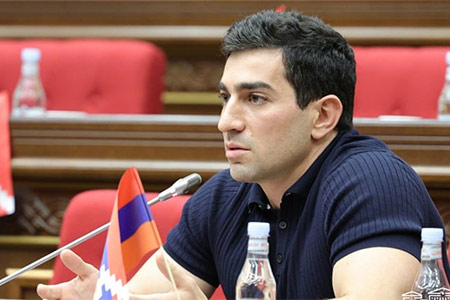
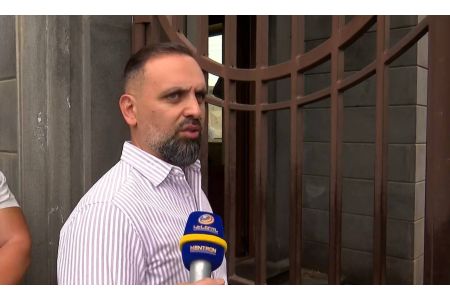
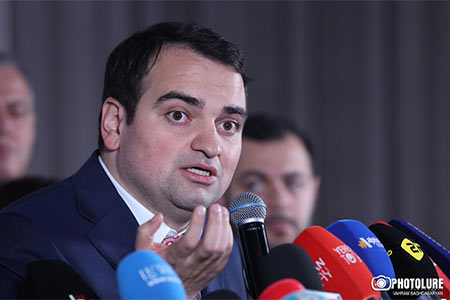
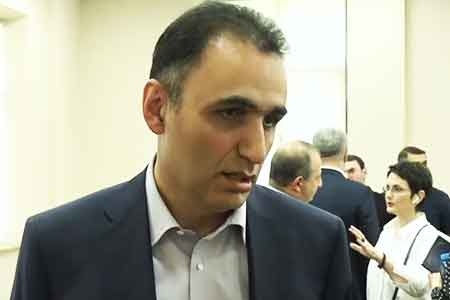
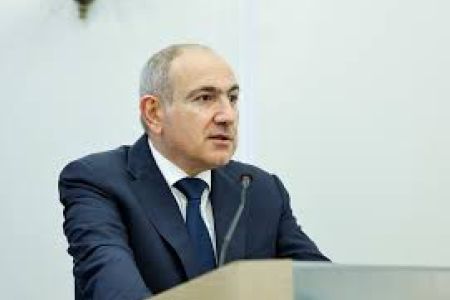
ArmInfo. In its report on the parliamentary elections, the Parliamentary Assembly of the Council of Europe clearly pointed to the use of selective political persecution by the Armenian authorities. This was stated by Levon Kocharyan, a member of the National Assembly of the Republic of Armenia from the opposition Armenia faction, at a press conference on October 5.
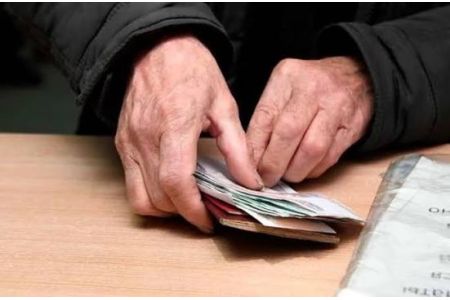
According to him, the PACE report contains numerous references to the violations raised by the opposition. The PACE recommendations explicitly state the need to end this practice. The problem associated with the Prosperous Armenia Party was also clearly presented. PACE particularly expressed bewilderment at the justifications of the Central Electoral Commission, which refused to hold by-elections in three polling stations. "We also heard about the authorities' use of administrative resources and social bribery during the pre-election period, especially when it came to increasing pensions, introducing a mandatory health insurance system, issues related to driver's licenses, etc.," the opposition leader noted.
Levon Kocharyan also pointed to the part of the report that points to pressure exerted on citizens, who were ultimately forced to vote for the ruling party. Public Television of Armenia also played a role in this active government activity.
As a reminder, according to the PACE report, pressure was exerted on public sector employees during the election campaign to participate in Civil Contract party events. A series of social and economic measures announced by the government before the elections raised concerns about a level playing field for the campaign.
From an electoral law perspective, these measures may not have formally violated the law, but observers perceived them as steps that carried the risk of being used as a campaign tool. More than 200 criminal cases were recorded, almost entirely involving opposition figures. The PACE delegation expressed concern about the potential selective use of criminal prosecutions and called for due process guarantees for opposition members. Armenia's media environment was deemed extremely polarized: the public broadcaster and several television stations demonstrated bias in their coverage.
Violent violations of various kinds were recorded at almost 44 percent of polling stations, including procedural issues, violations of the secrecy of the ballot, cases of voter pressure, restrictions on campaigning, and other violations. The Central Election Commission's justification that invalidating the results at three polling stations "did not affect the overall outcome" was deemed unconvincing. The report notes that, according to some calculations, if turnout data from the disputed stations had been included, the Prosperous Armenia Party could have overcome the 4% threshold, gained mandates, and influenced the structure of the parliamentary majority. However, a rerun of the vote was not held without sufficient explanation.
Serious shortcomings in the area of effective and timely judicial protection were identified. In the case of the dispute over the results at three polling stations, the report finds that the courts failed to restore the status quo, and the legal process did not provide an effective resolution before the new parliament began its work. The presence of an atmosphere of fear in the pre-election environment was emphasized.
However, the recording of the above-mentioned problems did not prevent PACE from deeming the final election results acceptable.








 Turkologist: Azerbaijan will never, under any circumstances, stop pressuring the Armenian people
 Political scientist: We need to move away from the question of "when" and replace it with more important questions
 International Law Specialist: Azerbaijan intends to initiate legal proceedings against Armenia by sentencing Armenian prisoners
 Russian Security Council: In Armenia, they want to force Russian asset owners to dispose of their assets
 Zakharova: Russia ready to discuss with Armenia the prospects for expanding military cooperation as part of a review of bilateral ties
 Tevanyan: Armenia, like Ukraine and Moldova, is being drawn into the EU’s global war
 Yerevan City Hall is considering introducing a valet parking system in the city
 Expert: The circus surrounding the “Albanization” of Armenian culture in the presence of foreign ambassadors in occupied Artsakh is genocide
 Political scientist: If Russian-Armenian relations are destroyed, Turkey will take Russia`s place
 Political scientist: The Armenian public is simply obliged to significantly change the entire content of public discourse and struggle
 Cross tattoos are being removed from the skin of Christian prisoners in Azerbaijan by fire, according to a human rights activist.
 Zakharova: Armenia`s likely introduction of visas with Russia will be a step against Yerevan itself
 Putin: Armenia`s recognition of Karabakh as part of Azerbaijan in Prague has given Russia`s position on this issue an ambivalent character
 Putin: Armenia`s adoption of the law on EU accession means an announcement of its withdrawal from the Eurasian Economic Union
 Aram Vardevanyan: Public demands solutions, not apology scandals in Parliament
 Arrested Armenian oligarch on economy and new jobs