
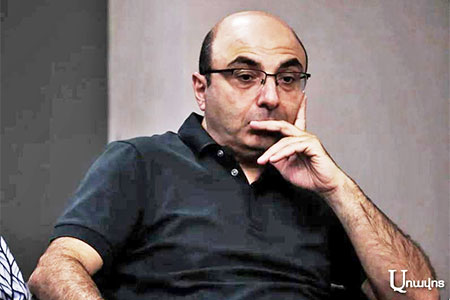
ArmInfo. Uncertainty driven by hope is fundamentally different from uncertainty plagued by despair, as noted by Vahe Hovhannisyan, a member of the Alternative Projects Group, in his recent article when commenting on the upcoming 36th anniversary of Armenia's Declaration of Independence.
Reflecting on the adoption of the historic document by the Supreme Council 36 years ago, Hovhannisyan noted that it was crafted largely by educated, patriotic, yet politically inexperienced figures from diverse backgrounds who achieved a broad consensus. However, he contrasted that founding era with the present day, where discussions often center on severe national challenges, territorial shifts, and fundamental existential questions. "There is no similarity between today and those days 36 years ago. Perhaps only uncertainty is similar. But uncertainty sanctified by hope is fundamentally different from uncertainty marked by despair," the analyst emphasized.
Hovhannisyan argued that Armenia today requires post-war reconstruction, national revival, and a forward- looking strategic document to guide the nation through the realities of the coming decades. He stressed that such a framework must define national goals, rules of coexistence, and economic models, serving as a subject of serious public and state discourse rather than replacing the foundational Declaration of Independence.
"Unfortunately, we have neither those who would discuss this, nor a truly good education as an internal public atmosphere. We are talking about a strategic concept that will define our state and national goals, problems, the rules of coexistence between Armenia and the Armenian world, our understanding of ourselves and our neighbors, with a new perception of economic models and allies. This is precisely what should have been the subject of discussion in our statecraft debates, within the framework of good education. The restoration of states after war and severe defeats is not a chaotic process. States are restored through serious post-war reconstruction programs," the political scientist emphasized.
He added that drafting a national strategic document faces two main hurdles. First, the question arises: who should adopt it? The current National Assembly lacks the necessary public standing, and no other authoritative format exists. Second, adopting a new document requires an atmosphere of internal solidarity. "Ultimately, we must find the courage to admit that Armenian territories and the Armenian population in this region have been steadily shrinking over the past 100 years. This is the most telling fact about us. We must have the courage and the wisdom to understand the causes and find steps to halt this process," the political analyst emphasized.
"Will we do this? Will we achieve this? I do not know. We haven't even had the courage to speak out openly and give a sound assessment of our shared 36-year journey—a path we all walked together. Denying those 36 years is a grave mistake, just as idealizing them is wrong. Thirty-six years ago, political and progressive thought was largely centered in the National Assembly. Today, it is mostly behind bars or under house arrest—or withdrawn into itself out of a sense of helplessness, which is little different from prison. Entering the next phase of Armenia's life in such an unhealthy state means condemning ourselves to self-destruction, and there is no morality in that process. Today, we must find the forces and the platforms to initiate this discussion and spark a renewal of political thought. This is largely a matter of self-defense, and only public dialogue can serve as a genuine internal guarantee for Armenia's future development," the analyst concluded.


















 Expert: Current process is not about peace, but implementing Azerbaijan`s wishlist
 Expert: Real peace unattainable until Armenia-Azerbaijan agreement is signed and ratified
 TRIPP`s proximity to Iranian border could slow its implementation - expert
 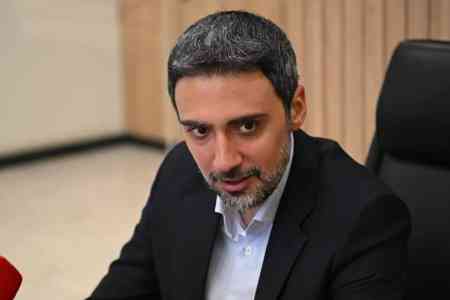 Aram Vardevanyan: Public demands solutions, not apology scandals in Parliament
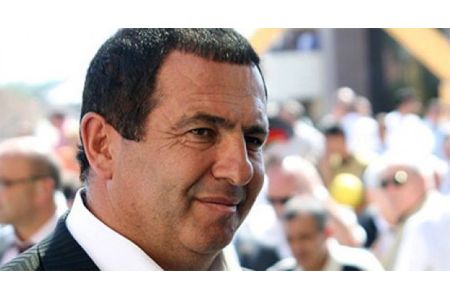 Arrested Armenian oligarch on economy and new jobs
 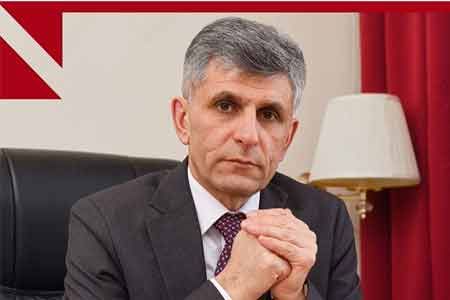 "In Baku, we gave a worthy rebuff to the false claims regarding the past and present of our people" – Former Artsakh Parliament Speaker from Baku captivity
 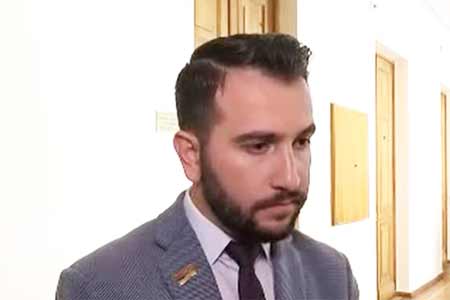 NA Vice Speaker candidate believes his wife`s salary as director of HayPost is the lowest in the company`s history
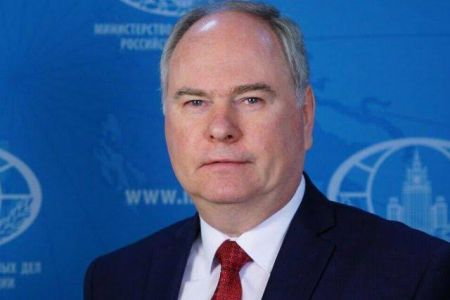 RF Permanent Representative: There is no CSTO-Armenia conflict
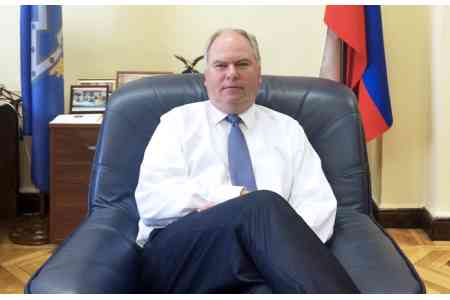 Moscow: NATO seeking to "Pull" Armenia away from CSTO Allies
 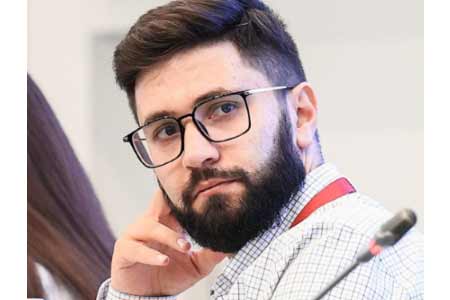 Political analyst: Russia intends to determine which "Camp" Armenia will choose through a referendum
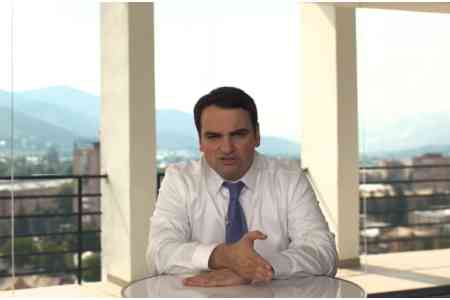 Narek Karapetyan will give up his parliamentary salary in favor of charitable contributions.
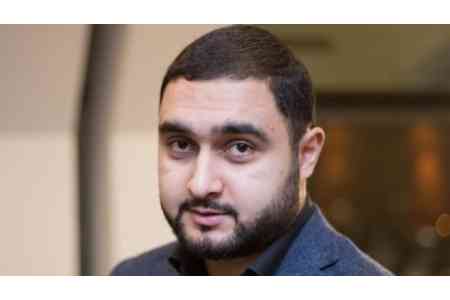 Armenian analyst: Developing relations with Europe and the U.S. must not jeopardize relations with regional powers
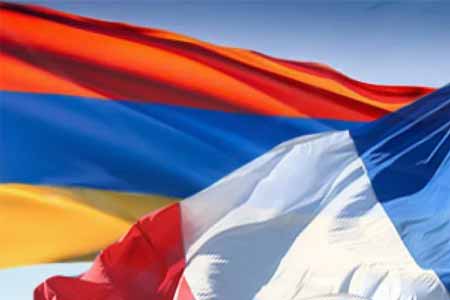 Armenia and France discuss further development of strategic partnership and EU cooperation
 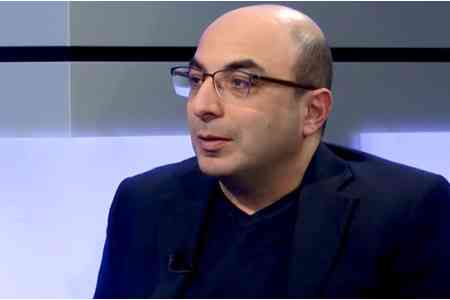 To overcome risks Armenia must reduce domestic escalation - expert
 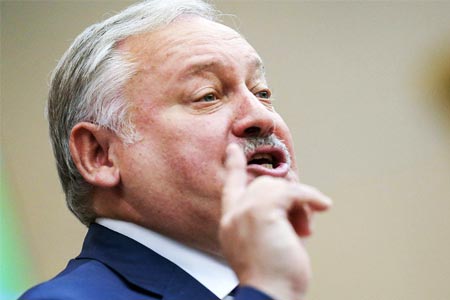 Zatulin: Pashinyan was eager to get back to Russia because he actually lost the elections
 Human rights activist Ruben Melikyan dismissed from YSU
 Zakharova: Armenia`s pro-EU pivot poses economic security risks to EAEU member states