

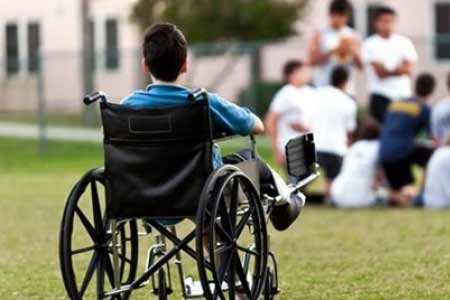
ArmInfo.The share of children with disabilities attending special schools in Armenia has decreased from 37.5% in 2015 to 6.5% in 2023. This means that the majority of these children are now enrolled in public secondary schools, as stated in the UNESCO Global Education Monitoring Report, presented at the annual meeting of the UNESCO Global Education Coalition.
Over the past eight years, this decline has been most significant in the regions of Central and Eastern Europe, the Caucasus, and Central Asia, given that most countries in these regions are also implementing reforms in this area. According to the press service of the Ministry of Education, Science, Culture, and Sports (MESCS), Armenia's system of universal inclusive education was highlighted as a separate success story in the report. "Armenia is presented as a country where the proportion of children with disabilities studying in special schools does not exceed 10%," the source stated.
It was noted that between 2015 and 2023, the number of children with disabilities in special schools decreased by 75%, while their number in secondary schools doubled. Currently, over 9,000 children are studying in secondary schools with inclusive education, and only about 400 in special schools.
The report also cites ongoing improvements in the process of assessing the need for special educational conditions and increased parental awareness, which has resulted in a 30% increase in the number of children assessed since 2011. Armenia has also made progress in terms of children not included in the compulsory education system. Compared to 2015, the proportion of such children decreased in 2024: from 8% to 4% in primary education, from 8% to 6% in basic education, and from 24% to 11% in high school.
The report also presents Armenia as a country where the proportion of students in vocational education and training increased between 2000 and 2024. Along with Armenia, Tajikistan, Ukraine, Kyrgyzstan, and Moldova are among the regional leaders in this indicator.








 Expert: The arrest of opposition figures in Armenia for social media posts is a systematic attempt to intimidate the public and suppress dissent.
 Azerbaijani Studies Expert: While Azerbaijan Prepares Its Generation for War, Aliyev’s Aide Calls on Armenia to Prepare Armenian Society for “Peace”
 Turkologist: Azerbaijan will never, under any circumstances, stop pressuring the Armenian people
 Political scientist: We need to move away from the question of "when" and replace it with more important questions
 International Law Specialist: Azerbaijan intends to initiate legal proceedings against Armenia by sentencing Armenian prisoners
 Lukashenko called for Armenia to assume the CIS presidency in 2029
 Dmitry Medvedev predicted a Ukrainian-like fate for Armenia amid the country`s shift in foreign policy
 Russian Security Council: In Armenia, they want to force Russian asset owners to dispose of their assets
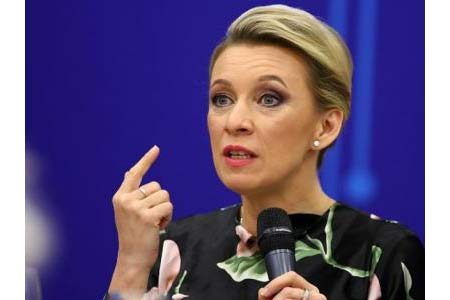 Zakharova: Russia ready to discuss with Armenia the prospects for expanding military cooperation as part of a review of bilateral ties
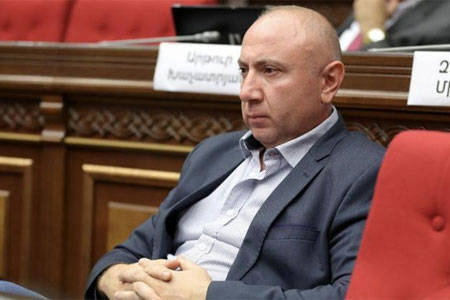 Tevanyan: Armenia, like Ukraine and Moldova, is being drawn into the EU’s global war
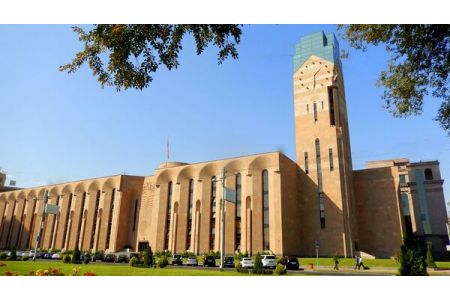 Yerevan City Hall is considering introducing a valet parking system in the city
 Expert: The circus surrounding the “Albanization” of Armenian culture in the presence of foreign ambassadors in occupied Artsakh is genocide
 Political scientist: If Russian-Armenian relations are destroyed, Turkey will take Russia`s place
 Political scientist: The Armenian public is simply obliged to significantly change the entire content of public discourse and struggle
 Cross tattoos are being removed from the skin of Christian prisoners in Azerbaijan by fire, according to a human rights activist.
 Zakharova: Armenia`s likely introduction of visas with Russia will be a step against Yerevan itself
 Putin: Armenia`s recognition of Karabakh as part of Azerbaijan in Prague has given Russia`s position on this issue an ambivalent character
 Putin: Armenia`s adoption of the law on EU accession means an announcement of its withdrawal from the Eurasian Economic Union
 Aram Vardevanyan: Public demands solutions, not apology scandals in Parliament