

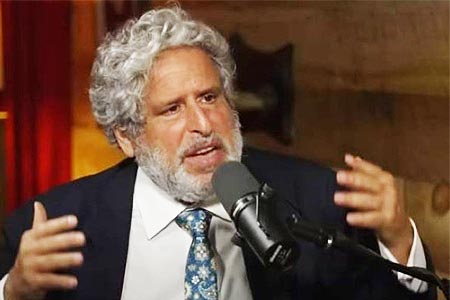
ArmInfo. The South Caucasus and Armenia act as a balancing buffer between three major regional powers. Narek Karapetyan, a member of the political council of the opposition Strong Armenia party, expressed this opinion in an interview with American businessman and well-known blogger Mario Naufalo.
According to Karapetyan, the South Caucasus serves as a buffer between Iran, Turkey, and the Russian Federation. This is precisely why the region is so important: the shortest land routes from China to Europe pass through it and Armenia, allowing for the avoidance of the southern and northern logistics routes, which are currently under threat of war. Therefore, from a logistical perspective, Armenia is crucial for creating a short-term logistics route from China to Europe and from Europe to China.
Further discussing the evolving geopolitical situation in the region, Karapetyan noted that when the problem between Armenia and Azerbaijan is resolved, the South Caucasus will become the only stable zone in the region, as ongoing developments in the north have upset the balance in the South Caucasus maintained by Russia, which, in fact, led to the war between Armenia and Azerbaijan. "The developments in Ukraine, the war with Ukraine, have weakened Russia's balancing role," Karapetyan noted, emphasizing that Turkey, on the contrary, has strengthened its position.
"We need balance in this region, and Trump's TRIPP project is precisely that balance that can bring about long-term peace. The only thing we need to work on is elevating the role of the United States from a mere witness to a guarantor of peace. This will bring stability and peace along the entire supply chain, and this crossroads will become the safest crossroads in this large, unstable region," he emphasized, noting that TRIPP is not a corridor, but a road and an excellent opportunity for Armenia. "But we need guarantees, even more guarantees for peace. He (Trump) managed to ensure that Azerbaijan does not use force on this road. And it's stipulated that this is Armenian territory. So this is good for Armenia, it's good for the region. They can use this road, but it's an economic project. It could bring peace, but again, we need guarantees. Because, for example, in 10 years, we could again face new problems from Azerbaijan when they declare that they want other territories," Karapetyan said.
At the same time, discussing Israel's influence in the region in the context of the war against Iran, Mario Naufalo noted that Turkish influence, filling the vacuum left by Russian influence, has also allowed Israel to become involved due to its interest in Azerbaijani oil and begin to play a growing geopolitical role on Iran's northern borders. This should be of concern to Armenia, which lost the war in part because of Israel's role.
According to Karapetyan, Israel has played and continues to play a major role in supplying weapons and various military equipment to Azerbaijan, and Israel is also a major force in shaping the region's geopolitical map. However, achieving peace between Armenia and Azerbaijan could transform Israel's role from an arms supplier to a provider of peaceful technologies. "Israel is an important country in this vast region, possessing enormous technological potential that it can share with all our countries, and this potential can be used to solve economic problems. And if we look at the problems of this region from the perspective of opportunity, rather than conflict, we can reap enormous benefits," Karapetyan emphasized.























 Analyst: The primary issue with Armenia`s new Parliament Speaker`s speech lies is its one-sided interpretation of the causes of the political crisis
 Expert: Gagik Tsarukyan embodies post-Soviet model of big business-state relations; this model is used in many other post-Soviet countries
 Expert: Azerbaijan promoting aggressive plans against Armenia at state level
 Iranologist: Baku`s propaganda of might masks the country`s inability to provide water to its own population
 NA Vice Speaker candidate believes his wife`s salary as director of HayPost is the lowest in the company`s history
 RF Permanent Representative: There is no CSTO-Armenia conflict
 Moscow: NATO seeking to "Pull" Armenia away from CSTO Allies
  Political analyst: Russia intends to determine which "Camp" Armenia will choose through a referendum
 Narek Karapetyan will give up his parliamentary salary in favor of charitable contributions.
 Armenia and France discuss further development of strategic partnership and EU cooperation
  To overcome risks Armenia must reduce domestic escalation - expert
  Zatulin: Pashinyan was eager to get back to Russia because he actually lost the elections
 Human rights activist Ruben Melikyan dismissed from YSU
 Pashinyan removed from INNOPROM guest list
 Zakharova: Armenia`s pro-EU pivot poses economic security risks to EAEU member states
 It`s time for South Caucasus countries to think of South Caucasus as single, unified region - RA premier
  Pashinyan: Armenia and Azerbaijan should leave each other alone
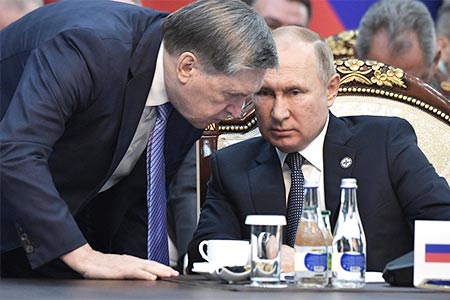 Moscow sees situation with Armenia as attempt to attack Russia-involving integration associations - Russian presidential aid