

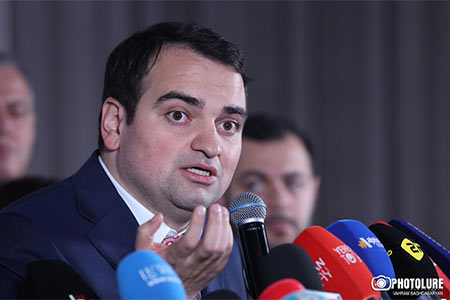
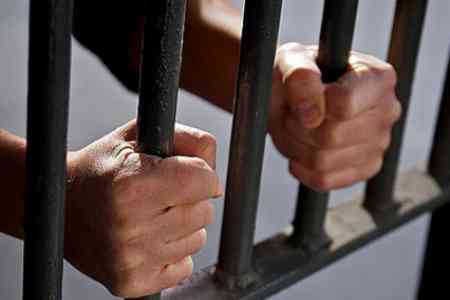
ArmInfo. The number of suicides in Armenian penal institutions (PIs) in 2025 - 24 cases - is a 15-year high, as stated by Hovhannes Ghukasyan, Deputy Head of the Department for the Prevention of Torture and Cruelty-Treatment at the Armenian Human Rights Defender's Office, at a press conference in Yerevan titled "Human Rights in Closed Institutions: The Right to Health Care in the Army and the Penitentiary System."
According to him, this number is at least double the 2024 figures, demonstrating the inadequacies of competent authorities in identifying the causes of suicides and contributing factors. "Despite the introduction of a risk assessment mechanism in penal institutions since 2022, visits by the Ombudsman's Office show that the effectiveness of this mechanism remains low, as evidenced by the opinions of psychologists," Ghukasyan said.
Regarding cases of self-harm and suicide attempts, Ghukasyan noted a quantitative increase in suicide attempts: from 19 suicide attempts by 14 prisoners in 2024 to 46 suicide attempts by 16 prisoners in 2025. "Although the number of self-harm cases decreased from 625 to 617, this decrease is insignificant. The number of people committing such acts has also decreased-from 205 to 183. The problem lies in the lack of psychologists working with prisoners at the initial stage of their prison stay, which makes it difficult to determine the risk of suicide or self-harm. Furthermore, the insufficient number of psychologists prevents all prisoners from receiving the necessary assistance, making it impossible to effectively prevent suicide attempts," Ghukasyan explained. He said that the problem also lies in the lack of differentiation between suicide and self-harm cases and their causes by the Penitentiary Medicine Center. Specifically, he noted, the responsible bodies fail to collect and analyze cases under their responsibility in order to subsequently take effective measures to regulate them.
Sergey Gabrielyan, chairman of the group of public observers monitoring penitentiary institutions and bodies of the Ministry of Justice of Armenia, speaking about the situation in Armenia's prisons, noted that it is sad that the responsible parties, unfortunately, are unwilling to participate in such discussions. This, he added, suggests that they either lack precise answers to certain questions, are concealing the situation, or are afraid to participate in public discussions. Meanwhile, as Gabrielyan noted, from 2025 to the present, the monitoring group has received over 180 signals, 80% of which concerned prisoner health issues. Meanwhile, as Gabrielyan pointed out, such high figures in Armenia as in 2025 were last recorded in 2016 (29 deaths) and in 2024 (12 deaths), all of which were biological. He also noted that since this is happening in closed institutions, another problem is that neither the state nor the Ministry of Health provides information on who is responsible for these deaths: which doctor or which agency.
"That is, the overall problem is the inaction of state bodies. As long as there is no one to monitor this situation, nor anyone to blame, the situation in Armenia's prisons will only worsen," the chairman of the public observer group concluded.















 Analyst: The primary issue with Armenia`s new Parliament Speaker`s speech lies is its one-sided interpretation of the causes of the political crisis
 Expert: Gagik Tsarukyan embodies post-Soviet model of big business-state relations; this model is used in many other post-Soviet countries
 Expert: Azerbaijan promoting aggressive plans against Armenia at state level
 Iranologist: Baku`s propaganda of might masks the country`s inability to provide water to its own population
 NA Vice Speaker candidate believes his wife`s salary as director of HayPost is the lowest in the company`s history
 RF Permanent Representative: There is no CSTO-Armenia conflict
 Moscow: NATO seeking to "Pull" Armenia away from CSTO Allies
  Political analyst: Russia intends to determine which "Camp" Armenia will choose through a referendum
 Narek Karapetyan will give up his parliamentary salary in favor of charitable contributions.
 Armenia and France discuss further development of strategic partnership and EU cooperation
  To overcome risks Armenia must reduce domestic escalation - expert
  Zatulin: Pashinyan was eager to get back to Russia because he actually lost the elections
 Human rights activist Ruben Melikyan dismissed from YSU
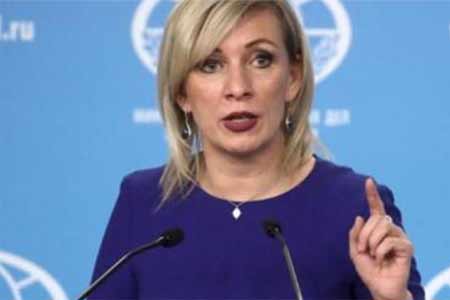 Zakharova: Armenia`s pro-EU pivot poses economic security risks to EAEU member states
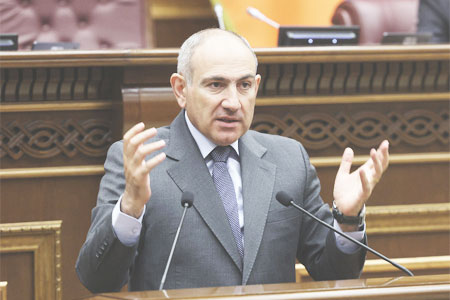 It`s time for South Caucasus countries to think of South Caucasus as single, unified region - RA premier
  Pashinyan: Armenia and Azerbaijan should leave each other alone
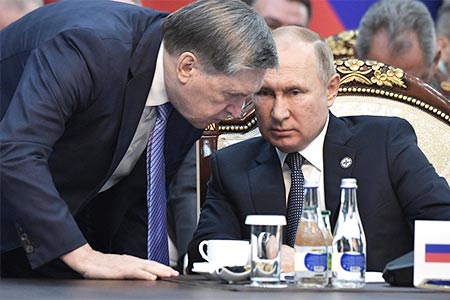 Moscow sees situation with Armenia as attempt to attack Russia-involving integration associations - Russian presidential aid