
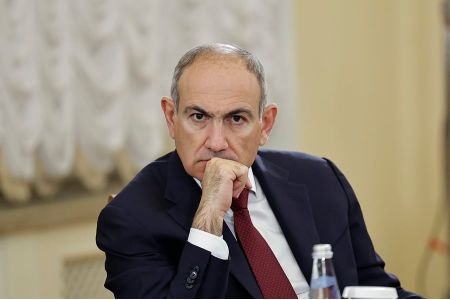
ArmInfo. Armenian Prime Minister Nikol Pashinyan's threats against Armine Mosyan, the daughter of field commander Meruzhan Mosyan, who died in the Artsakh Liberation War in 1993 and was posthumously awarded the First Degree Combat Cross, have sparked outrage in Armenian society.
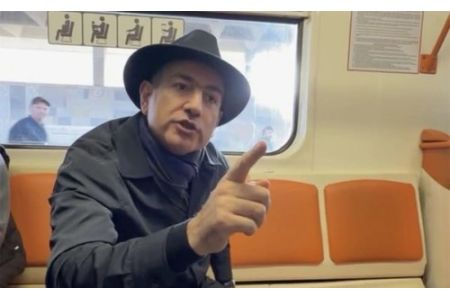
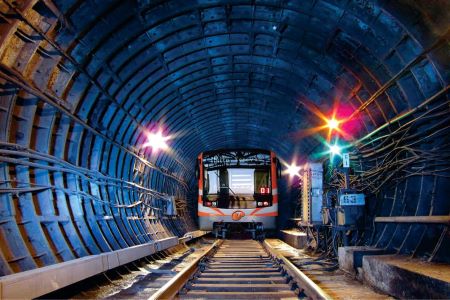
On March 22, the Armenian Prime Minister, now in his third week of campaigning for the upcoming parliamentary elections, descended into the Yerevan metro. There, he distributed badges with a map of the so-called "real Armenia." In one of the subway cars, he attempted to give one to a woman with a child. However, the child's mother, after thanking him, declined, noting that she was from Artsakh and that she believed Armenia had different borders. This response infuriated Pashinyan, who began yelling at the woman, waving his finger, and threatening her, all the while accusing the people of Artsakh of fleeing their homes.
All the woman's requests to speak to her without raising his voice were unsuccessful. Pashinyan's behavior sparked outrage in Armenian society. Amid public criticism, a few hours later, the Armenian prime minister allegedly attempted to apologize to the woman on live television for his behavior. However, instead of apologizing, he began threatening Armenian society that if his political party was not elected, the country would face a new war in the fall.
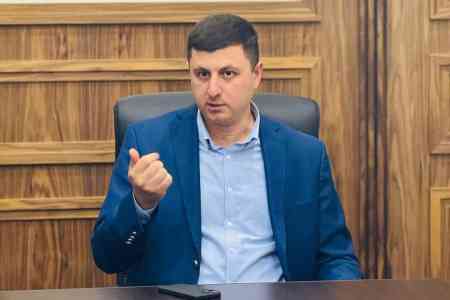
Reacting to Pashinyan's actions, Narek Karapetyan, a member of the board of the Strong Armenia party, called such behavior toward a woman unacceptable in Armenia. "Anyone who talks to an Armenian mother and shakes his finger at her in the presence of her son should not be our prime minister. No, and that's it," Karapetyan remarked.
In turn, Artsakh Ombudsman Gegham Stepanyan, in response to the incident, noted that the incident in the metro was a complete exposure of the rhetoric of "brothers and sisters from Artsakh": when, on the one hand, an imitation of concern was created, and on the other, displaced persons were systematically persecuted and labeled: for their opinions, feelings, pain and dignity. "Of course, it's never been a secret who stands at the top of this pyramid of hatred, with their real or fake pages, controlled media platforms, and the inaction of law enforcement agencies regarding all of this. From a human rights perspective, there's too much to say here. But even after all that's been said, a heavy silence remains: because when human pain is not acknowledged, when a fierce and immoral struggle is waged against human memory and natural aspirations, words often lose their power. For hundreds of thousands of people living in Armenia, the displaced persons of Artsakh are true sisters and brothers, and they don't repeat this several times a day with a limited agenda, but demonstrate it with their attitude.
This map is the map of us all. We must not turn it into a tool of manipulation. But in the hearts and aspirations of people, there is another map-not an illusion, but a natural and just desire to return to the place, to the homeland, where they were born, lived, and created," Stepanyan wrote on his Facebook page. It is noteworthy that, amid a wave of indignation among citizens, public figures, and political figures, pro-government media and fake news began to fuel a wave of hatred against the woman who dared to shield her child from Pashinyan's actions.





 Expert: Economic pressure on Armenia may be virtually painless for other EAEU members, but not for Armenia itself
 Expert on protests in France: Civilizations fade when society loses a vision of the future
 Turkologist: Azerbaijan is not all-powerful—its vulnerabilities should become part of Armenia’s security strategy
 Opinion: The development of the Amulsar mine near the resort town of Jermuk is the beginning of an environmental disaster in Armenia
 Expert: The arrest of opposition figures in Armenia for social media posts is a systematic attempt to intimidate the public and suppress dissent.
 The Armenian Foreign Minister commented on the country`s return to work within the CSTO.
 The Artsakh Public Council expressed outrage at the UN Secretary-General`s behavior
 Lukashenko called for Armenia to assume the CIS presidency in 2029
 Dmitry Medvedev predicted a Ukrainian-like fate for Armenia amid the country`s shift in foreign policy
 Russian Security Council: In Armenia, they want to force Russian asset owners to dispose of their assets
 Zakharova: Russia ready to discuss with Armenia the prospects for expanding military cooperation as part of a review of bilateral ties
 Tevanyan: Armenia, like Ukraine and Moldova, is being drawn into the EU’s global war
 Yerevan City Hall is considering introducing a valet parking system in the city
 Expert: The circus surrounding the “Albanization” of Armenian culture in the presence of foreign ambassadors in occupied Artsakh is genocide
 Political scientist: If Russian-Armenian relations are destroyed, Turkey will take Russia`s place
 Political scientist: The Armenian public is simply obliged to significantly change the entire content of public discourse and struggle
 Cross tattoos are being removed from the skin of Christian prisoners in Azerbaijan by fire, according to a human rights activist.
 Zakharova: Armenia`s likely introduction of visas with Russia will be a step against Yerevan itself
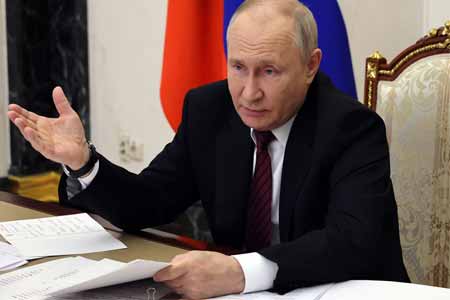 Putin: Armenia`s recognition of Karabakh as part of Azerbaijan in Prague has given Russia`s position on this issue an ambivalent character
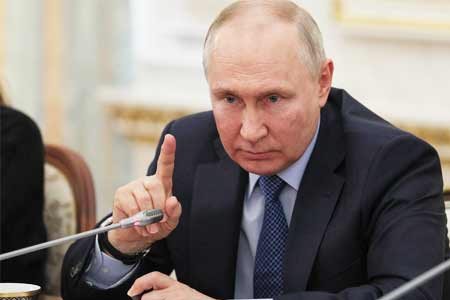 Putin: Armenia`s adoption of the law on EU accession means an announcement of its withdrawal from the Eurasian Economic Union