


ArmInfo.The war in Iran is already going far beyond the Middle East conflict itself and is directly affecting the economic architecture of the South Caucasus. This is the opinion of Georgian political scientist Gela Vasadze.
According to him, this is not just about oil prices or risks for global markets, but a deeper process-the redistribution of flows, changes in logistics, and the reorganization of regional economic ties.
"The first and most obvious effect is price. Rising oil prices create an asymmetric situation within the region. Azerbaijan receives additional export revenues and strengthens its fiscal stability. However, this gain is limited: dependence on commodity prices increases, and market volatility itself complicates strategic planning," the expert noted.
According to him, the situation is reversed for Georgia and Armenia: rising energy prices translate into inflationary pressure, higher logistics costs, and a decline in purchasing power. Thus, a divergence of economic trajectories within the South Caucasus is already evident at the first level.
"The second level is the Strait of Hormuz as a key element of the global energy infrastructure. Any threat to its functioning leads to higher insurance rates, higher shipping costs, and increased overall market anxiety. At the same time, the US signaling a reduced willingness to assume unilateral responsibility for the Strait's security effectively shifts the risks to regional and corporate actors. For the South Caucasus, this means less direct participation in ensuring security than the need to adapt to a new reality-more expensive and less predictable global trade," Vasadze asserted.
The Georgian expert believes that the third aspect is related to logistics and the fate of the North-South Corridor. He noted that this project, which envisions the integration of Russia, Azerbaijan, Iran, and India into a single transportation system, effectively loses its predictability in a war.
"Military risks, sanctions restrictions, and a general decline in trust in the Iranian route are de facto freezing its development. This creates a window of opportunity for alternative routes, primarily the Middle Corridor through the Caspian Sea and the South Caucasus. However, it should be noted that the infrastructure readiness of these routes is limited, meaning they are not capable of completely replacing the Iranian route in the short term," the political scientist added.
Vasadze identified the transformation of consumer markets as the fourth level. He recalled that Iran has traditionally served as a source of relatively inexpensive goods for countries in the region, especially Armenia and Azerbaijan, and to a lesser extent Georgia.
"The decreased availability of Iranian goods, coupled with rising logistics costs, is leading to higher prices for final products and a change in the import structure. Other players, primarily Turkey, which has a more robust industrial base and export potential, are beginning to occupy the vacated niches. This is intensifying competition in domestic markets and simultaneously increasing dependence on external suppliers," the political scientist continued. Vashadze considers foreign trade relations with Iran to be a fifth aspect. He noted that despite relatively modest absolute figures, Iran's importance as a trading partner varies among countries in the region.
"For Armenia, it is of strategic importance, including through energy cooperation. For Azerbaijan, it is an important but not critical partner. For Georgia, it is more peripheral, but Iran's influence manifests itself indirectly through pricing and logistics channels. During a war, these ties either weaken or become less predictable, which primarily impacts the economies most dependent on them.
Thus, the war in Iran creates a complex and multilayered picture for the South Caucasus. Short-term benefits associated with rising oil prices or the expansion of alternative routes are combined with long-term risks: the disruption of supply chains, increased inflationary pressure, and increased dependence on external economic centers. In this context, the key question is not who wins now, but which economies are able to adapt to the new configuration of regional and global connections," he concluded.




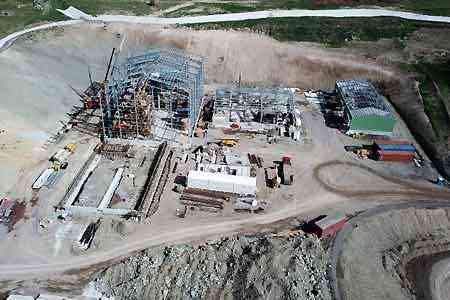






















 Opinion: The development of the Amulsar mine near the resort town of Jermuk is the beginning of an environmental disaster in Armenia
 Expert: The arrest of opposition figures in Armenia for social media posts is a systematic attempt to intimidate the public and suppress dissent.
 Azerbaijani Studies Expert: While Azerbaijan Prepares Its Generation for War, Aliyev’s Aide Calls on Armenia to Prepare Armenian Society for “Peace”
 Lukashenko called for Armenia to assume the CIS presidency in 2029
 Dmitry Medvedev predicted a Ukrainian-like fate for Armenia amid the country`s shift in foreign policy
 Russian Security Council: In Armenia, they want to force Russian asset owners to dispose of their assets
 Zakharova: Russia ready to discuss with Armenia the prospects for expanding military cooperation as part of a review of bilateral ties
 Tevanyan: Armenia, like Ukraine and Moldova, is being drawn into the EU’s global war
 Yerevan City Hall is considering introducing a valet parking system in the city
 Expert: The circus surrounding the “Albanization” of Armenian culture in the presence of foreign ambassadors in occupied Artsakh is genocide
 Political scientist: If Russian-Armenian relations are destroyed, Turkey will take Russia`s place
 Political scientist: The Armenian public is simply obliged to significantly change the entire content of public discourse and struggle
 Cross tattoos are being removed from the skin of Christian prisoners in Azerbaijan by fire, according to a human rights activist.
 Zakharova: Armenia`s likely introduction of visas with Russia will be a step against Yerevan itself
 Putin: Armenia`s recognition of Karabakh as part of Azerbaijan in Prague has given Russia`s position on this issue an ambivalent character
 Putin: Armenia`s adoption of the law on EU accession means an announcement of its withdrawal from the Eurasian Economic Union
