

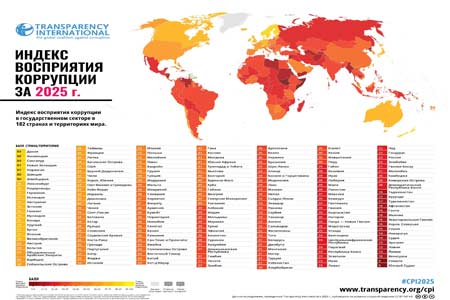
ArmInfo. The Corruption Perceptions Index (CPI) in Armenia in recent years has demonstrated that the institutional changes undertaken by the Armenian authorities have not led to a significant improvement in the perceived level of corruption in the Republic. This was stated in a statement received by ArmInfo by the Anti-Corruption Coalition of Civil Society Organizations (CSOs) of Armenia.
The statement states that, according to the indicators, the country's Corruption Perceptions Index (CPI) in 2025 was 46 points, one point lower than the previous year, and Armenia ranked 65th out of 182 countries globally. Meanwhile, the Coalition noted that, according to Appendix 1 of the Anti-Corruption Strategy for 2023-2026, approved by the Armenian government on October 26, 2023, the index was expected to increase to 55 points as a result of planned measures. "Clearly, compared to this indicator, the international assessment raises serious concerns. The 2025 results demonstrate that corruption remains a serious problem in many countries and regions around the world," the organization emphasized. The Anti-Corruption Coalition noted that in recent years, Armenia has implemented important institutional reforms aimed at creating and developing an anti-corruption system. Specifically, specialized anti-corruption bodies have been established, such as the Anti-Corruption Committee, the Corruption Prevention Commission (CPC), anti-corruption courts, and relevant divisions of the Prosecutor General's Office. "The establishment and operation of these structures were intended to enhance the effectiveness of the fight against corruption and lead to a reduction in the perception of corruption in the public sphere. However, a comparative analysis of indicators over recent years shows that the institutional changes implemented have not yet led to a significant improvement in the perception of corruption. While the decrease in the indicator in 2025 compared to the previous year is small and can be considered an acceptable statistical deviation, it also indicates that the impact of the implemented anti-corruption policy has not yet manifested itself in significant progress. Furthermore, comparative observations show a decline of 2 points compared to the 2020-2021 indicators," the coalition added.
Meanwhile, according to the source, Armenia ranked 60th in the global Corruption Perceptions Index for 2020 with 49 points, improving its position by 7 points compared to 2019. The organization cited this stark difference as a reason for the relevant authorities to pay attention to the effectiveness of the fight against corruption. The Anti-Corruption Coalition also called for consideration of the fact that corruption is a complex social phenomenon and is rapidly transforming.
"Expert research by the Armenian CSO Anti-Corruption Coalition shows that the perception of corruption in the country is often limited. In particular, society does not always recognize phenomena such as nepotism, favoritism, and clientelism as manifestations of corruption. These phenomena can have a significant impact on human resource management in the public sector, as well as on the transparency and accountability of the public procurement system, creating risks of uncompetitive and non-transparent practices," the statement noted.
The Coalition noted that, from a transparency and accountability perspective, the situation is also concerning: despite the fact that Armenian legislation establishes a legal framework for managing conflicts of interest, their application is primarily reactive. That is, as the organization explained, case studies are primarily conducted post-factum, while early prevention and deterrence tools are still limited in their application.
In this regard, attention is drawn to the information provided by Committee Chair Artur Nahapetyan in the 2025 Anti-Corruption Committee Activity Report. The Coalition noted that, according to this information, in 2025, cases against 298 public servants were sent to court, 222 of whom were serving officials.
"The above results raise serious concerns regarding the effective implementation of corruption prevention and combating policies. The CSO Anti-Corruption Coalition of Armenia also assesses the committee member selection processes as concerning, emphasizing the need to take additional measures to enhance transparency, accountability, and trust in these competitions and elections," the organization emphasized. Another concerning practice identified by the Anti-Corruption Coalition is cases in which, during court proceedings involving the confiscation of illicit property of public interest, the judge decides to hold hearings behind closed doors without a corresponding motion from the parties and without a valid reason, citing the interests of justice. "Such a practice may be seen as a deviation from the principle of transparency in cases of public importance and may negatively impact public confidence in the fairness of judicial proceedings. Best international practices and accepted anti-corruption standards clearly emphasize maximum transparency and openness in judicial proceedings. In particular, the UN Convention against Corruption, as well as the guidebooks of the Council of Europe and the Organisation for Economic Co- operation and Development, have repeatedly emphasized that the public's right to information and openness in judicial proceedings are fundamental in the fight against corruption," the Coalition recalled.
The Armenian CSO Anti-Corruption Coalition also identified a number of systemic problems, one of which is the insufficient systemic policy in the area of anti-corruption education and public awareness. Specifically, it noted that government policies and the anti-corruption institutional system fail to adequately foster a culture of intolerance toward corruption among the general public, as well as among civil servants and those holding public office, which further complicates the consistent implementation of preventive measures.
The organization emphasized the need to ensure the independence and accountability of the anti-corruption institutional system. In this regard, the Anti-Corruption Coalition reaffirmed its commitment to supporting the Armenian government in fully and comprehensively achieving the goals and actions outlined in the Anti-Corruption Strategy for 2023-2026. The Coalition also expressed its intention to provide expert support to anti-corruption institutional bodies to localize best international practices and develop institutional capacity. According to the source, the Anti-Corruption Coalition of Armenia is a professional civil society organization founded on November 28, 2014, in Yerevan. Currently, the coalition comprises over 50 civil society organizations, and the Armenian Lawyers' Association serves as its secretariat.

























 Expert: The arrest of opposition figures in Armenia for social media posts is a systematic attempt to intimidate the public and suppress dissent.
 Azerbaijani Studies Expert: While Azerbaijan Prepares Its Generation for War, Aliyev’s Aide Calls on Armenia to Prepare Armenian Society for “Peace”
 Turkologist: Azerbaijan will never, under any circumstances, stop pressuring the Armenian people
 Political scientist: We need to move away from the question of "when" and replace it with more important questions
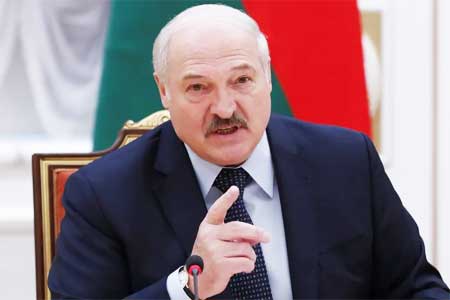 Lukashenko called for Armenia to assume the CIS presidency in 2029
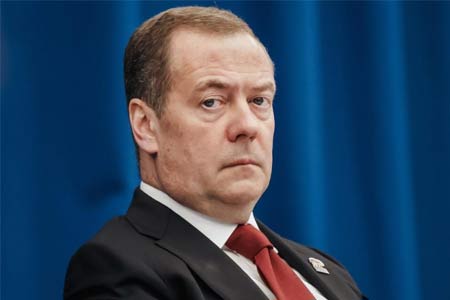 Dmitry Medvedev predicted a Ukrainian-like fate for Armenia amid the country`s shift in foreign policy
 Russian Security Council: In Armenia, they want to force Russian asset owners to dispose of their assets
 Zakharova: Russia ready to discuss with Armenia the prospects for expanding military cooperation as part of a review of bilateral ties
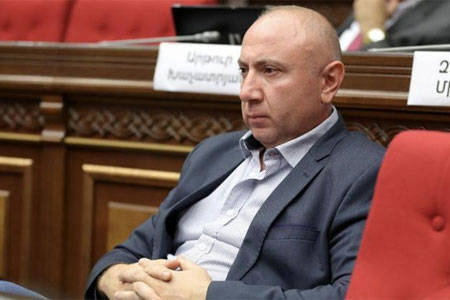 Tevanyan: Armenia, like Ukraine and Moldova, is being drawn into the EU’s global war
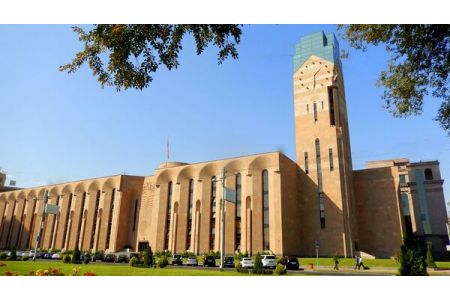 Yerevan City Hall is considering introducing a valet parking system in the city
 Expert: The circus surrounding the “Albanization” of Armenian culture in the presence of foreign ambassadors in occupied Artsakh is genocide
 Political scientist: If Russian-Armenian relations are destroyed, Turkey will take Russia`s place
 Political scientist: The Armenian public is simply obliged to significantly change the entire content of public discourse and struggle
 Cross tattoos are being removed from the skin of Christian prisoners in Azerbaijan by fire, according to a human rights activist.
 Zakharova: Armenia`s likely introduction of visas with Russia will be a step against Yerevan itself
 Putin: Armenia`s recognition of Karabakh as part of Azerbaijan in Prague has given Russia`s position on this issue an ambivalent character
 Putin: Armenia`s adoption of the law on EU accession means an announcement of its withdrawal from the Eurasian Economic Union