
ArmInfo.Almost half of respondents in Armenia don't trust any political figure, according to the results of a survey by the International Republican Institute (IRI).
When asked which political figure they trust most, 48% of respondents said they trust no one, 20% named current Prime Minister Nikol Pashinyan, 10% named businessman Samvel Karapetyan, 5% named second President Robert Kocharyan, 4% named businessman and leader of the Prosperous Armenia Party Gagik Tsarukyan, and 4% named Foreign Minister Ararat Mirzoyan. Several other groups received less than 4% of the vote, 16% gave a different answer, and 9% were undecided or refused to answer.
When asked whether they believe Armenia is moving in the right direction overall, 47% of respondents answered affirmatively, 41% negatively, and 11% were undecided. It is noteworthy that in June 2025, only 36% of respondents believed Armenia was moving in the right direction, another 49% believed it was moving in the wrong direction, and another 15% were undecided.
At the same time, 21% of respondents believe security and the border situation are the most pressing problems facing the country, 18% said unemployment, 11% said the high cost of living, 9% said low wages, 8% said low pensions, 8% said the lack of peace, 7% each cited poverty, poor education, regional security, and other factors, 6% said poor foreign policy, 5% each said healthcare, and poor governance. 38% gave a different answer, 4% said there are no problems, and 5% were undecided.
The survey was conducted by the International Republican Institute (IRI) Center for Survey Research and BREVIS (represented by IPSC LLC). Data collection was conducted from February 3 to 13, 2026, using computer-aided telephone interviews (CATI). The sample consisted of 1,506 citizens of the Republic of Armenia over the age of 18 and former residents of Nagorno-Karabakh who were forcibly displaced from Nagorno-Karabakh and currently reside in Armenia (they may or may not be citizens). Citizens who had lived in Armenia for less than six months were not included in the sample. Telephone numbers were selected using random digit dialing (RDD). The survey response rate was 22%. The margin of error does not exceed +2.5 percentage points for the entire sample. The sum of numbers in the graphs may differ from 100 percent due to rounding.








 Expert: Economic pressure on Armenia may be virtually painless for other EAEU members, but not for Armenia itself
 Expert on protests in France: Civilizations fade when society loses a vision of the future
 Turkologist: Azerbaijan is not all-powerful—its vulnerabilities should become part of Armenia’s security strategy
 Opinion: The development of the Amulsar mine near the resort town of Jermuk is the beginning of an environmental disaster in Armenia
 Expert: The arrest of opposition figures in Armenia for social media posts is a systematic attempt to intimidate the public and suppress dissent.
 Expert: It`s time for Armenia to move away from uncertainty and choose between West and East
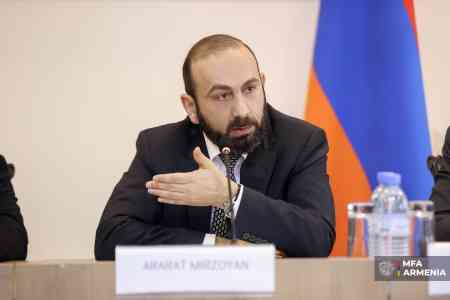 The Armenian Foreign Minister commented on the country`s return to work within the CSTO.
 The Artsakh Public Council expressed outrage at the UN Secretary-General`s behavior
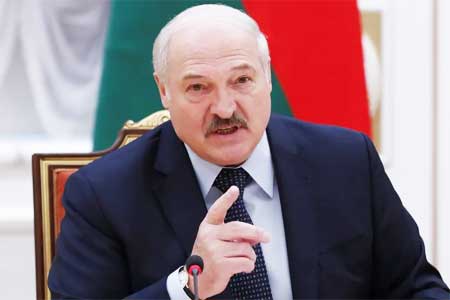 Lukashenko called for Armenia to assume the CIS presidency in 2029
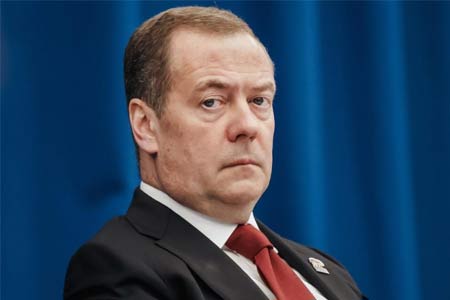 Dmitry Medvedev predicted a Ukrainian-like fate for Armenia amid the country`s shift in foreign policy
 Russian Security Council: In Armenia, they want to force Russian asset owners to dispose of their assets
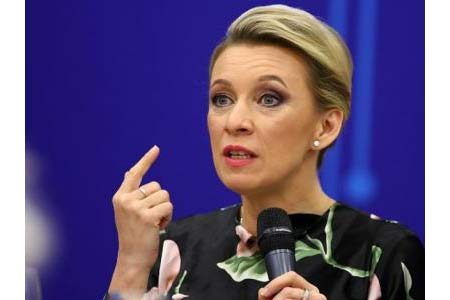 Zakharova: Russia ready to discuss with Armenia the prospects for expanding military cooperation as part of a review of bilateral ties
 Tevanyan: Armenia, like Ukraine and Moldova, is being drawn into the EU’s global war
 Yerevan City Hall is considering introducing a valet parking system in the city
 Expert: The circus surrounding the “Albanization” of Armenian culture in the presence of foreign ambassadors in occupied Artsakh is genocide
 Political scientist: If Russian-Armenian relations are destroyed, Turkey will take Russia`s place
 Political scientist: The Armenian public is simply obliged to significantly change the entire content of public discourse and struggle
 Cross tattoos are being removed from the skin of Christian prisoners in Azerbaijan by fire, according to a human rights activist.
 Zakharova: Armenia`s likely introduction of visas with Russia will be a step against Yerevan itself