
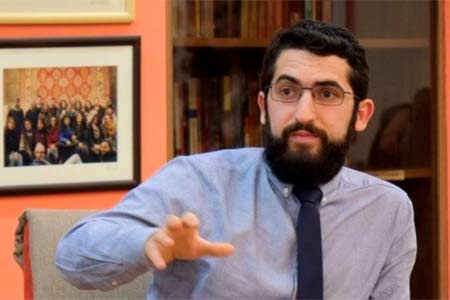
ArmInfo.Varuzhan Geghamyan, a PhD candidate and Turkologist, spoke about three important events that could spark a conflict over Iran and change the future of the region in the coming days.
In his Facebook post, the expert stated that, figuratively speaking, a major war is raging near Armenia's borders. On one side of this war is the superpower United States and its ally Israel, and on the other is our neighbor Iran.
"In the coming days, the United States and especially Israel, in parallel with airstrikes on Iranian infrastructure, will attempt two things: first, to destabilize the domestic political situation in Iran, and second, to incite various Iranian peoples to armed separatist struggle. In other words, to divide Iran," the expert asserted. According to Geghamyan, in the context of the above, it is already known that US President Donald Trump (again, likely at Israel's insistence) has held talks with Kurdish forces in the region. He added that if we add to this the airstrikes carried out in recent days against Iranian border posts and military bases on the Kurdish Iran-Iraq border, the picture becomes complete. "In addition to the Kurds, the Baloch people living in southeastern Iran and the Turkic-speaking Iranians (Azerbaijanis) living along our borders are also being targeted by propaganda and other means. The assassination of Ayatollah Khamenei was a tactical success for the American-Israeli forces, but not a strategic victory. It appears that, having pinned all their hopes on a quick overthrow of the Iranian regime and failed to achieve this, the attacking side lacks a full understanding of an alternative scenario for ending the war. Moreover, there is a tendency to underestimate the Iranian system. This is why there are various and contradictory statements about the conditions for readiness to continue the war. In other words, the American-Israeli exit strategy is unknown," Geghamyan added.
At the same time, he believes that despite the bilateral propaganda, the situation remains far from predictable. The Turkologist added that if an internal schism doesn't emerge in Iran, a so-called "war of attrition" could ensue-a long, drawn-out struggle for resources, not just material, in which the winner won't necessarily be the one with the most weapons. "New countries will join in: more than 10 countries, from neighboring Iraq to Cyprus, have already been affected," the expert asserted.
In conclusion, he expressed confidence that Armenians will also feel the consequences of these processes in the coming days, for example, when everything becomes more expensive due to the closure of the Strait of Hormuz.





























 Azerbaijani studies expert : Ruben Vardanyan’s wife threatened with arrest if she visits Baku
 Political scientist: The model of allied relations between Russia and Armenia has collapsed
 Expert: The defeated authorities` position on normalizing relations with the enemy should not affect the rights of Artsakh refugees
 Political scientist: If Russian-Armenian relations are destroyed, Turkey will take Russia`s place
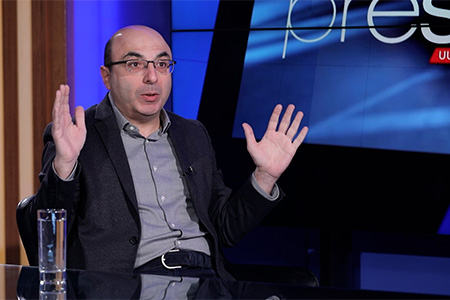 Political scientist: The Armenian public is simply obliged to significantly change the entire content of public discourse and struggle
 Cross tattoos are being removed from the skin of Christian prisoners in Azerbaijan by fire, according to a human rights activist.
 Zakharova: Armenia`s likely introduction of visas with Russia will be a step against Yerevan itself
 Putin: Armenia`s recognition of Karabakh as part of Azerbaijan in Prague has given Russia`s position on this issue an ambivalent character
 Putin: Armenia`s adoption of the law on EU accession means an announcement of its withdrawal from the Eurasian Economic Union
 Medvedev: Yerevan will never become an EU member, but it will permanently damage relations with the Eurasian Economic Union, including with Moscow.
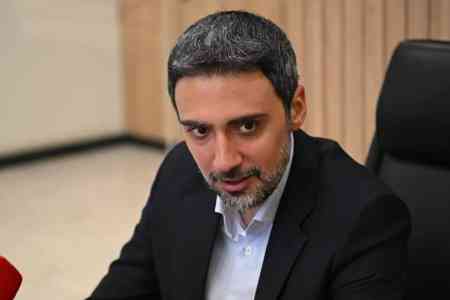 Aram Vardevanyan: Public demands solutions, not apology scandals in Parliament
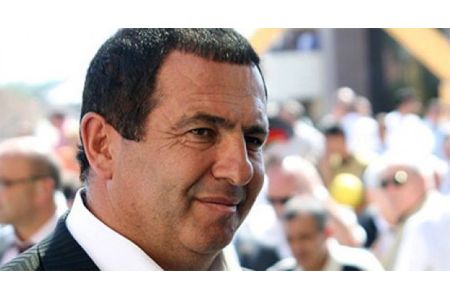 Arrested Armenian oligarch on economy and new jobs
 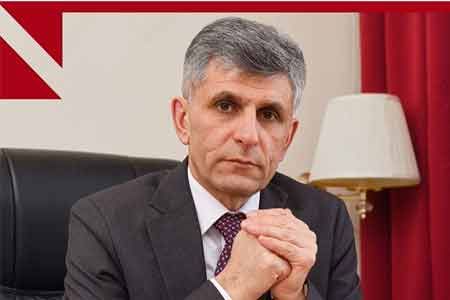 "In Baku, we gave a worthy rebuff to the false claims regarding the past and present of our people" – Former Artsakh Parliament Speaker from Baku captivity
 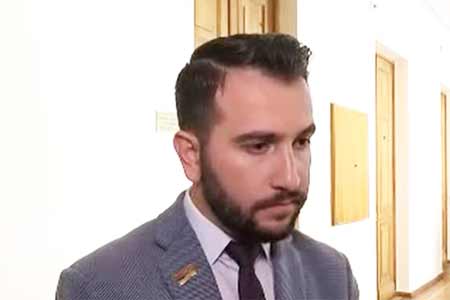 NA Vice Speaker candidate believes his wife`s salary as director of HayPost is the lowest in the company`s history
 RF Permanent Representative: There is no CSTO-Armenia conflict
 Moscow: NATO seeking to "Pull" Armenia away from CSTO Allies
  Political analyst: Russia intends to determine which "Camp" Armenia will choose through a referendum
 Narek Karapetyan will give up his parliamentary salary in favor of charitable contributions.