

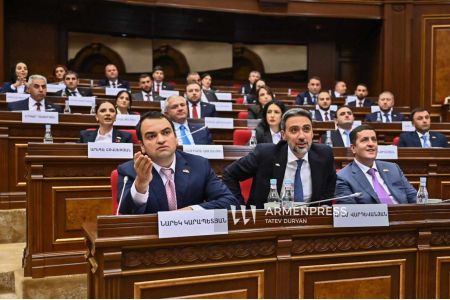
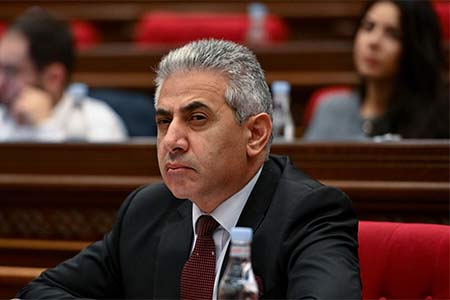
ArmInfo. Discussions are underway with the company "Veolia Jur" regarding changing the water supply schedule for the period from May 1 to September 15. This was announced by Aramazd Kalantaryan, Chairman of the RA Water Committee, at the plenary session of the National Assembly of the Republic of Armenia on March 3.
Earlier, the company presented a schedule according to which water supply to consumers in Yerevan and the regions would be limited to 17 hours during the specified period. Following this, RA Minister of Territorial Administration and Infrastructure David Khudatyan issued a statement announcing the company's continued provision of services at the same level.
In this regard, Aramazd Kalantaryan emphasized that the committee and "Veolia Jur" have requested two weeks to resolve the issue.
A preliminary analysis shows that the system has potential for improving the drinking water supply schedule. The basis for this analysis is to give new impetus to the continuation of the major capital investment program. Another reason could be the discovery of new water sources, which were underway prior to the major capital investment program. A decision has been made to attract additional financial resources to channel water from these sources to consumers.
Kalantaryan emphasized that water supply outages will occur, but they will not exceed 3-4 hours, compared to 6-7 hours in some areas of Yerevan. These outages will occur at night, which is necessary to fill the reservoirs. The head of the Water Committee also reported that water losses in the system currently amount to approximately 45%-50%. Veolia Djur achieved this figure in accordance with its commitments to reduce losses, which previously stood at 80%. The RA government and the company have invested 22 billion drams over the past two years to address this issue.
On March 3, Aramazd Kalantaryan presented a draft agreement with the World Bank in parliament, according to which Armenia will receive a EUR 70.4 million loan from the International Bank for Reconstruction and Development for the implementation of the "Water Supply and Irrigation Systems Improvement. Phase 1" program. According to the Chairman of the RA Water Committee, the agreement is valid for 180 days from the date of its signing, and the project is valid for five years from the date of its entry into force. The effective date of the Co-financing Agreement is March 31, 2026. The project consists of the following main components: water sector reform and institutional strengthening of climate-resilient irrigation and water supply systems in rural areas, improvement of rural water supply and sanitation, modernization of irrigation infrastructure and system management, and project management. The project is also expected to receive co-financing from the French Development Agency (Agence Francaise de Developpement) for approximately the same amount of EUR 70 million. Given the multifaceted and interconnected nature of the challenges facing Armenia's water sector, including deteriorating irrigation infrastructure, limited access to safe water for rural populations, and growing risks associated with climate change, the proposed project aims to apply an integrated, multi-phase approach to ensure sustainable development and effective management of the sector. The project is a logical continuation of previous World Bank-financed initiatives and will ensure the implementation of necessary policy, institutional, and infrastructure reforms. The project is expected to result in the introduction of climate-resilient irrigation and water supply systems that will contribute to economic growth, food security, and balanced regional development.
The first five-year, ?180 million phase of the program will be implemented by the Water Committee of the RA Ministry of Territorial Administration and Infrastructure in settlements in the Ararat, Armavir, Kotayk, Aragatsotn, Shirak, and Tavush regions.
The initiative aims to modernize infrastructure and strengthen institutions regulating the water sector, in line with Armenia's commitments to reduce greenhouse gas emissions and improve adaptation to extreme weather events. According to the source, approximately 650,000 people in 579 rural settlements in Armenia remain without access to centralized water services because they live in areas not covered by lease agreements for water supply. The project will also contribute to improving the governance structure of water user associations, including by engaging women. The second phase will allocate approximately ?250 million to continue the same program.
As a reminder, since 1992, the World Bank has provided the country with approximately $3 billion, including investment loans, grants, analytical support, and technical assistance. The current portfolio of the IBRD, trust funds, and the International Development Association (IDA, a World Bank entity) amounts to approximately $400 million. Since 2023, Armenia has also become an IDA donor country.













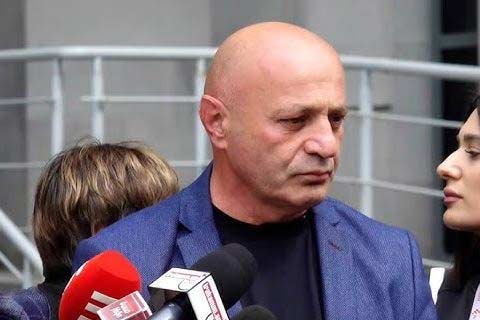


 Expert: The arrest of opposition figures in Armenia for social media posts is a systematic attempt to intimidate the public and suppress dissent.
 Azerbaijani Studies Expert: While Azerbaijan Prepares Its Generation for War, Aliyev’s Aide Calls on Armenia to Prepare Armenian Society for “Peace”
 Turkologist: Azerbaijan will never, under any circumstances, stop pressuring the Armenian people
 Political scientist: We need to move away from the question of "when" and replace it with more important questions
 International Law Specialist: Azerbaijan intends to initiate legal proceedings against Armenia by sentencing Armenian prisoners
 Dmitry Medvedev predicted a Ukrainian-like fate for Armenia amid the country`s shift in foreign policy
 Russian Security Council: In Armenia, they want to force Russian asset owners to dispose of their assets
 Zakharova: Russia ready to discuss with Armenia the prospects for expanding military cooperation as part of a review of bilateral ties
 Tevanyan: Armenia, like Ukraine and Moldova, is being drawn into the EU’s global war
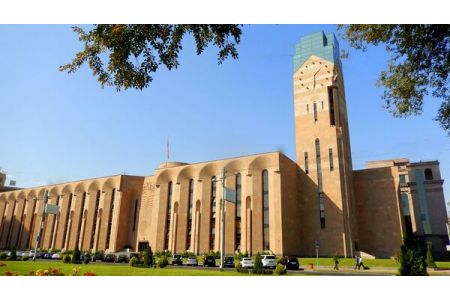 Yerevan City Hall is considering introducing a valet parking system in the city
 Expert: The circus surrounding the “Albanization” of Armenian culture in the presence of foreign ambassadors in occupied Artsakh is genocide
 Political scientist: If Russian-Armenian relations are destroyed, Turkey will take Russia`s place
 Political scientist: The Armenian public is simply obliged to significantly change the entire content of public discourse and struggle
 Cross tattoos are being removed from the skin of Christian prisoners in Azerbaijan by fire, according to a human rights activist.
 Zakharova: Armenia`s likely introduction of visas with Russia will be a step against Yerevan itself
 Putin: Armenia`s recognition of Karabakh as part of Azerbaijan in Prague has given Russia`s position on this issue an ambivalent character
 Putin: Armenia`s adoption of the law on EU accession means an announcement of its withdrawal from the Eurasian Economic Union