ArmInfo.Ankara and Baku's long-term goals of ousting Russian capital from Armenia are beyond doubt, political scientist Vahe Davtyan wrote on his Facebook page.
He recalled that RA Prime Minister Nikol Pashinyan recently stated that the management of the Armenian Railway by a Russian company creates problems, especially for transit through Armenia. According to him, "in many countries, in the West, East, South, and North, there is an opinion that after Nakhichevan, the railway should not pass through Armenia due to Russian control." This was followed by the idea of transferring management of the South Caucasus Railway to a third party. "A logical question arises: which of these countries want to transit through Armenia but, given the presence of Russian capital, avoid it? To answer this question, it's necessary to consider the problem on a macro-regional and regional scale. Countries of Western or Central Asia? Transport links have long existed between them through Georgia and Azerbaijan, and an attempt is now being made to diversify this route through TRIPP. The Middle East? Can you name any major players in the region that are not currently engaged in intensive economic cooperation with Moscow? Iran and Georgia? In the case of the former, we simply exclude them, while in the case of the latter, we have documented dynamic Russian- Georgian economic and infrastructural cooperation since 2012. That leaves Turkey and Azerbaijan, whose long-term goals of displacing Russian capital from Armenia are beyond doubt," the political scientist emphasized.
In this regard, he recalled February 2010, when he represented the South Caucasus Railway at the TRACECA working meeting in Istanbul as part of the Armenian delegation. "There was 'football diplomacy,' negotiations on the Iranian-Armenian railway had begun, and Moscow, anticipating the opening of the Armenian-Turkish border, initiated a project to establish an international logistics center at the Akhuryan border crossing, which I presented in a special report. During a coffee break, a representative of the Turkish Ministry of Foreign Affairs approached me. After asking a couple of clarifying questions about the project, he said, 'All this is well and good, but if you really want to integrate and become a transit zone, you should manage your railway without Russian participation.' Not only has nothing changed in Ankara's regional ideas, but the principle of excluding the Russian factor has become even stronger over the past decade. This is more than clearly expressed in Turkey's master plan for transport development until 2053. Pashinyan understands that TRIPP will not lead to Armenia's transport integration, that in reality, the issue of comprehensively unblocking communications is not on the agenda, and therefore another culprit must be found. In this case, Moscow appears in this status. "The elections are a good argument to justify why we are still so far from the promised bright future," the political scientist concluded.


















 Iranologist: Baku`s propaganda of might masks the country`s inability to provide water to its own population
 Analyst: Continued tensions between Yerevan and Moscow could entail new restrictive measures from Russia
 Political analyst: Russia intends to determine which "Camp" Armenia will choose through a referendum
 Armenia and France discuss further development of strategic partnership and EU cooperation
  To overcome risks Armenia must reduce domestic escalation - expert
  Zatulin: Pashinyan was eager to get back to Russia because he actually lost the elections
 Human rights activist Ruben Melikyan dismissed from YSU
 Pashinyan removed from INNOPROM guest list
 Zakharova: Armenia`s pro-EU pivot poses economic security risks to EAEU member states
 It`s time for South Caucasus countries to think of South Caucasus as single, unified region - RA premier
  Pashinyan: Armenia and Azerbaijan should leave each other alone
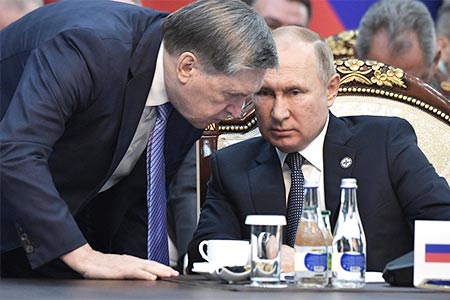 Moscow sees situation with Armenia as attempt to attack Russia-involving integration associations - Russian presidential aid
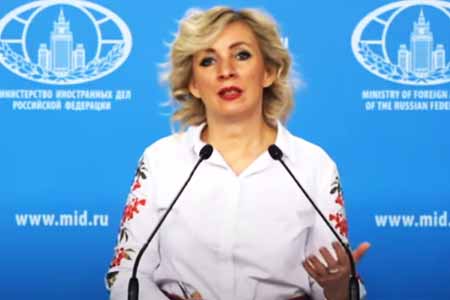 Zakharova: Armenia views relations with Russia as tool for financially securing reorientation toward EU
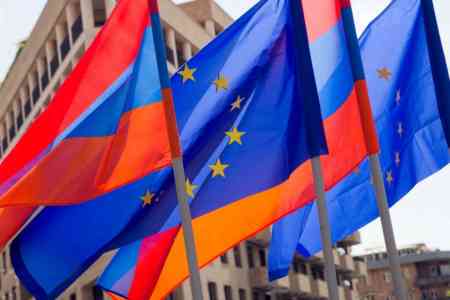 The Armenian Minister of Justice and the EU Ambassador discussed visa liberalization issues for Yerevan.
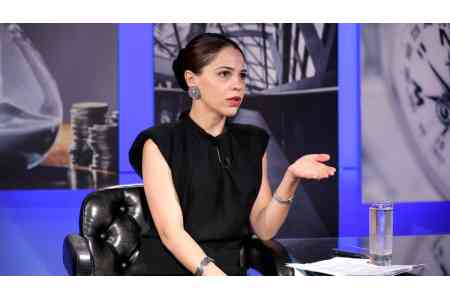 Azerbaijan`s aggressive plans against Armenia became possible in wake of Pashinyan`s decisions on Artsakh - expert
  Zakharova: Russia sent a note of protest to Armenia over the act of vandalism at the "Mother Armenia" memorial in Gyumri