
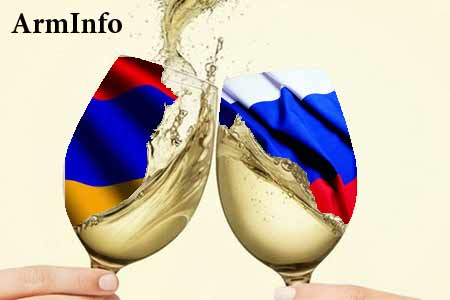
ArmInfo.Armenia has entered the top 10 countries friendly to Russia, according to the National Research Institute for the Development of Communications (NIIRC, Russia), which presented the Friendliness Rating of Communication Regimes in Post-Soviet Countries.
"Ten countries entered the friendly group: South Ossetia, Abkhazia, Belarus, Kyrgyzstan, Kazakhstan, Tajikistan, Uzbekistan, Armenia, Azerbaijan, and Turkmenistan.
Five countries retained their unfriendly status: Moldova, Lithuania, Latvia, Estonia, and Ukraine. One country, Georgia, remained 'conditionally friendly/conditionally unfriendly.' It is noted that the friendliness score increased in nine countries, while it decreased in eight," according to the Institute's analysis.
The key points of the report: communication regimes are becoming subsystems of political governance, defining the rules of access to public information and meanings. It is noted that "friendliness" is becoming a tool of power, rather than an emotional characteristic. "Rules and procedures are more important than rhetoric: symbolic friendship does not compensate for the limitations of language, media, and institutions. Multi-vectorism is becoming the norm: European, Turkish, and Chinese tracks are strengthening.
In unfriendly countries, communications are securitized and become part of national security.
The Russian language remains, but its presence is declining; in unfriendly countries, it is used as a tool for political struggle.
No country has succeeded in completely ousting Russia from the communications space," the report states.
At the same time, the importance of this monitoring of communications regimes is emphasized, as it is a tool that allows Russia to see the real picture, not just a political window dressing. It shows where its channels of interaction are functioning, and where barriers and restrictions are emerging; which ties remain stable, and which are under threat, from humanitarian and educational to media; and where the risks of fragmentation, loss of trust, and growing internal rifts are increasing. This study enables the flexible adaptation of foreign policy to the demands of societies in the region; the more precise selection of instruments of interaction, from alliance formats to targeted pragmatic communications; and the avoidance of strategic mistakes in the face of growing competition for meaning and influence.
For countries in the region, this is a diagnostic of their own decisions: how the media environment is changing; how open or closed is the humanitarian space; and whether early signs of internal schism are emerging. It helps national governments understand the consequences of their policies and adjust them before problems become irreversible.


























 Expert: Gagik Tsarukyan embodies post-Soviet model of big business-state relations; this model is used in many other post-Soviet countries
 Expert: Azerbaijan promoting aggressive plans against Armenia at state level
 Iranologist: Baku`s propaganda of might masks the country`s inability to provide water to its own population
 Political analyst: Russia intends to determine which "Camp" Armenia will choose through a referendum
 Narek Karapetyan will give up his parliamentary salary in favor of charitable contributions.
 Armenia and France discuss further development of strategic partnership and EU cooperation
  To overcome risks Armenia must reduce domestic escalation - expert
  Zatulin: Pashinyan was eager to get back to Russia because he actually lost the elections
 Human rights activist Ruben Melikyan dismissed from YSU
 Zakharova: Armenia`s pro-EU pivot poses economic security risks to EAEU member states
 It`s time for South Caucasus countries to think of South Caucasus as single, unified region - RA premier
  Pashinyan: Armenia and Azerbaijan should leave each other alone
 Moscow sees situation with Armenia as attempt to attack Russia-involving integration associations - Russian presidential aid
 Zakharova: Armenia views relations with Russia as tool for financially securing reorientation toward EU