


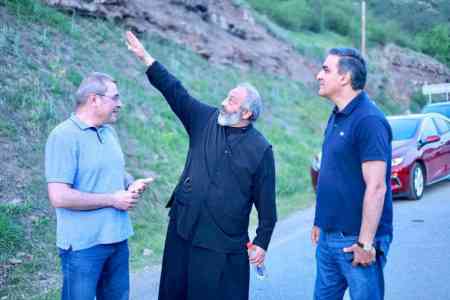
ArmInfo. Armenia must become a technological and industrial hub-this is the principle the country must adhere to. David Ananyan, co-founder of the "Wings of Unity" political initiative, stated this at a press conference in Yerevan on February 17, presenting the initiative's economic policy guidelines.
He emphasized that the initiative's new economic model is based on seven key areas aimed at improving the efficiency of the country's economic system. The first area, he said, is defining Armenia's place in the global economy. Ananyan explained that, as a small country with limited resources, it is necessary to understand how to position itself internationally and build an economy focused on exports rather than consumption.
Speaking about how to achieve this goal, he noted that Armenia must find its niche in the global economy by finding a high-tech and valuable product, a combination of services and goods.
"That is, the country must become a supplier of high-tech and knowledge-intensive services and products on the international market. This is the foundation of our model, which defines our place in the global economy as a small country. Our model formula is as follows: niche - speed - technology - institutions. Ultimately, this model implies that Armenia is small in territory but large in its economic role," explained the initiative's co-founder.
In the second stage, according to Ananyan, it is necessary to determine an action plan for moving in this direction. The politician noted that economic development and growth are not dependent on trade, construction, or domestic consumption of services. Meanwhile, as the initiative's co-founder noted, the country's economic activity rate has recently been 9.1%, with trade and construction the driving forces behind this activity.
However, as Ananyan noted, trade is a branch of the economy; that is, it is simply the movement of goods from producer to consumer. He emphasized that this means that Armenia, as an importing country, finances the economies of other countries. In this regard, he emphasized the need to shift from a consumer model to a producer model. "After all, if a country has no exports or industry, but only imports, then it becomes a secondary territory and loses its economic identity. Meanwhile, we must move toward becoming an industrialized country, based on the ideology of creating industrial zones. In this sense, Armenia's geographical location should not be viewed as a limitation, but as a challenge that requires the construction of infrastructure that connects the country to the world and allows it to find its niche on the international stage," the initiative's co-founder emphasized.
To implement this strategy, Ananyan pointed to the need to develop the North-South international highway, the North-South railway, and the East-West railway (the Trans-Caspian route - ed.).
He named the third area as a strategy for developing small and medium-sized businesses (SMEs), emphasizing the need to connect SMEs with industrial zones. He stated that SMEs should become the connecting link in these zones, which will require retraining and specialization, as well as social responsibility on the part of large entrepreneurs. "For SMEs to function successfully, it is necessary to ensure access to capital and simplified access to the securities market," Ananyan added.
The fourth area he identified was the need to reassess the legal framework for joint-stock companies. Specifically, the reorganization of all joint-stock companies within a certain timeframe. "This will allow limited liability companies to position themselves within the SME sector and simultaneously provide access to stock market capital. Regarding the diaspora, it is necessary to engage them in Armenia's economic development process, as compatriots from the diaspora possess financial capital, partner networks, and expertise in various fields. For example, if we invite the diaspora to Armenia and offer to relocate their production to industrial zones with a zero-tax regime, they will become the leaders in the development of these zones," Ananyan explained.
The initiative's co-founder outlined a new tax philosophy as the sixth area. He explained that the transition from a consumer model to an exporter model and the creation of industrial value require a change in the logic of the entire tax system. "This will require the gradual elimination of the turnover tax under a simple model and the introduction of a progressive system for both income tax and profit tax," the co-founder noted. Ananyan named the digital dram concept as the final direction. He explained that the main goal of this concept is to create a list of goods and services that will be circulated in Armenia exclusively in digital currency, ensuring 100% traceability and transparency. According to Ananyan, this concept will enable controlled public procurement.
Parliamentary elections in Armenia are scheduled for June 7, 2026






















 Politician: Statement by Armenia`s third president may deprive opposition of only political basis for ousting Pashinyan
 Political scientist: Real recount will deprive Pashinyan of any constitutional majority
 Elections in Armenia were accompanied by unprecedented pressure on opposition, RF MFA spokesperson claims
  Expert: Even OSCE observers recorded numerous violations during elections in Armenia
 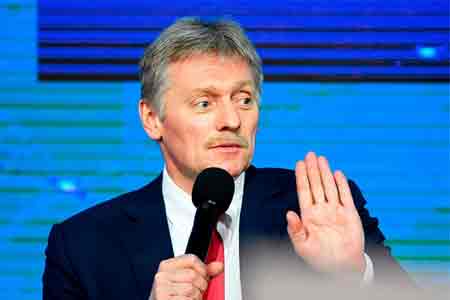 Moscow to await official results of Armenian elections - Peskov
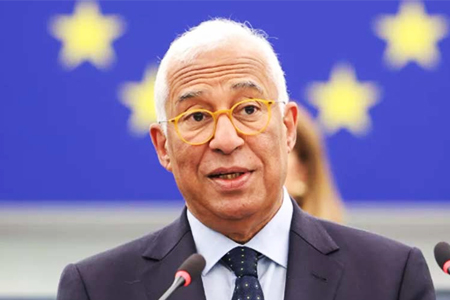 Antonio Costa: EU to deepen its partnership with Armenia, expanding cooperation in energy, trade, and digitalization
 Israeli MFA congratulates Pashinyan
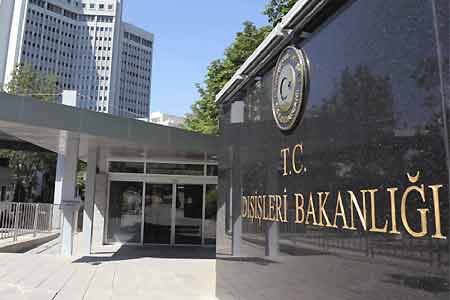 Turkish MFA comments on results of Armenian elections
 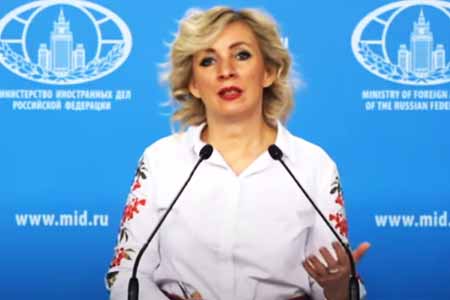 Zakharova: International observers cannot ignore `flagrant violations` in Armenian elections
 Russian Senator: Opposition complaints regarding election violations by ruling party remain unanswered
 RA premier receiving congratulations on his victory in parliamentary elections
 Head of IPA CIS Council Secretariat: Extremely difficult atmosphere during parliamentary elections campaign in Armenia accompanied by mass arrests
 Pashinyan`s party leads with 51.13% based on vote counts from 533 polling stations