


ArmInfo.Representatives of the newly formed political force "Pan- Armenian Public Union" presented the main principles and areas of activity of their initiative.
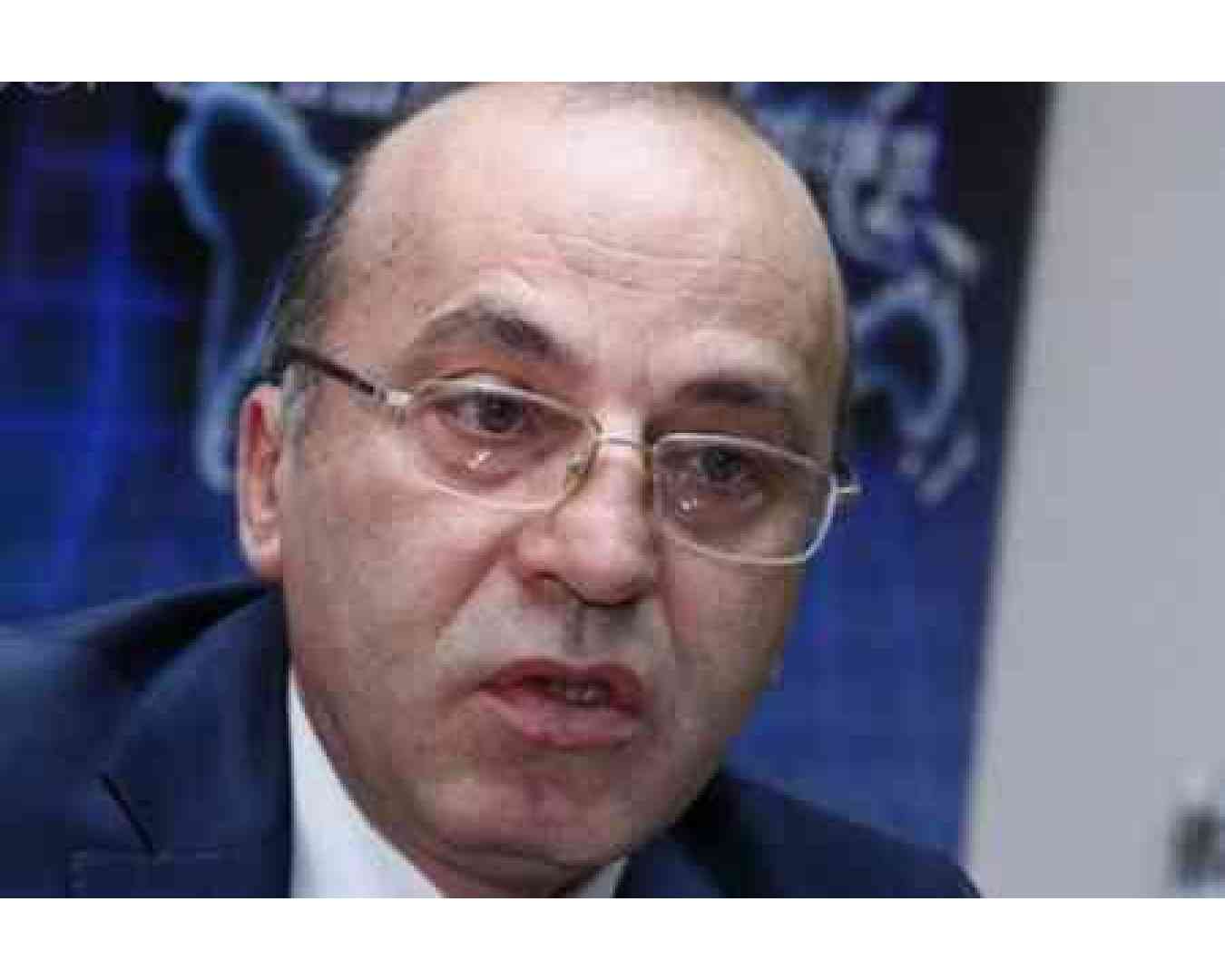
During a press conference on February 9 in Yerevan, Doctor of Economics and Professor Tatul Manaseryan noted that the initiative has already been joined by military figures who made significant contributions to the establishment of Armenian statehood and security, as well as representatives of the clergy and the diaspora. Manaseryan emphasized that the union they founded is not only pan-Armenian but also transcends politics and party lines. He added that the creation of their union is not connected to electoral processes, despite the upcoming parliamentary elections in Armenia scheduled for June 2026, and this coincidence is purely coincidental.
"At the suggestion of Major General Arkady Ter-Tadevosyan, the hero of Artsakh and a symbol of victory in the heroic battle for Artsakh, a civil council was formed, which continues to exist. All the ideas and goals temporarily abandoned after Ter-Tadevosyan's death will now be revived with renewed vigor within this union," Manaseryan recalled.
Diplomat and Professor Ruben Karapetyan, in turn, presented the union's activities. He stated that no single political force or public organization is capable of overcoming the profound crisis that has arisen in Armenia. In this regard, Karapetyan emphasized the need for profound and systemic changes that will have a long-term impact on the Republic and all Armenians.
"To achieve this, the Armenian people must act as a united whole, relying not only on our shared past but also on our contemporary interests and a collective vision of the future," the diplomat stated.
According to him, this is precisely the goal the Pan-Armenian Public Union will strive to achieve: a state- oriented, pro-Armenian policy aimed at unifying society and building a national state. To this end, according to Karapetyan, they have defined six core principles for their initiative. First, he stated, the sovereignty, security, and territorial integrity of the Republic of Armenia cannot be the subject of any negotiations.
"Armenia's internationally recognized and historical territories must be defended with strategic clarity and unwavering determination. Every decision and action taken by the country's government must be guided solely by the supreme interests of the Armenian people and Armenian statehood. No other interest can be above the national interest," the diplomat explained.
Secondly, he continued, in the context of globalization and democratic challenges, governance in Armenia must strengthen national identity, be based on religious, spiritual, and family values, promote social justice, and ensure the growth of democratic viability. "Thirdly, the Armenian Apostolic Church (AAC) must continue to be a pillar of national identity. The government must normalize relations with the Armenian Church, excluding any interference in the internal affairs of the AAC," Karapetyan continued.
Fourthly, he named the need to defend the right of the people of Artsakh to return to their homeland in all international courts, adding that the Artsakh issue must become a top priority on Armenia's foreign policy agenda. "Furthermore, Armenia must pursue justice by demanding adequate compensation from Turkey for the crime it committed - the Armenian Genocide - and from Azerbaijan for ethnic cleansing in Artsakh and other war crimes during the war. This requires legal, diplomatic, and other steps to ensure that these countries are held accountable before an international court," the diplomat noted, introducing the fifth point.
Karapetyan believes the sixth principle is the need to recognize that the diaspora is an integral part of the nation. "In this regard, governance in Armenia must be organized in a way that allows the diaspora to contribute to national development, as well as to decision-making on security issues," the diplomat emphasized.
Summing up, he noted that in the future, they intend to hold various hearings on Armenia's new constitution, the country's electoral processes, the national economy, foreign policy, and the security system, which will allow them to form a common understanding of Armenia's future.









 Politician: With high voter turnout, current government to no chance
 Political analyst: Relatively high turnout indicates that Armenian citizens are actively and consciously shaping the country`s future
 Head of IPA CIS Council Secretariat: Extremely difficult atmosphere during parliamentary elections campaign in Armenia accompanied by mass arrests
 Pashinyan`s party leads with 51.13% based on vote counts from 533 polling stations
 Voting in parliamentary elections in Armenia ends
  Strong Armenia: Administrative Court not providing judicial decisions to citizens wishing to vote in parliamentary elections
 Russia trying to convey to Armenia that the EU has effectively transformed into a military-political union – Overchuk
 Armenian FM: Relations between Armenia and Russia need " a certain degree of healing"