



ArmInfo.The document signed by Armenian Prime Minister Nikol Pashinyan and ten rebel bishops is null and void, contradicts Article 17 of the Armenian Constitution, and violates the principle of separation of state and church, making any legitimate consequences impossible. Lawyer Levon Baghdasaryan wrote this on his Facebook page.
As the lawyer explained, this is due to the fact that the document is not a normative legal act, an individual administrative act, does not create legal consequences, and is, at most, political or ideological in nature. "There is an impression that both church representatives and the authorities, having abandoned their duties and responsibilities, are preparing for conflict by manipulating believers and exploiting the sensitive topic of faith, which is a norm of natural law. In this regard, I once again appeal to the government of Armenia to refrain from directly or indirectly interfering in matters outside its competence, as such interference may entail liability," the lawyer noted. Baghdasaryan noted that the legal term "roadmap" is not defined in the Basic Law of Armenia, in the country's laws, or in the legal system of the Armenian government. In this regard, he stated that the document signed by Pashinyan and ten bishops is purely political or ideological in nature. "The Armenian Apostolic Church (AAC) is separated from the state, which means that state authorities cannot interfere in its internal affairs. State bodies and officials have no right to influence the formation or termination of senior church positions and cannot participate in these processes. The Prime Minister's participation in the signing of this document constitutes direct state intervention in a religious institution," Baghdasaryan emphasized. He also noted that Catholicos of All Armenians Garegin II is not a state official, is not appointed by state bodies, and is not subordinate to the executive branch. "The election and termination of the Catholicos's powers is carried out exclusively on the basis of the canon law of the Armenian Apostolic Church and the National Church Assembly. Consequently, the participation of the Prime Minister or any state body in this process is beyond their competence. The fact that the document is signed by several bishops does not change its legal nature or eliminate the unconstitutionality of the Prime Minister's participation, nor does it replace the authority of the National Church Assembly. The joint signature of the Prime Minister and 10 bishops makes this document an act of state interference in the internal affairs of a religious organization. Such a document contradicts the principle of freedom of religion, international standards of autonomy for religious organizations, and Article 9 of the European Convention on Human Rights. Consequently, it may be subject to international judicial and legal review," the human rights activist concluded.
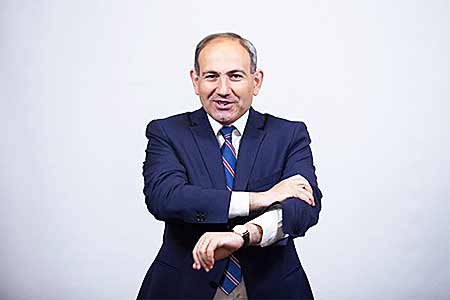
Last May, the Armenian Prime Minister launched a campaign against the Armenian Apostolic Church. As part of this campaign, on the night of January 5, Armenian Prime Minister Nikol Pashinyan signed the so- called "roadmap for the improvement" of the Armenian Apostolic Church with 10 rebellious bishops. The "roadmap" consists of five points: a public announcement of a reform program; the removal of the current Catholicos; the election of a locum tenens of the patriarchal throne; the adoption of a Church Charter, which should establish "mechanisms for maintaining established principles, ensuring financial transparency and proper behavior of the clergy"; and the election of a Catholicos of All Armenians, "in accordance with the established procedure." It should be noted that, according to the Constitution of Armenia, the Armenian Apostolic Church is separate from the state and has a special mission.

























 Expert: Even OSCE observers recorded numerous violations during elections in Armenia
  Armenia`s ex-minister of justice calls on opposition to honestly answer questions troubling Armenian citizens
 Lawyer: according to preliminary results, Pashinyan`s party lacks 2/3 majority necessary to amend Armenia`s Constitution
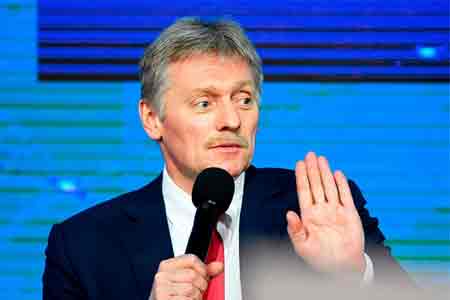 Moscow to await official results of Armenian elections - Peskov
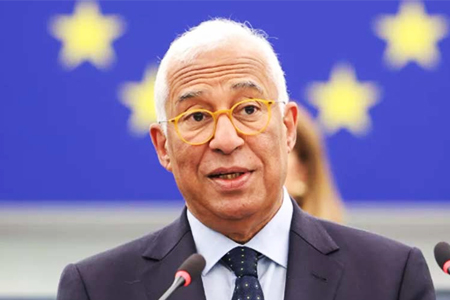 Antonio Costa: EU to deepen its partnership with Armenia, expanding cooperation in energy, trade, and digitalization
 Israeli MFA congratulates Pashinyan
 Turkish MFA comments on results of Armenian elections
 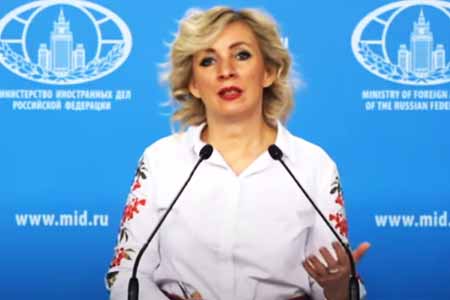 Zakharova: International observers cannot ignore `flagrant violations` in Armenian elections
 Strong Armenia to issue statement after vote count completed - Narek Karapetyan
 Russian Senator: Opposition complaints regarding election violations by ruling party remain unanswered
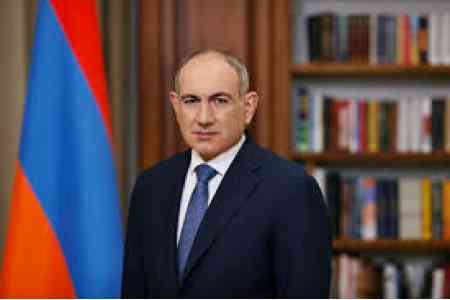 RA premier receiving congratulations on his victory in parliamentary elections
 Head of IPA CIS Council Secretariat: Extremely difficult atmosphere during parliamentary elections campaign in Armenia accompanied by mass arrests
 Pashinyan`s party leads with 51.13% based on vote counts from 533 polling stations
 Voting in parliamentary elections in Armenia ends
  Strong Armenia: Administrative Court not providing judicial decisions to citizens wishing to vote in parliamentary elections