

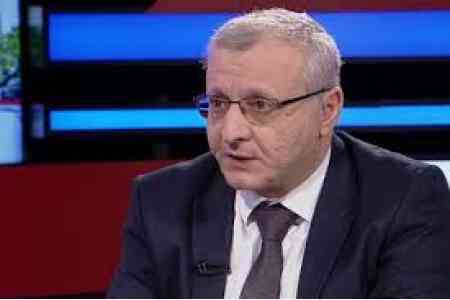
ArmInfo. Armenian Prime Minister Nikol Pashinyan will not be able to reassert his authority in 2026 without resorting to total repression. Political scientist and leader of the Democratic Alternative party, Suren Surenyants, stated this at a press conference in Yerevan.
As the political scientist noted, repression has become the most widespread phenomenon in Armenia's political life and the only tool Pashinyan uses to maintain his grip on power. Pashinyan's anti-church campaign, including the planned invasion of Holy See Etchmiadzin on December 28, also fits into this logic, according to the expert. "Today, the Armenian Apostolic Church (AAC) is one of the few structures that is not subordinate to the authorities," Surenyants noted. At the same time, the politician believes that the country's electoral process reached a critical point when EU High Representative for Foreign Affairs and Security Policy Kaja Kallas stated that "the European Union is ready to support Armenia in the fight against hybrid threats from Russia ahead of the 2026 elections." "Thus, EU officials effectively supported Pashinyan's repression, which gave him the opportunity to reaffirm his electoral authoritarianism in the country. Another PR tool for the current government was the announcement that the 8th European Political Community summit will be held in Armenia on May 4, 2026," Sureniants believes.
However, the political scientist is confident that this can still be countered. According to the expert, under the current circumstances, the opposition must do everything possible to ensure more than 50% of voters participate in the elections, in other words, turning society into a subject of the upcoming processes. "If the number of voters exceeds this threshold, the Moldovan election scenario will not be repeated. After all, Pashinyan is counting on an apathetic and hopeless society that will not go to the polls," the political scientist explained.
Sureniants also suggested that around five significant opposition centers are expected to emerge before the elections. He believes the elections could contribute to the consolidation of these centers, although he acknowledged that the opposition has not yet taken sufficiently active steps in this direction, while the current government is working effectively.
"To achieve qualitative change, the opposition must overcome its internal contradictions, including resolving the issue of releasing political prisoners and preventing the authorities' anti-church campaign. These two components are significant challenges to holding legitimate and competitive elections. If these problems are not resolved, the likelihood of Pashinyan's reign remaining high," Sureniants concluded. As a reminder, the next parliamentary elections in Armenia will be held on June 7, 2026.
















 Armenian Political Scientist: The approaches, methods, rmphases and content of today’s struggle in Armenia Cannot Remain the Same
 Political scientist: Armenians will live peacefully in their homeland only when they can once again set national goals for themselves, such as Artsakh
 Armenian Historian: People Like Magdalena Grono Should Be Kept Away from the Thresholds of Armenian Shrines
 Azerbaijani studies expert: Armenia’s Foreign Ministry could use the ICC against Aliyev’s Armenophobic statements
 Zakharova: Russia ready to discuss with Armenia the prospects for expanding military cooperation as part of a review of bilateral ties
 Tevanyan: Armenia, like Ukraine and Moldova, is being drawn into the EU’s global war
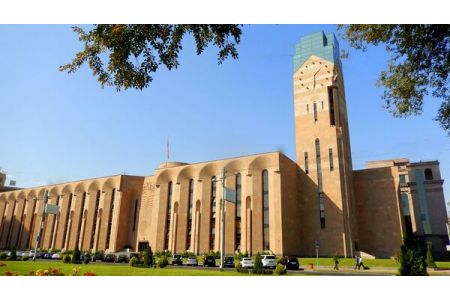 Yerevan City Hall is considering introducing a valet parking system in the city
 Expert: The circus surrounding the “Albanization” of Armenian culture in the presence of foreign ambassadors in occupied Artsakh is genocide
 Political scientist: If Russian-Armenian relations are destroyed, Turkey will take Russia`s place
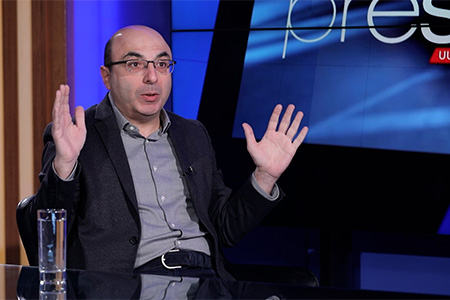 Political scientist: The Armenian public is simply obliged to significantly change the entire content of public discourse and struggle
 Cross tattoos are being removed from the skin of Christian prisoners in Azerbaijan by fire, according to a human rights activist.
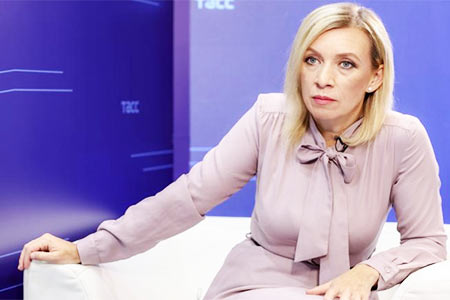 Zakharova: Armenia`s likely introduction of visas with Russia will be a step against Yerevan itself
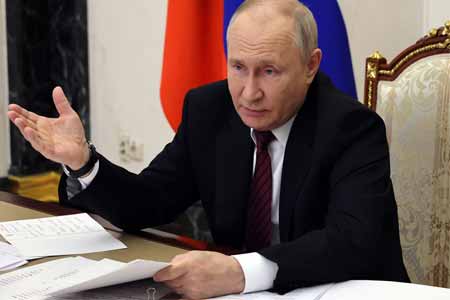 Putin: Armenia`s recognition of Karabakh as part of Azerbaijan in Prague has given Russia`s position on this issue an ambivalent character
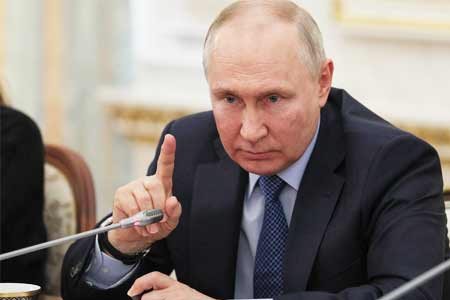 Putin: Armenia`s adoption of the law on EU accession means an announcement of its withdrawal from the Eurasian Economic Union
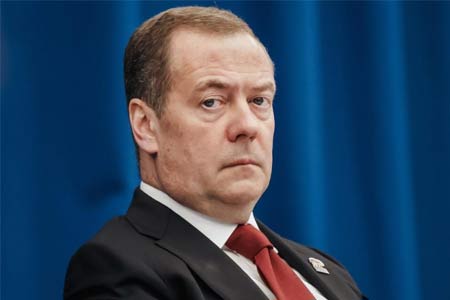 Medvedev: Yerevan will never become an EU member, but it will permanently damage relations with the Eurasian Economic Union, including with Moscow.
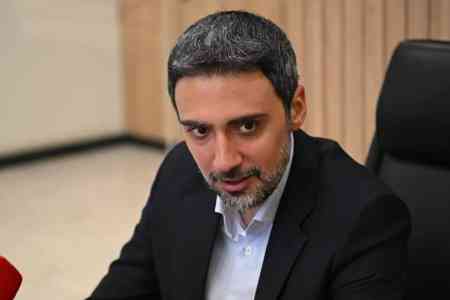 Aram Vardevanyan: Public demands solutions, not apology scandals in Parliament
 Arrested Armenian oligarch on economy and new jobs
 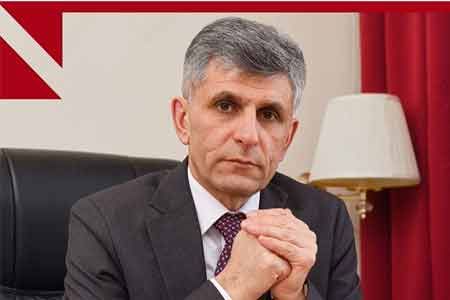 "In Baku, we gave a worthy rebuff to the false claims regarding the past and present of our people" – Former Artsakh Parliament Speaker from Baku captivity