
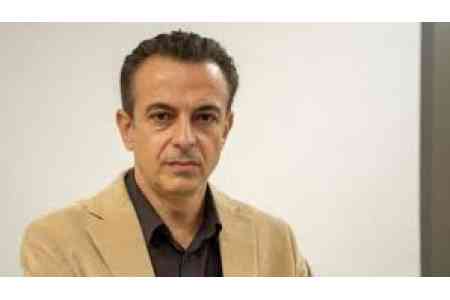
ArmInfo. The United States intends to hand over the South Caucasus region to the control of Turkey and Azerbaijan without providing Armenia with any security guarantees. Stanford University professor Artur Khachikyan writes this, citing the opinion of American human rights activist and head of the nongovernmental organization Christian Solidarity International (CSI), Dr. John Eibner.
According to Khachikyan, there is currently a distrust of the opinions of local experts, including his own. It is for this reason that he urged people to familiarize themselves with Eibner's theses.
He states that Eibner is convinced that Armenia should not rely on guarantees provided by the United States. He cited the situation in Ukraine as an example, and also pointed to President Donald Trump's failure to persuade Turkey to open an Orthodox seminary in Istanbul. He also noted that Trump spoke with Azerbaijani President Ilham Aliyev about releasing 23 Armenian prisoners of war in Baku, but despite this, they remain in prison.
"As a result, Armenia will be forced to accept peace under the conditions of subordination, similar to the Ottoman Empire. Armenians will find themselves as an ethnic minority in Turkey and Azerbaijan, deprived of human rights and democracy. They will have their own Catholicos, but he will be subordinate to the Turkish-Azerbaijani tandem. While some Armenians may succeed under these conditions, as they did in the Ottoman Empire, they will be cut off from their nation," the human rights activist noted.
Eibner also pointed to the possibility of large-scale investment from Turkey, Azerbaijan, and the Persian Gulf states, which, he claimed, would lead to Armenians losing control of their country. "And economic integration and dependence will inevitably lead to political integration," the CSI director added.
One day, Eibner believes, an "Armenian quarter" similar to those in Damascus and other Middle Eastern cities could emerge in Yerevan.
The human rights activist then quoted the US Ambassador to Turkey and Special Envoy for the Middle East, Thomas Barak, who noted that the countries that emerged after World War I were "tribes with flags" and "artificial borders" that were never intended to be nation-states. This statement, he said, clearly demonstrates the lack of prospects for recognition of "Armenia's legitimacy by the United States."
In conclusion, he noted that the only way for Armenia to preserve its national identity would be to strive to preserve what the country has today, including the Armenian Apostolic Church (AAC). "Even if Armenia has to submit to Turkey and Azerbaijan and lose its statehood, this could help preserve their national identity," Einber concluded.
As a reminder, on August 8, a trilateral meeting of the leaders of the United States, Armenia, and Azerbaijan took place at the White House. During this meeting, Armenian Prime Minister Nikol Pashinyan, US President Donald Trump, and Azerbaijani President Ilham Aliyev signed a joint declaration on the establishment of peace.
























 Expert: Real peace unattainable until Armenia-Azerbaijan agreement is signed and ratified
 TRIPP`s proximity to Iranian border could slow its implementation - expert
  Who and why is sacrificing RA National Security Service`s reputation? - expert
  Tehran creating security environment in which sustainable shipping in Strait of Hormuz difficult to imagine without its direct participation - expert
 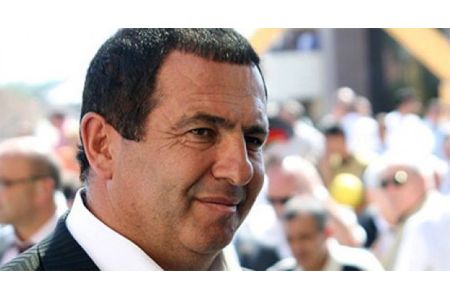 Arrested Armenian oligarch on economy and new jobs
 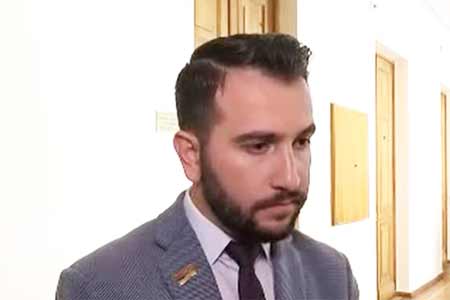 NA Vice Speaker candidate believes his wife`s salary as director of HayPost is the lowest in the company`s history
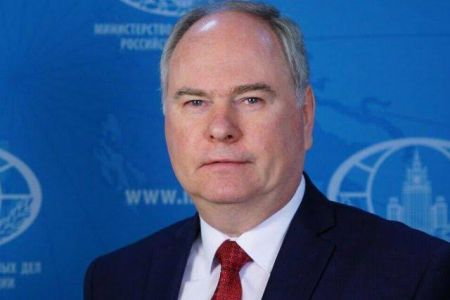 RF Permanent Representative: There is no CSTO-Armenia conflict
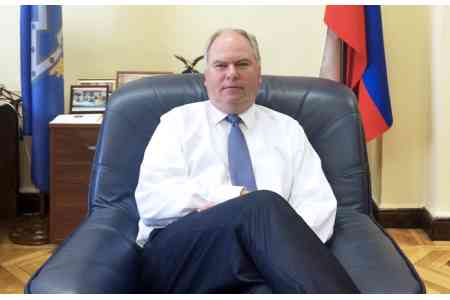 Moscow: NATO seeking to "Pull" Armenia away from CSTO Allies
  Political analyst: Russia intends to determine which "Camp" Armenia will choose through a referendum
 Narek Karapetyan will give up his parliamentary salary in favor of charitable contributions.
 Armenian analyst: Developing relations with Europe and the U.S. must not jeopardize relations with regional powers
 Armenia and France discuss further development of strategic partnership and EU cooperation
  To overcome risks Armenia must reduce domestic escalation - expert
  Zatulin: Pashinyan was eager to get back to Russia because he actually lost the elections
 Human rights activist Ruben Melikyan dismissed from YSU
 Pashinyan removed from INNOPROM guest list
 Zakharova: Armenia`s pro-EU pivot poses economic security risks to EAEU member states
 It`s time for South Caucasus countries to think of South Caucasus as single, unified region - RA premier
  Pashinyan: Armenia and Azerbaijan should leave each other alone