
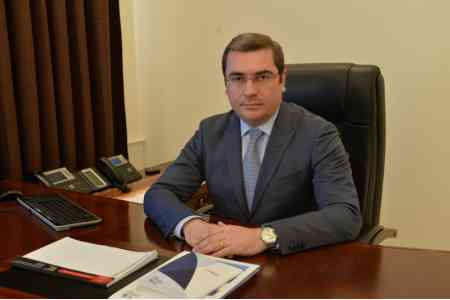
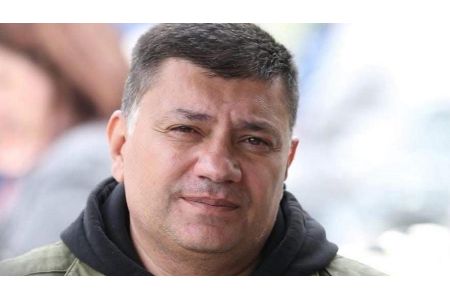
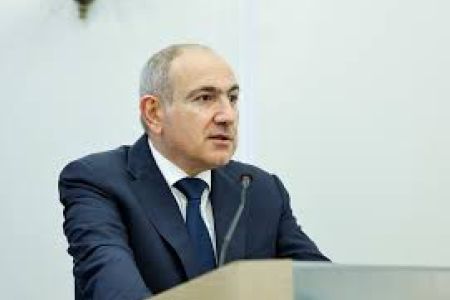
ArmInfo. By holding a Christian Prayer Breakfast in Armenia, Prime Minister Nikol Pashinyan is telling the West that Armenia is no longer simply distancing itself from Russia, but is doing so in the language of civilizational choice. For domestic audiences, he will appear as not just an ordinary politician but also a "spiritual and political reformer," the bearer of a new civilizational path for the state. Former Chairman of the State Revenue Committee and member of the Wings of Unity political movement, David Ananyan, shared his opinion.
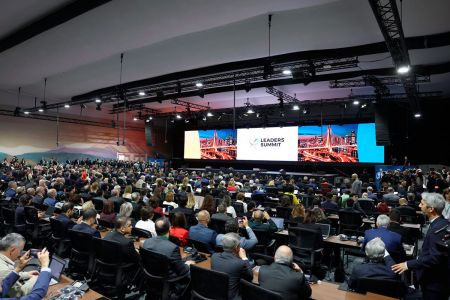
The Prayer Breakfast, organized and held in Armenia for the first time on November 14-15, cannot, in essence, be perceived as a simple religious ceremony. It arose at the intersection of politics, public image- building, and state strategy, pursuing significantly broader and far-reaching goals.
Nikol Pashinyan presented this format in Armenia not as a continuation of tradition, but as a political science tool for creating a new basis for the legitimacy of power for domestic and foreign audiences," Ananyan wrote on his Facebook page, presenting his thoughts on the reasons and goals for holding this event in the Republic of Armenia.
Why now: in search of a new "moral" image?
The original format of this forum, originating in the United States, was aimed at a reserved, closed, bipartisan spiritual dialogue. However, the Armenian version presents a completely different picture, the politician notes.
"The 2026 election processes are already beginning to take shape, and the government's political capital is showing serious cracks: the shadow of defeat in the war, territorial losses, declining public trust, and a growing socio-political rift.
Under these circumstances, Pashinyan's team is attempting to elevate political competition to a new level - to the realm of moral leadership, where it's no longer simply about programs, but about "values," "peace," and "civilizational choices." The prayer breakfast, in essence, became the first act on this stage," Ananyan believes.
Message to the West: "Armenia is a Christian, peaceful country embracing Western values."
The recent period of foreign policy shows that Armenia is simulating a rapid perestroika. For Pashinyan, this event is also a foreign policy statement, the subtext of which is clear: Armenia is no longer simply distancing itself from Russia, but is doing so in the language of civilizational choice. The prayer breakfast is a symbolic bridge for him to Washington, Brussels, and the Western political arena, where such formats are perceived as "quiet but important" signals of value identification, he emphasizes.
Message to the domestic audience: "I am not a political leader, but a spiritual and moral leader."
In domestic policy, Pashinyan's goal is equally clear: he is attempting to ascribe to himself not only political authority, but also value and moral authority. That is, to present himself not as an ordinary political figure, but as a "spiritual and political reformer," the bearer of a new civilizational path for the state. And this is where the main contradiction begins.
The Standoff Between the Armenian Government and the Armenian Apostolic Church: A Breakup They Are Trying to Present as "Reform"
Ananyan notes that the "Prayer Breakfast" itself cannot ignore the context in which it is being organized. After all, it is taking place amidst an open conflict between the government and the Armenian Apostolic Church.
"We have witnessed pressure on the Catholicos of All Armenians, criminal cases against the upper class and, in general, against the clergy, attempts to diminish the national role of the Church, as well as propaganda attacks with labels such as "medieval," "perverted," or "corrupt."
Now a new formulation is being introduced: "We are not against Christianity, we are simply cleansing it of dark influences."
This is not a religious, but a political position, the purpose of which is clear: to form an alternative spiritual platform at the state level, one that is not subject to the influence of Etchmiadzin and is more manageable.
The Prayer Breakfast is just such a platform: soft, global, ecumenical and politically safe.
What is the true goal, along three axes?
The combination of all this creates, Ananyan notes, perhaps the most complex political construct of recent years, the three axes of which are as follows:
1) Foreign policy: to demonstrate to the West that Armenia is not only democratic, but also a member of the "Christian civilization."
2) Domestic policy: to regain lost legitimacy not through state effectiveness, but through "moral leadership."
3) Electoral strategy for 2026: to present oneself not as a leader responsible for the consequences of the war, but as a symbol of "moral transformation." In other words, to replace the results of governance with an emotional and value-based agenda. Conclusion: this is not a prayer, but a new concept of power.
The prayer breakfast in Armenia is a relevant strategic event that simultaneously addresses several objectives. In particular, it softens the anti-clerical image of the government, bypasses the spiritual authority of the Armenian Apostolic Church, introduces a new, controlled "spiritual format," and prepares a relaunch of Pashinyan's political image in 2026.
Thus, although the event's name has religious overtones, its content is entirely secular and political. In other words, there is less prayer and much more statecraft," concludes David Ananyan.
Pashinyan attended the Christian Prayer Breakfast in the United States in February and subsequently decided to emulate this experience. The annual event, held in the United States, brings together not only Christian organizations but also religious organizations from various countries, including Muslim ones.
On the first day of the "Prayer Breakfast" in Armenia, November 14, participants called on the Armenian authorities to release the arrested clergy of the Armenian Apostolic Church.










 Opinion: The development of the Amulsar mine near the resort town of Jermuk is the beginning of an environmental disaster in Armenia
 Expert: The arrest of opposition figures in Armenia for social media posts is a systematic attempt to intimidate the public and suppress dissent.
 Azerbaijani Studies Expert: While Azerbaijan Prepares Its Generation for War, Aliyev’s Aide Calls on Armenia to Prepare Armenian Society for “Peace”
 Lukashenko called for Armenia to assume the CIS presidency in 2029
 Dmitry Medvedev predicted a Ukrainian-like fate for Armenia amid the country`s shift in foreign policy
 Russian Security Council: In Armenia, they want to force Russian asset owners to dispose of their assets
 Zakharova: Russia ready to discuss with Armenia the prospects for expanding military cooperation as part of a review of bilateral ties
 Tevanyan: Armenia, like Ukraine and Moldova, is being drawn into the EU’s global war
 Yerevan City Hall is considering introducing a valet parking system in the city
 Expert: The circus surrounding the “Albanization” of Armenian culture in the presence of foreign ambassadors in occupied Artsakh is genocide
 Political scientist: If Russian-Armenian relations are destroyed, Turkey will take Russia`s place
 Political scientist: The Armenian public is simply obliged to significantly change the entire content of public discourse and struggle
 Cross tattoos are being removed from the skin of Christian prisoners in Azerbaijan by fire, according to a human rights activist.
 Zakharova: Armenia`s likely introduction of visas with Russia will be a step against Yerevan itself
 Putin: Armenia`s recognition of Karabakh as part of Azerbaijan in Prague has given Russia`s position on this issue an ambivalent character
 Putin: Armenia`s adoption of the law on EU accession means an announcement of its withdrawal from the Eurasian Economic Union