
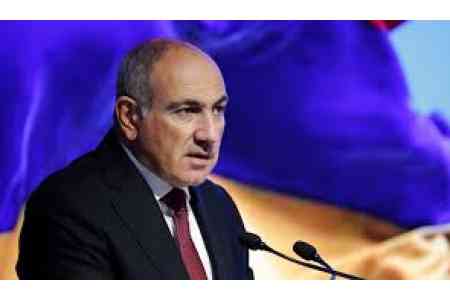
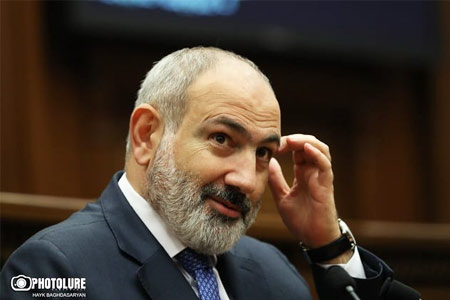
ArmInfo. Prime Minister Nikol Pashinyan believes that statements by the second and third presidents, Robert Kocharyan and Serzh Sargsyan, confirm his earlier thesis that the Nagorno-Karabakh issue was "a leash in the hands of certain forces."
Pashinyan has previously stated repeatedly that the Karabakh issue has been used for many years by many countries as a "noose around Armenia's neck." "This issue is an instrument aimed at the elimination of Armenian statehood," he said in parliament in October 2024.
"Statements by the KR (Robert Kocharyan) and the SS (Serzh Sargsyan) in recent days confirm that the Karabakh issue was a leash in the hands of certain forces seeking to tie the Republic of Armenia to the "neighboring tree." "Peoples' rights, historical justice, and similar terms were merely a smokescreen for the main goal," Pashinyan wrote today on social media.
In this regard, Pashinyan is convinced that all negotiation processes and proposals were aimed at keeping Armenia on a short leash. This will become clear when he publishes the negotiation documents at the end of the year, the prime minister added.
Furthermore, Pashinyan continues, all proposals to "stop the war" boiled down to shortening the leash. "The ultimate goal of this process of shortening the leash was to end Armenia's statehood.
Under such a scenario, the Karabakh conflict would have ended only with the loss of Armenia's statehood," the Armenian prime minister asserts, pointing out that only "at the cost of the lives of our martyrs, thanks to the historical intuition of the Republic of Armenia and our people of Karabakh, was Armenia able to escape this scenario."
Nikol Pashinyan also believes that the former presidents are proposing a return to this scenario, which was originally written and implemented under the slogan "Lenin, the Party, Gorbachev" and, "most likely, under the auspices of the KGB."
"And since their capabilities are obviously zero, an attempt is being made to form a "cohort of young Leninists, Party members, and Gorbachevites" under the auspices of the old KGB.
Expected result: 0 + 0 = 0.
P.S. Our Karabakh people must settle in the Republic of Armenia with the support of the government. Yes, this is a large-scale, complex, and resource-intensive program, but we will continue its implementation," Nikol Pashinyan concluded.
"As a reminder, on Saturday night, during a 7-hour live broadcast of the Imnemnimi podcast, third President of Armenia Serzh Sargsyan named three reasons for the 44-day war in Artsakh in 2020.
The first, of course, is the avoidance of negotiations and, in fact, a refusal to engage in them altogether. The negotiators also proposed some kind of incomprehensible solution. And these circumstances led to the negotiation process ceasing... I think he (the country's leader - ed.) was unable to fully engage in the negotiations. "Just reading the documents, it was difficult to understand where these documents were leading," Sargsyan noted. The second reason, in his opinion, was that events had occurred that gave Azerbaijan the opportunity to justify its initiative to start the war. "The third circumstance was that the Azerbaijani and Turkish intelligence were well informed about the situation in our Army and saw that the Army's combat readiness had noticeably decreased," the former president said. When asked whether the war was inevitable, he gave a clearly negative answer. "Looking ahead, was such an outcome predictable, I will say unequivocally - no. But already in the second half of 2018, in 2019, I saw problems in our Armed Forces, became convinced of them in 2020, and in August 2020, I stated during a press conference that military actions were approaching," Serzh Sargsyan said. He also reported that the OSCE Minsk Group co- chairs proposed in 2019 Pashinyan received a new document regarding the Karabakh issue, which had been hidden from the public for about a year. According to Sargsyan, he warned the Nagorno-Karabakh leadership about the existence of such a document and urged them to familiarize themselves with it. Later, in May or June 2020, the Russian Foreign Ministry, as Sargsyan noted, confirmed that such a document did indeed exist. As the former president noted, he initially considered the document unacceptable to Armenia, but later concluded that it could serve as a basis for negotiations.
On November 9, in an interview with Channel 5, second President Robert Kocharyan expressed confidence that Prime Minister Nikol Pashinyan's refusal to implement Point 9 of the November 9, 2020, trilateral statement led to the blockade of Artsakh and its loss. He also asserted that a similar Washington document is now being presented as the deal of the century, especially given the loss of Artsakh and the Lachin Corridor. Regarding the reasons for the loss of Artsakh and the outbreak of hostilities, the second Armenian president noted that approximately a year before the start of the 44-day war, it was clear to him that everything was being done to provoke a war. He is convinced that the war was caused by the breakdown of the negotiation process, and through the fault of the Armenian side. "The Armenian side refused to negotiate for the first time in the history of negotiations. Kocharyan is confident that the policy pursued by the Armenian authorities since 2018 to weaken the army was one of the positive signals for the outbreak of hostilities. According to him, another pretext for Azerbaijani aggression was the operation on the northeastern border of the Armenian-Azerbaijani border, the scale of which was inflated and almost equated in significance with the Battle of Sardarapat. Kocharyan is confident that the above-mentioned circumstances created ideal conditions for Azerbaijan to initiate a war, and due to Armenia's breakdown in the negotiation process, no one condemned this aggression. He also noted that in recent years, the Armenian prime minister has openly stated that Artsakh was a burden for Armenia and, by relinquishing it, Yerevan freed itself from this burden and "gained independence." The former Armenian president expressed his conviction that the war would not have happened if the Armenian authorities had not made these grave mistakes.
When asked what the outcome of the Artsakh negotiation process would have been without the Armenian authorities' actions, Kocharyan expressed his belief that the negotiations would have ended with the adoption of a modified version of the Madrid Principles. "If Nikol Pashinyan had joined the negotiation process in 2019-the OSCE Minsk Group proposal was a good one-then everything would have ended with the signing of such a document," Kocharyan said.
Robert Kocharyan also answered the question of whether the Artsakh issue has been finally resolved. "We must be realistic. This means we must fight within international structures to establish the right of return to Artsakh. For hope to emerge, Armenia must change its policy," Kocharyan said, pointing out that it is necessary to strengthen the army and security system not for war, but to prevent it. "A combat-ready army gives you the opportunity to have geopolitical partners, not geopolitical bosses. If you [consume] security, it has its price," the second president of Armenia said.



 Expert on protests in France: Civilizations fade when society loses a vision of the future
 Turkologist: Azerbaijan is not all-powerful—its vulnerabilities should become part of Armenia’s security strategy
 Opinion: The development of the Amulsar mine near the resort town of Jermuk is the beginning of an environmental disaster in Armenia
 Expert: The arrest of opposition figures in Armenia for social media posts is a systematic attempt to intimidate the public and suppress dissent.
 The Artsakh Public Council expressed outrage at the UN Secretary-General`s behavior
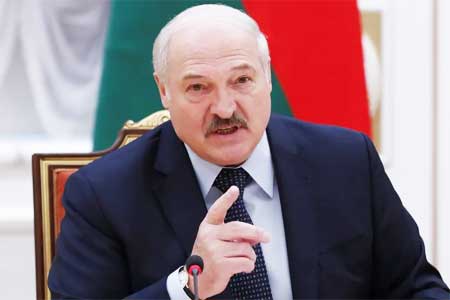 Lukashenko called for Armenia to assume the CIS presidency in 2029
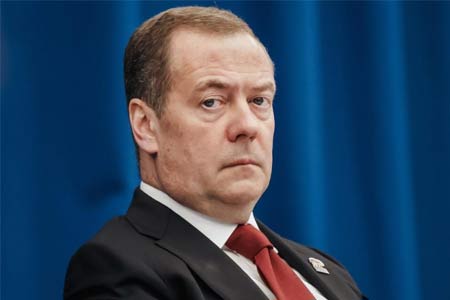 Dmitry Medvedev predicted a Ukrainian-like fate for Armenia amid the country`s shift in foreign policy
 Russian Security Council: In Armenia, they want to force Russian asset owners to dispose of their assets
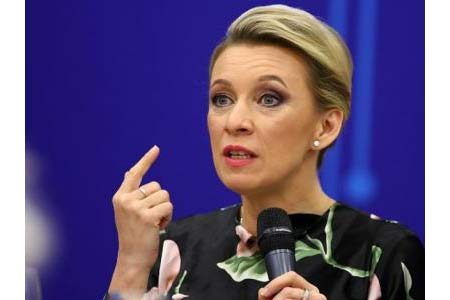 Zakharova: Russia ready to discuss with Armenia the prospects for expanding military cooperation as part of a review of bilateral ties
 Tevanyan: Armenia, like Ukraine and Moldova, is being drawn into the EU’s global war
 Yerevan City Hall is considering introducing a valet parking system in the city
 Expert: The circus surrounding the “Albanization” of Armenian culture in the presence of foreign ambassadors in occupied Artsakh is genocide
 Political scientist: If Russian-Armenian relations are destroyed, Turkey will take Russia`s place
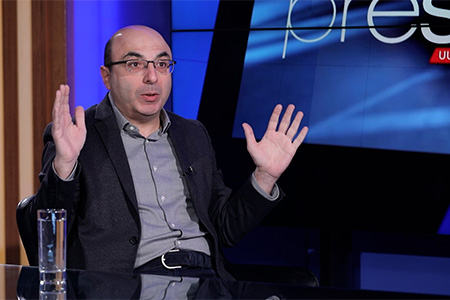 Political scientist: The Armenian public is simply obliged to significantly change the entire content of public discourse and struggle
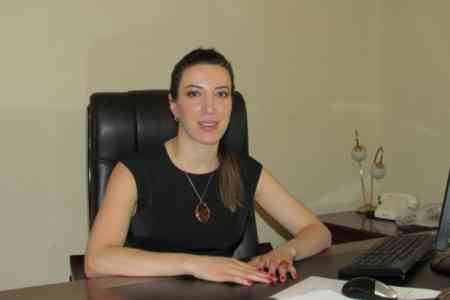 Cross tattoos are being removed from the skin of Christian prisoners in Azerbaijan by fire, according to a human rights activist.
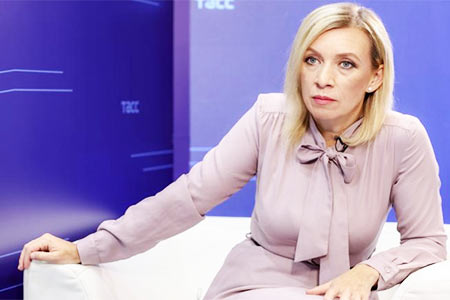 Zakharova: Armenia`s likely introduction of visas with Russia will be a step against Yerevan itself
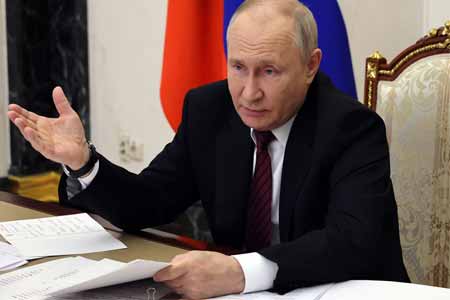 Putin: Armenia`s recognition of Karabakh as part of Azerbaijan in Prague has given Russia`s position on this issue an ambivalent character
 Putin: Armenia`s adoption of the law on EU accession means an announcement of its withdrawal from the Eurasian Economic Union