


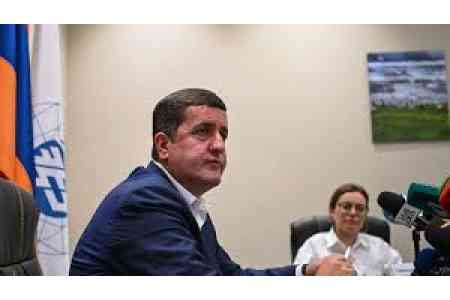
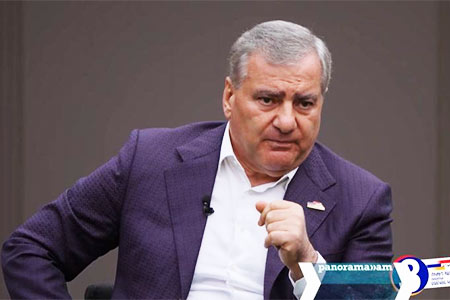
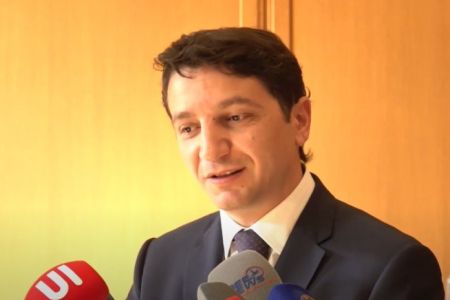
ArmInfo. Armenian authorities are planning to reduce electricity tariffs at the end of this year or early next year. However, they will do so in their own name, claiming credit for the process, in order to gain political dividends. David Ghazinyan, former head of the Electric Networks of Armenia (ENA) company, shared his viewpoint during a press conference on November 3.
The former head of ENA recalled that the first application for a tariff reduction was submitted to the Public Services Regulatory Commission (PSRC) on June 6, given that there was a positive balance of 3.6 billion drams due to the fact that relatively cheap electricity was being supplied to the system in larger quantities than expected. The PSRC's response, received on June 13, stated that the tariff would only be revised by the end of the year.
However, following Tashir Capital's corresponding statement, one of the PSRC's executives shared "obviously false information" on PTV, claiming that the company had allegedly requested a tariff reduction on one hand and an increase on the other, due to the proposed investment of 12 billion drams, Ghazinyan continued. To refute this claim, the former head of the ENA previously shared an audio recording of a PSRC meeting online, obtained legally.
"Duringt this meeting, Tashir Group requested permission to increase investment in line construction and cable repairs by 12 billion drams this year. Reimbursement of expenses was supposed to be deferred for 30 years, and if not, the company was prepared to make the investment using its profits," he said. Ghazinyan mentioned the Regulator's statement that Tashir's application only required a 0.2 dram per kilowatt-hour reduction another "lie." "This is another lie for the simple reason that the 3.6 billion dram surplus was formed over less than six months; that is, they took the entire year's generation and divided it by the profit earned over the first six months. However, even in this case, the surplus would have been more than 1 dram, but considering that in 2025, as of today, the population's electricity consumption was 1.6 billion kWh, the indicated 3.6 billion dram would have increased to 7.2 billion dram. That is, dividing these 7.2 billion dram by 1.6 billion kWh would have resulted in a figure within which the tariff for the population could be reduced," Ghazinyan clarified.
David Ghazinyan believes that the Public Regulatory Commission of Armenia is currently completely devoid of independence and operates under the dictates of the authorities, and the Regulator will only reduce tariffs when given the appropriate order "from above." The Armenian authorities will do this in a way that avoids mentioning the name "Tashir Capital" or Samvel Karapetyan, but "attributes credit to themselves and their good work." However, the plan failed because Tashir preempted these actions, Ghazinyan added. Thus, on October 31, the application for a tariff reduction from the owner of Electric Networks of Armenia CJSC was resubmitted to the Public Regulatory Commission of Armenia, and Tashir Capital CEO Narek Karapetyan announced on social media that it was possible to reduce the tariff for the population by 3 drams.
Additionally, the former head of the ENA noted that for the years 2023-2025, as a result of the liberalization of Armenia's energy market (where large consumers purchase kWh from traders, while ENA is only responsible for transportation), 30 billion drams were taken out of the country's energy system. Without this factor, the tariff could have potentially be lowered by up to 5 drams per kilowatt-hour, and electricity for the socially disadvantaged could have been made practically free, David Ghazinyan assured.


























 Present-day geopolitical competition shifts from territorial control to infrastructure flows
 Expert: Public participation in decision-making essential for sustainable urban development
  Politician: Statement by Armenia`s third president may deprive opposition of only political basis for ousting Pashinyan
 RA Security Council Sec, Assistant to President of Azerbaijan hold negotiations in Dilijan
 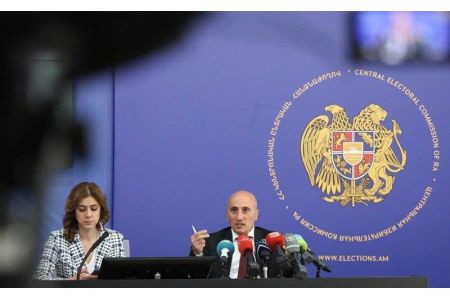 CEC Neutralizes PAP: Three Political Forces to Enter Armenian Parliament Following Election Vote
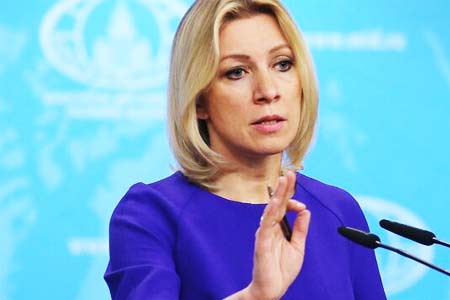 Elections in Armenia were accompanied by unprecedented pressure on opposition, RF MFA spokesperson claims
 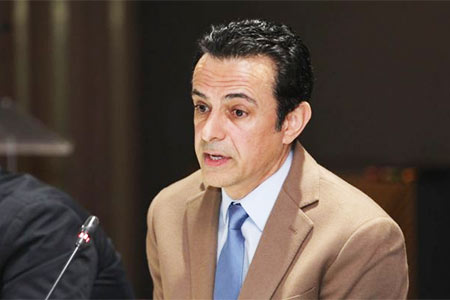 Expert: Even OSCE observers recorded numerous violations during elections in Armenia
  Moscow to await official results of Armenian elections - Peskov
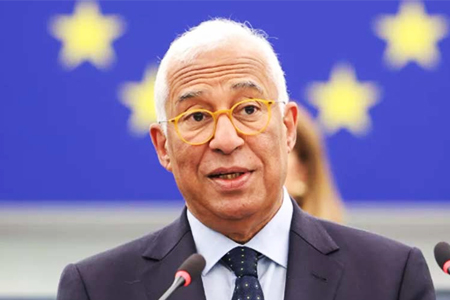 Antonio Costa: EU to deepen its partnership with Armenia, expanding cooperation in energy, trade, and digitalization
 Israeli MFA congratulates Pashinyan
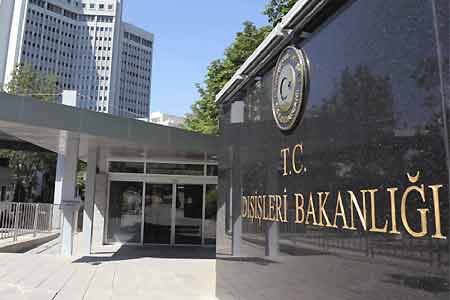 Turkish MFA comments on results of Armenian elections
 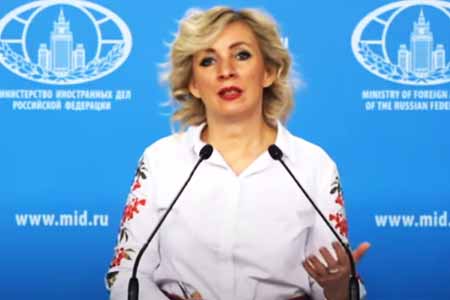 Zakharova: International observers cannot ignore `flagrant violations` in Armenian elections
 Russian Senator: Opposition complaints regarding election violations by ruling party remain unanswered
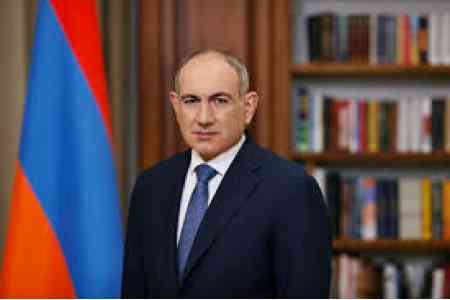 RA premier receiving congratulations on his victory in parliamentary elections
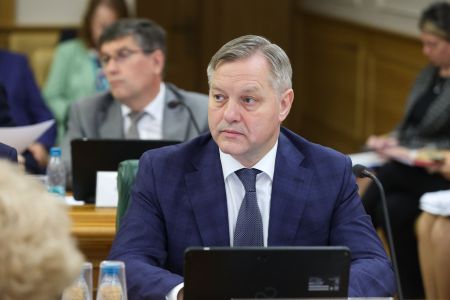 Head of IPA CIS Council Secretariat: Extremely difficult atmosphere during parliamentary elections campaign in Armenia accompanied by mass arrests
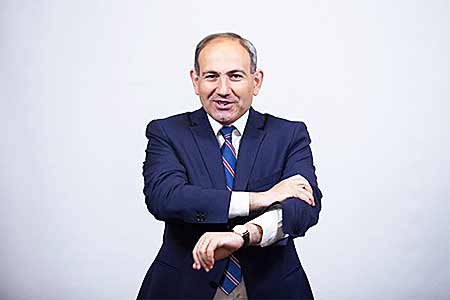 Pashinyan`s party leads with 51.13% based on vote counts from 533 polling stations