

ArmInfo.The "Preventing Escalation and Advancing Caucasus Engagement Act " (Peace Act), proposed by US House Foreign Affairs Committee Vice Chairman Darrell Issa, is unnecessary, unenforceable, and limited in scope, as stated by Alex Galitsky, Political Director of the Armenian National Committee of America (ANCA).
According to the ARF Dashnaktsutyun press service, he explained that sanctions would only be applied in the event of "new aggression" against Armenia, ignoring Azerbaijan's continued occupation of sovereign Armenian territories, the abduction and abuse of Armenian prisoners, the destruction of Armenian cultural heritage and property, and the right of Artsakh Armenians to return to their homes in safety and dignity.
As a result, as the ANCA Political Director noted, the "Law of Peace" sets an extremely low standard for Azerbaijan's accountability, supposedly "preventing" only "new aggression," but justifying and normalizing Azerbaijan's ongoing human rights violations and occupation of Armenian territories. " Even if an individual or country meets the criteria for sanctions, the president is not required to apply them. In addition, most sanctions (including the Peace Act) grant the president broad discretion to bypass sanctions if circumvention is deemed "in the national security interests of the United States." This rationale has been used by successive administrations over the past two decades, including the Trump administration, to bypass restrictions on military assistance to Azerbaijan," the ANCA Political Director mentioned.
He further stated that the president already has the authority to impose sanctions on Azerbaijan. The Global Magnitsky sanctions allow the president to freeze the financial assets and deny entry to Azerbaijani officials responsible for human rights abuses. The European Union, the United Kingdom, Canada, and Australia have similar legislation, meaning that the imposition of U.S. sanctions could encourage their application in other countries. There are also tools aimed at Azerbaijan's energy sector, particularly in the context of its energy and security ties with Russia and Iran. Washington's failure to implement these existing mechanisms raises questions about whether the Peace Act, even if enacted, would ever be implemented.
Furthermore, as the ANCA Political Director noted, there are also instruments targeting Azerbaijan's energy sector, particularly in the context of its energy and security ties with Russia and Iran. In this context, he questioned whether the "Peace Bill" would ever be implemented if Washington is already failing to implement existing mechanisms.
" Washington's involvement in the Armenia-Azerbaijan peace process is largely driven by regional energy interests. This is evidenced by Trump's "Trump Route for International Peace" (TRIPP) initiative, which would grant the United States exclusive rights to develop and operate "unimpeded (transport) communication" through Syunik (connecting Turkey with Azerbaijan), the US-Azerbaijan Memorandum of Understanding to expand cooperation in the defense and energy sectors, as well as the agreement reached between ExxonMobil and SOCAR to increase American energy investments in Azerbaijan. Any claim that the administration will punish the very energy industry in which it is steadily expanding its investments is naive at best and deliberately misleading at worst.," the ANCA Political Director added. Thus, according to Galitsky, the bill's focus on preventing "new aggression" comes at the expense of ongoing human rights and security issues that remain unresolved in the bilateral peace process. He is confident that, in this context, Azerbaijan can simply avoid new escalations, but continue its violence against Armenian prisoners of war and continue its occupation of Armenian territories.
He expressed confidence that the bill serves the interests of the Armenian authorities. Specifically, Galitsky explained, it will help allay concerns about the lack of meaningful security guarantees for Armenia in the peace process, while simultaneously undermining efforts to ensure accountability and justice for human rights violations and ongoing aggression by Azerbaijan. In conclusion, he touched on the actions that the US Congress should actually take. "First and foremost, it should focus its efforts on implementing existing sanctions and accountability instruments to ensure real consequences for Azerbaijan's continued aggression. Specifically, Congress should tighten restrictions on US military aid to Azerbaijan and implement Global Magnitsky Sanctions.
On September 18, U.S. Congressmen Dina Titus and Gus Bilirakis introduced the bipartisan Azerbaijan Sanctions Review Act, requiring the Trump-Vance administration to review the applicability of sanctions under the Global Magnitsky Act to Azerbaijani officials responsible for war crimes, human rights abuses, and the continued unlawful detention of Armenian prisoners of war and civilian hostages.








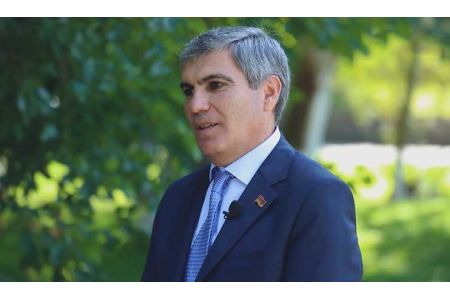
















 Expert: Current process is not about peace, but implementing Azerbaijan`s wishlist
 Expert: Real peace unattainable until Armenia-Azerbaijan agreement is signed and ratified
 TRIPP`s proximity to Iranian border could slow its implementation - expert
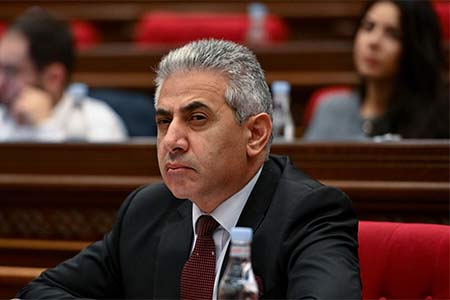
  Who and why is sacrificing RA National Security Service`s reputation? - expert
  Tehran creating security environment in which sustainable shipping in Strait of Hormuz difficult to imagine without its direct participation - expert
  Arrested Armenian oligarch on economy and new jobs
  NA Vice Speaker candidate believes his wife`s salary as director of HayPost is the lowest in the company`s history
 RF Permanent Representative: There is no CSTO-Armenia conflict
 Moscow: NATO seeking to "Pull" Armenia away from CSTO Allies
  Political analyst: Russia intends to determine which "Camp" Armenia will choose through a referendum
 Narek Karapetyan will give up his parliamentary salary in favor of charitable contributions.
 Armenian analyst: Developing relations with Europe and the U.S. must not jeopardize relations with regional powers
 Armenia and France discuss further development of strategic partnership and EU cooperation
  To overcome risks Armenia must reduce domestic escalation - expert
  Zatulin: Pashinyan was eager to get back to Russia because he actually lost the elections
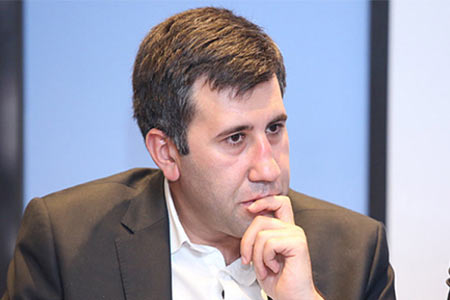 Human rights activist Ruben Melikyan dismissed from YSU
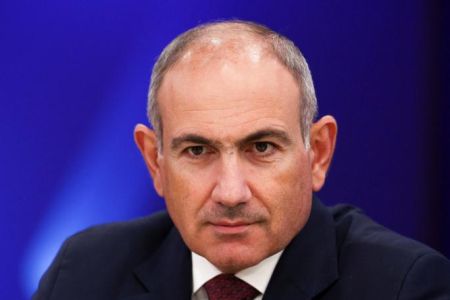 Pashinyan removed from INNOPROM guest list
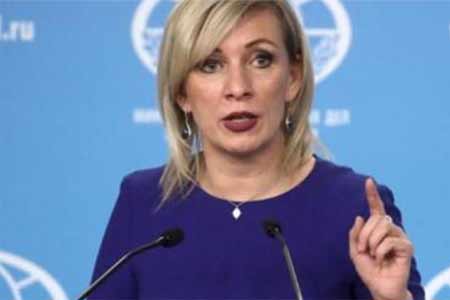 Zakharova: Armenia`s pro-EU pivot poses economic security risks to EAEU member states
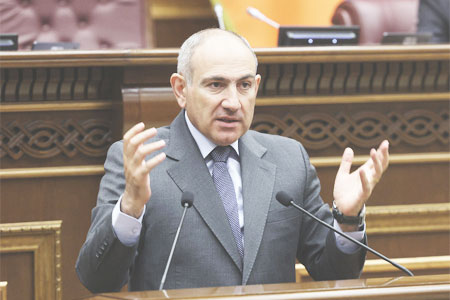 It`s time for South Caucasus countries to think of South Caucasus as single, unified region - RA premier
  Pashinyan: Armenia and Azerbaijan should leave each other alone