

ArmInfo. The United Nations Population Fund Armenia office officially launched the UNFPA Country Program for 2026-2030, aimed at promoting demographic resilience, gender equality, youth empowerment, and reproductive health in Armenia. This was reported by the UNFPA press service in Armenia.
At the opening ceremony, Armenian Deputy Foreign Minister Robert Abisogomonyan stated that official Yerevan attaches particular importance to the Armenian Demographic Strategy, developed with UNFPA support, which should become one of the key priorities for the next five years. "It is essential to ensure sufficient funding for the full and effective implementation of the program. We are confident that the support and cooperation of our partners will be crucial in overcoming our development challenges," he stated.
In turn, Klaus Beck, Deputy Director of the UNFPA Regional Office for Eastern Europe and Central Asia, noted that Armenia is at a crucial stage in its development. "The new program is a transformative path to strengthening demographic resilience and unlocking the potential of every person," he said.
UN Resident Coordinator in Armenia Francoise Jacob emphasized that "Armenia's future prosperity depends on investing in people, their health, education, and equal opportunities."
UNFPA Country Director for Armenia Lusine Sargsyan, presenting the achievements of the past five years, lessons learned, and strategic directions of the new program, noted: "This program is our shared commitment to promoting demographic stability and human capital development in Armenia to build an inclusive, healthy, and resilient country."
The new five-year program aims to improve systems and capacities, as well as enhance policies to ensure quality and accessible sexual and reproductive health services and prevent gender-based violence, as well as promote reproductive rights, gender equality, and youth empowerment.
The program also places special emphasis on supporting communities in promoting positive social norms and healthy lifestyles, as well as the use of demographic data and evidence-based policy in decision- making..










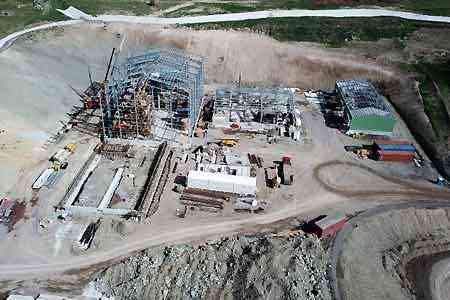


 Opinion: The development of the Amulsar mine near the resort town of Jermuk is the beginning of an environmental disaster in Armenia
 Expert: The arrest of opposition figures in Armenia for social media posts is a systematic attempt to intimidate the public and suppress dissent.
 The Artsakh Public Council expressed outrage at the UN Secretary-General`s behavior
 Lukashenko called for Armenia to assume the CIS presidency in 2029
 Dmitry Medvedev predicted a Ukrainian-like fate for Armenia amid the country`s shift in foreign policy
 Russian Security Council: In Armenia, they want to force Russian asset owners to dispose of their assets
 Zakharova: Russia ready to discuss with Armenia the prospects for expanding military cooperation as part of a review of bilateral ties
 Tevanyan: Armenia, like Ukraine and Moldova, is being drawn into the EU’s global war
 Yerevan City Hall is considering introducing a valet parking system in the city
 Expert: The circus surrounding the “Albanization” of Armenian culture in the presence of foreign ambassadors in occupied Artsakh is genocide
 Political scientist: If Russian-Armenian relations are destroyed, Turkey will take Russia`s place
 Political scientist: The Armenian public is simply obliged to significantly change the entire content of public discourse and struggle
 Cross tattoos are being removed from the skin of Christian prisoners in Azerbaijan by fire, according to a human rights activist.
 Zakharova: Armenia`s likely introduction of visas with Russia will be a step against Yerevan itself
 Putin: Armenia`s recognition of Karabakh as part of Azerbaijan in Prague has given Russia`s position on this issue an ambivalent character
 Putin: Armenia`s adoption of the law on EU accession means an announcement of its withdrawal from the Eurasian Economic Union