
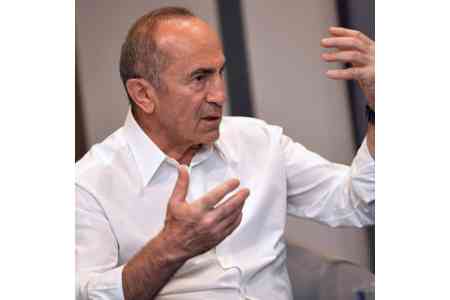
ArmInfo. During negotiations with the United States on the corridor, Armenia could have insisted on building not just a 42-kilometer railway section, but one four to five times longer-all the way to Yeraskh. This was stated by Robert Kocharyan, the second president of the Republic of Armenia, at a press conference on October 7.
On August 8, Armenia and Azerbaijan initialed a draft peace treaty in Washington, D.C., with US mediation. Following this, Yerevan and Baku submitted a joint statement abolishing the OSCE Minsk Group, mandated to resolve the Nagorno-Karabakh conflict. Independent Armenian experts criticized this document, calling it an act of capitulation and evidence of further concessions by the Armenian authorities, including on the issue of providing a corridor through southern Armenia.
According to the former president, in this case, the United States would bear responsibility for the smooth operation of this railway.
"Would this have been easy to achieve? Yes, it would have been, since the US benefit here is more than obvious. Especially since Trump loves impressive, large-scale projects. In that case, Armenia would truly have become a crossroads of the world. Against this backdrop, Aliyev would have been forced to either seek new paths or abandon his plans. The backdrop at the White House meeting would have been the President of Azerbaijan, not the Prime Minister of Armenia. Why didn't Nikol Pashinyan do this? Because he wasn't thinking about Armenia at all. He was more focused on the photograph he'd been given in Washington, which could have been actively used to resolve domestic political issues. I also have a photograph with US President Bill Clinton, signed by the latter, taken in the White House, but I didn't give anything for it," the second President of Armenia emphasized, adding that the photograph with Trump given to Pashinyan was nothing more than a formality.
The second option, as Robert Kocharyan noted, would involve building the road independently, without US participation. The road could remain under its current name, the "Trump Route," but control over it would remain with the Republic of Armenia. "We will try to understand the cost of this road for our country in the future," the former president of the Republic of Armenia said.
He pointed to the prevailing opinion about the potential for energy supplies from Central Asian countries to Europe via the planned route. The question is what energy resources are we talking about, given that Turkmenistan sells virtually all of its gas to China, and that country simply does not have excess capacity. The situation is developing similarly with oil, which is shipped to the Russian port of Novorossiysk, from where it enters the European market. The Baku-Ceyhan oil pipeline is approximately 70% operational.
Overall, according to Robert Kocharyan, the "Trump Route" is primarily of interest to Turkey for achieving its geopolitical goals.
This route will allow Ankara to establish direct communication with Azerbaijan and Central Asia, and Baku to restore communications with Nakhichevan.
But most importantly, according to the former president, none of the documents signed in the US provide any guarantees for Armenia's security, nor are there any willing guarantors. These documents contain no mechanisms for responding to situations in which their terms are violated. Essentially, the "peace" declared in Armenia depends on one person, who could have a bad dream one day and resolve the Zangezur issue the next, given the current global geopolitical situation.










 Expert: The arrest of opposition figures in Armenia for social media posts is a systematic attempt to intimidate the public and suppress dissent.
 Azerbaijani Studies Expert: While Azerbaijan Prepares Its Generation for War, Aliyev’s Aide Calls on Armenia to Prepare Armenian Society for “Peace”
 Turkologist: Azerbaijan will never, under any circumstances, stop pressuring the Armenian people
 Political scientist: We need to move away from the question of "when" and replace it with more important questions
 Lukashenko called for Armenia to assume the CIS presidency in 2029
 Dmitry Medvedev predicted a Ukrainian-like fate for Armenia amid the country`s shift in foreign policy
 Russian Security Council: In Armenia, they want to force Russian asset owners to dispose of their assets
 Zakharova: Russia ready to discuss with Armenia the prospects for expanding military cooperation as part of a review of bilateral ties
 Tevanyan: Armenia, like Ukraine and Moldova, is being drawn into the EU’s global war
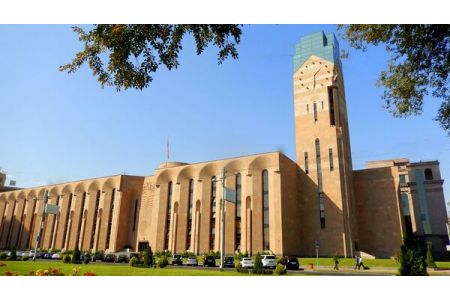 Yerevan City Hall is considering introducing a valet parking system in the city
 Expert: The circus surrounding the “Albanization” of Armenian culture in the presence of foreign ambassadors in occupied Artsakh is genocide
 Political scientist: If Russian-Armenian relations are destroyed, Turkey will take Russia`s place
 Political scientist: The Armenian public is simply obliged to significantly change the entire content of public discourse and struggle
 Cross tattoos are being removed from the skin of Christian prisoners in Azerbaijan by fire, according to a human rights activist.
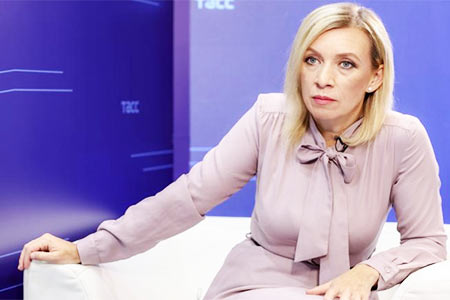 Zakharova: Armenia`s likely introduction of visas with Russia will be a step against Yerevan itself
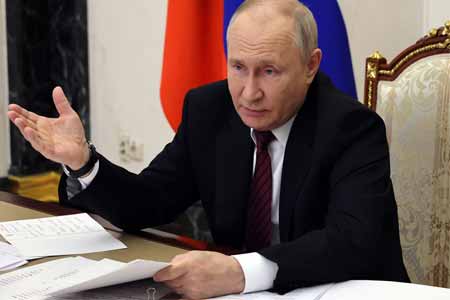 Putin: Armenia`s recognition of Karabakh as part of Azerbaijan in Prague has given Russia`s position on this issue an ambivalent character
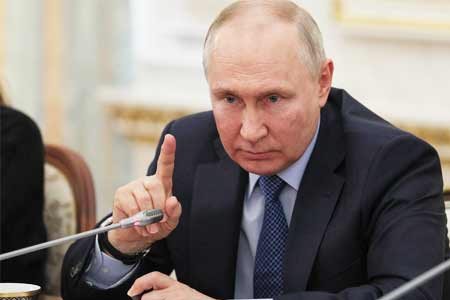 Putin: Armenia`s adoption of the law on EU accession means an announcement of its withdrawal from the Eurasian Economic Union