

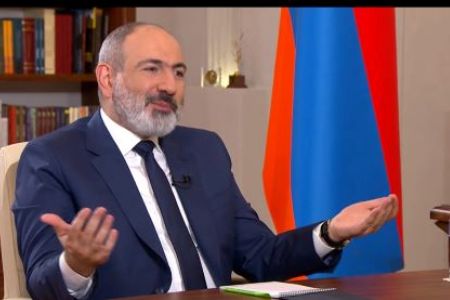
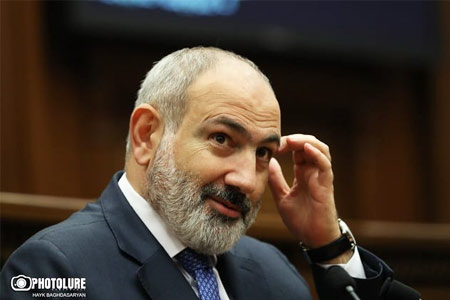
ArmInfo. Perhaps we need to rebrand our symbols. Prime Minister Nikol Pashinyan stated this during a meeting with representatives of IT companies in Engineering City.
"As what? As a symbol of what are we evaluating Baghramyan? This is also very important, since someone might say, 'Babajanyan was involved in something in Hungary, I don't know.' We must put him in the right place, what we value him for-his path, his talent, or whether we consider him a manifestation of our people's military talent. Because if someone says they value him as a member of the Soviet Union party or something, there might be a short circuit.
So, creating a heroic image is also important-what is Baghramyan a symbol of for us? "Because we accepted him according to the Soviet Union formula, but, pardon the word, we didn't adapt him to the independent Republic of Armenia, and because of this, people might say, 'What's so Soviet and expansionist about this?'"
The question isn't about replacing Baghramyan, but about formalizing why he is a hero to us, since we continue to consider him a hero out of inertia, within the framework of the formula that existed during the Soviet Union," Nikol Pashinyan said.
Hovhannes Khristoforovich Baghramyan (1897-1982) - Soviet commander and statesman, Marshal of the Soviet Union (1955), twice Hero of the Soviet Union (1944, 1977). Deputy Minister of Defense of the USSR (1955-1956, 1958-1968). He was born to an Armenian family in the village of Chardakhlu (Northern Artsakh) in the Elizavetpol Governorate of the Russian Empire.
Amazasp Khachaturovich Babajanyan (1906-1977) was a Soviet military commander, Hero of the Soviet Union, and Chief Marshal of the Armored Forces. He was born on February 18, 1906, in Chardakhlu (Northern Artsakh) to an Armenian peasant family. Babajanyan famously said, "Allow me to take back Western Armenia!" He participated in the suppression of anti-Soviet uprisings in Hungary, for which he was awarded the Order of Kutuzov, 1st Class.






 Expert: Economic pressure on Armenia may be virtually painless for other EAEU members, but not for Armenia itself
 Expert on protests in France: Civilizations fade when society loses a vision of the future
 Turkologist: Azerbaijan is not all-powerful—its vulnerabilities should become part of Armenia’s security strategy
 Opinion: The development of the Amulsar mine near the resort town of Jermuk is the beginning of an environmental disaster in Armenia
 Expert: The arrest of opposition figures in Armenia for social media posts is a systematic attempt to intimidate the public and suppress dissent.
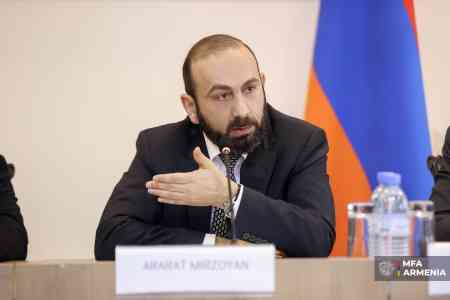 The Armenian Foreign Minister commented on the country`s return to work within the CSTO.
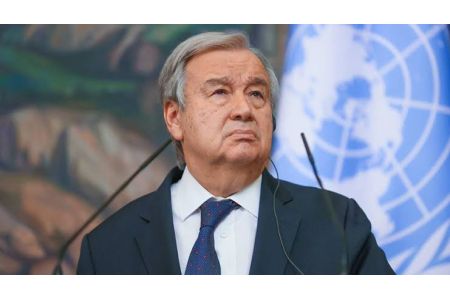 The Artsakh Public Council expressed outrage at the UN Secretary-General`s behavior
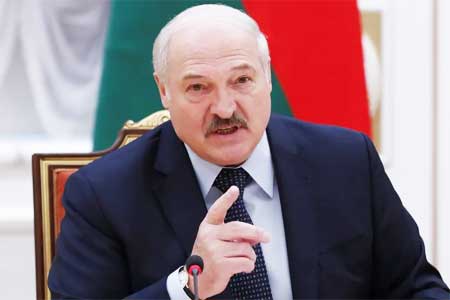 Lukashenko called for Armenia to assume the CIS presidency in 2029
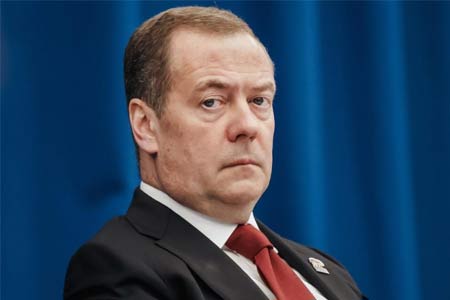 Dmitry Medvedev predicted a Ukrainian-like fate for Armenia amid the country`s shift in foreign policy
 Russian Security Council: In Armenia, they want to force Russian asset owners to dispose of their assets
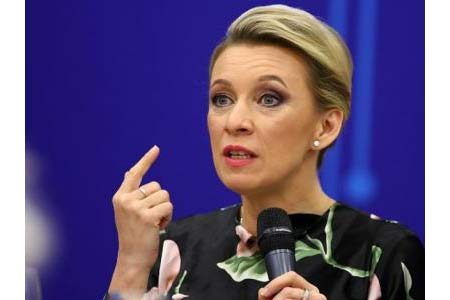 Zakharova: Russia ready to discuss with Armenia the prospects for expanding military cooperation as part of a review of bilateral ties
 Tevanyan: Armenia, like Ukraine and Moldova, is being drawn into the EU’s global war
 Yerevan City Hall is considering introducing a valet parking system in the city
 Expert: The circus surrounding the “Albanization” of Armenian culture in the presence of foreign ambassadors in occupied Artsakh is genocide
 Political scientist: If Russian-Armenian relations are destroyed, Turkey will take Russia`s place
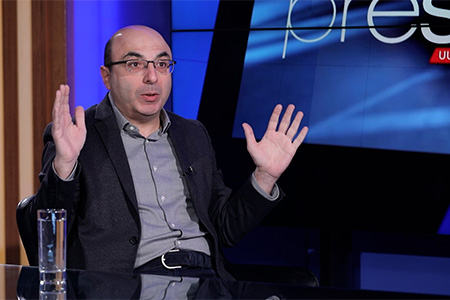 Political scientist: The Armenian public is simply obliged to significantly change the entire content of public discourse and struggle
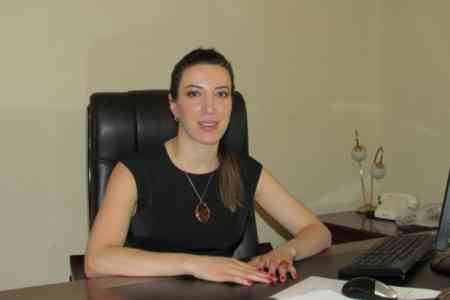 Cross tattoos are being removed from the skin of Christian prisoners in Azerbaijan by fire, according to a human rights activist.
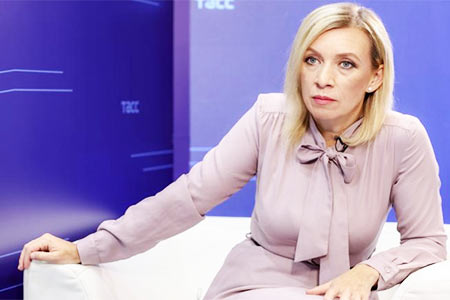 Zakharova: Armenia`s likely introduction of visas with Russia will be a step against Yerevan itself
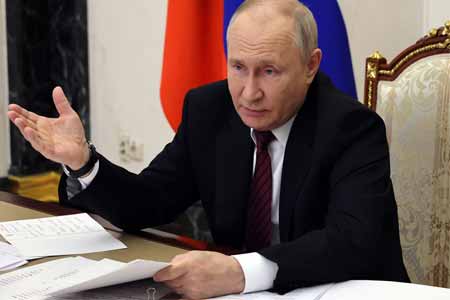 Putin: Armenia`s recognition of Karabakh as part of Azerbaijan in Prague has given Russia`s position on this issue an ambivalent character
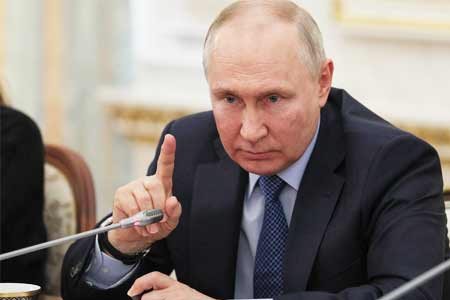 Putin: Armenia`s adoption of the law on EU accession means an announcement of its withdrawal from the Eurasian Economic Union
