

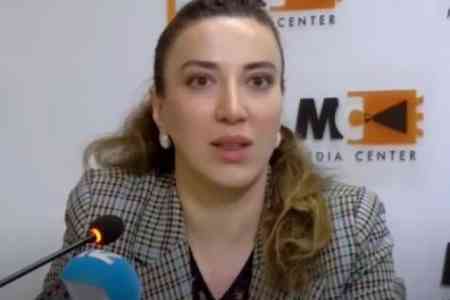
ArmInfo.The issue of the return of Armenian prisoners of war held in Baku must be resolved before the signing of a peace treaty between Armenia and Azerbaijan, as peace cannot be ensured without a resolution to humanitarian issues. This was stated by Siranush Sahakyan, director of the Center for International Comparative Law, during a discussion on the rights of Armenian prisoners of war held in Baku.
The human rights activist recalled that, according to official data, there are currently 23 prisoners of war in Azerbaijan, eight of whom are members of the military-political leadership of Artsakh, and five were taken hostage in 2020. "This means that Azerbaijan is currently illegally holding both Armenian prisoners taken during the 44-day war of 2020 and during the forced displacement of the Artsakh population in 2023," the human rights activist explained.
She also noted that among them are several dozen people considered forcibly disappeared. According to Sahakyan, the latest data puts their number at approximately 80, but she noted that the number could be much higher. In this regard, Sahakyan regretfully noted that the lack of an independent international organization essentially deprives the Armenian side of the opportunity to learn about the fate of prisoners, as well as any deaths. "That is, all information regarding prisoners is one-sided and incomplete. Moreover, it is unverifiable. Currently, we have information that the European Committee for the Prevention of Torture (CPT) visited Azerbaijan. We do not deny that members of their organization visited, including Armenian prisoners of war, but at this time I will refrain from providing further information on this matter. We will return to this during the next meeting and provide some details," the human rights activist assured.
Regarding Azerbaijan's demand to withdraw its claims from international courts, Sahakyan noted that this sends a clear message: "Any legal action against Azerbaijan threatens their security, as it neutralizes that country's aggressive policy." In this vein, she lamented that the Republic of Armenia, represented by the Armenian authorities, is about to abandon the only effective mechanism for protecting its legitimate interests-the legal one. "In other words, we are about to abandon the field in which we were victorious and return to where we were previously, so to speak, beaten," Sahakyan noted. In this vein, she stated that the Armenian public needs to understand that the country is dealing with a society in which the concepts of hero and criminal are perceived very differently.
Yeghishe Kirakosyan, head of the YSU Master's program in International Courts and Arbitration, also noted the risks if Armenia withdraws its international claims. He noted that, given the illegal trials being conducted in Azerbaijan, the rejection of international legal mechanisms could lead to all trials involving Armenian prisoners of war becoming one-sided. "That is, even if trials in international courts have not yet yielded any results, we must understand that they are necessary, if only to balance the situation. This is especially important from the perspective of a state that has lost the war," Kirakosyan explained. He also emphasized that a court ruling regarding Azerbaijan's crimes is not enough. He emphasized that lobbying by the Armenian side to implement these rulings is crucial.
In conclusion, Kirakosyan expressed his conviction that peace is impossible until humanitarian issues are resolved, recalling that this principle is also reflected in the Geneva Conventions. "Humanitarian issues are a component of establishing peace, and legal processes in this sense allow us to demonstrate that the parties are ready for real peace," the human rights activist concluded.
As a reminder, 23 Armenians are currently being held in Azerbaijani prisons, including 16 individuals captured following Azerbaijan's military attack on Artsakh on September 19, 2023. Among the captives are eight former Artsakh officials: former presidents Arkady Ghukasyan, Bako Sahakyan, and Arayik Harutyunyan; parliament speaker David Ishkhanyan; former state minister Ruben Vardanyan; former commander of the Defense Army Levon Mnatsakanyan; former deputy commander David Manukyan; and former foreign minister David Babayan.









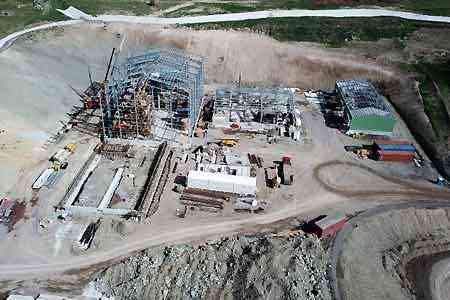




 Opinion: The development of the Amulsar mine near the resort town of Jermuk is the beginning of an environmental disaster in Armenia
 Expert: The arrest of opposition figures in Armenia for social media posts is a systematic attempt to intimidate the public and suppress dissent.
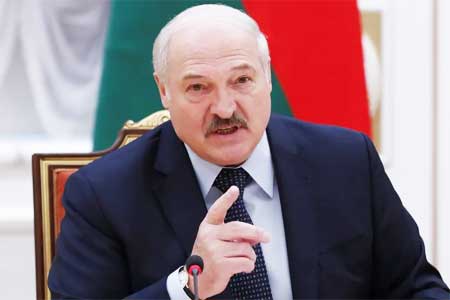 Lukashenko called for Armenia to assume the CIS presidency in 2029
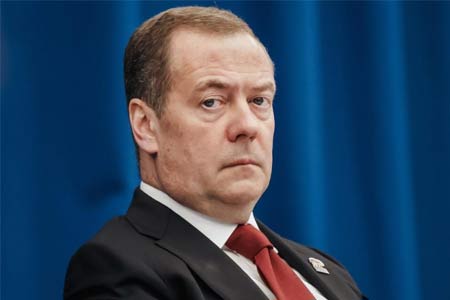 Dmitry Medvedev predicted a Ukrainian-like fate for Armenia amid the country`s shift in foreign policy
 Russian Security Council: In Armenia, they want to force Russian asset owners to dispose of their assets
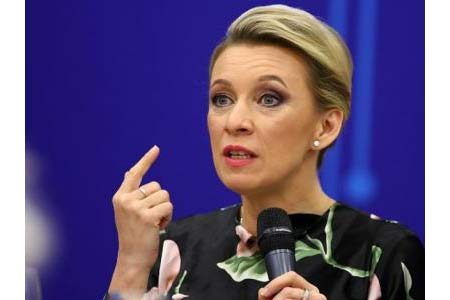 Zakharova: Russia ready to discuss with Armenia the prospects for expanding military cooperation as part of a review of bilateral ties
 Tevanyan: Armenia, like Ukraine and Moldova, is being drawn into the EU’s global war
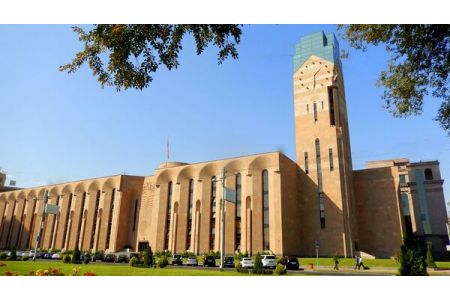 Yerevan City Hall is considering introducing a valet parking system in the city
 Expert: The circus surrounding the “Albanization” of Armenian culture in the presence of foreign ambassadors in occupied Artsakh is genocide
 Political scientist: If Russian-Armenian relations are destroyed, Turkey will take Russia`s place
 Political scientist: The Armenian public is simply obliged to significantly change the entire content of public discourse and struggle
 Cross tattoos are being removed from the skin of Christian prisoners in Azerbaijan by fire, according to a human rights activist.
 Zakharova: Armenia`s likely introduction of visas with Russia will be a step against Yerevan itself
 Putin: Armenia`s recognition of Karabakh as part of Azerbaijan in Prague has given Russia`s position on this issue an ambivalent character
 Putin: Armenia`s adoption of the law on EU accession means an announcement of its withdrawal from the Eurasian Economic Union
