


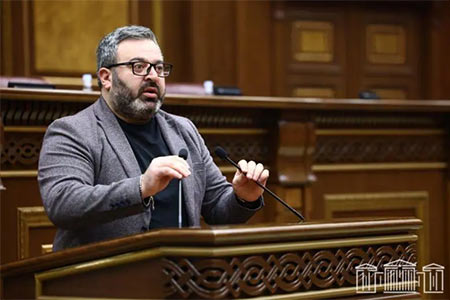
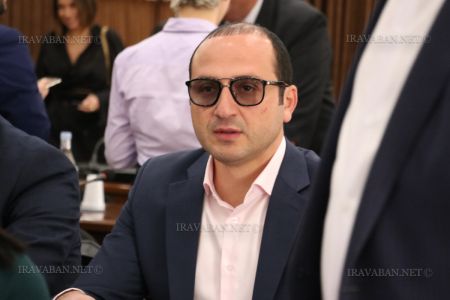
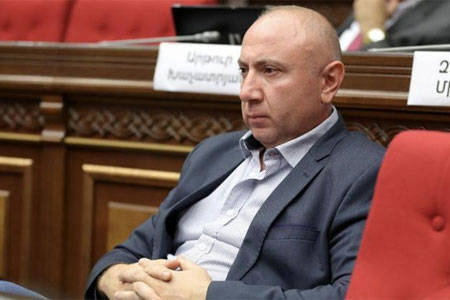
ArmInfo. The servers of the National Assembly of the Republic of Armenia are a "public thoroughfare." Gegham Manukyan, a member of parliament from the opposition "Armenia" faction, stated this at the NA plenary session on October 1, commenting on the draft law "On Cybersecurity," submitted by the RA government in its first reading.
The MP recalled that video cameras are installed in the corridors of the NA, recording every movement of parliamentarians. The data from the cameras is transmitted to the parliament's servers. In this regard, Manukyan recalled the case of NA MP Mher Sahakyan, whose incident was directed at the main server, which was allegedly hacked. Just three hours later, Manukyan continued, this incident appeared on one of the websites. The MP emphasized that in the past, the Personal Data Protection Agency would immediately take appropriate action in such cases, but recently, very little attention has been paid to the Agency's activities, and even the Ministry of Internal Affairs ignores his data.
The opposition leader also noted that similar video cameras are installed at airports, which are also used by members of the National Assembly. The servers at the airports are monitored by the National Security Service. "And then suddenly a message appears on the same website that Gegham Manukyan has departed for Moscow. My hair isn't turning gray, but I've spent half my life constantly inquiring with the National Security Service, the State Security Service, and the National Assembly about how these videos appear on this website. The response is complete silence," Manukyan noted, recalling that the website in question is owned by Taron Chakhoyan, Deputy Chief of Staff to the Prime Minister of the Republic of Armenia.
The MP, emphasizing the importance of the document presented, pointed to the need to guarantee the security of citizens' personal data in order to prevent similar situations.
According to the draft law, a special autonomous body will be created in Armenia to combat cybercrime. Presenting the document, RA Minister of High-Tech Industry Mkhitar Haypapetyan noted that the package aims to create a legal framework for protecting information systems and critical infrastructure, including the energy, transport, and financial sectors, from cyber threats. The new state autonomous body will monitor, assess risks, and coordinate incident response measures. The scope of regulation covers relations related to the uninterrupted functioning of information systems and critical information infrastructures used to provide vital services; ensuring the availability, integrity, and confidentiality of processed, distributed, stored, and transmitted information; notification of cyber incidents, their prevention, and resolution; requirements for cybersecurity service providers; and overseeing compliance with the requirements of this law.
The bill clarifies the powers of the body developing state cybersecurity policy, represented by the Ministry of High-Tech Industry of the Republic of Armenia, and the body implementing cybersecurity policy, represented by an autonomous body, as well as other competent state bodies in this area. Adoption of the package will create a legal basis for developing a comprehensive state cybersecurity policy and action plan, inventorying and classifying cybersecurity challenges and risks, and principles for responding to cyber incidents, strengthening cybersecurity in emergency situations and under martial law, clarifying roles and responsibilities, planning and conducting cyber exercises, and implementing programs aimed at raising public awareness.
To ensure the security of the state information system, the autonomous body will be tasked with restricting the use of state information systems and the level of data exchange (x-road). These systems are created and developed using state budget funds, constitute critical infrastructure, contain a security component, and are aimed at providing the population with uninterrupted, secure, and high-quality services. To implement this function, the body must have clear legislative provisions and an enabling regulatory framework. It should be noted that, with the adoption of the bill, the total annual salary and social security costs, once the relevant positions and employees of the autonomous body are fully staffed, will amount to 4-6 billion drams. The cost calculations took into account the fact that the salaries of employees in professional units are high in the market, and these teams will comprise the bulk of the body's staff.












 Expert: Economic pressure on Armenia may be virtually painless for other EAEU members, but not for Armenia itself
 Expert on protests in France: Civilizations fade when society loses a vision of the future
 Turkologist: Azerbaijan is not all-powerful—its vulnerabilities should become part of Armenia’s security strategy
 Opinion: The development of the Amulsar mine near the resort town of Jermuk is the beginning of an environmental disaster in Armenia
 Expert: The arrest of opposition figures in Armenia for social media posts is a systematic attempt to intimidate the public and suppress dissent.
 The Artsakh Public Council expressed outrage at the UN Secretary-General`s behavior
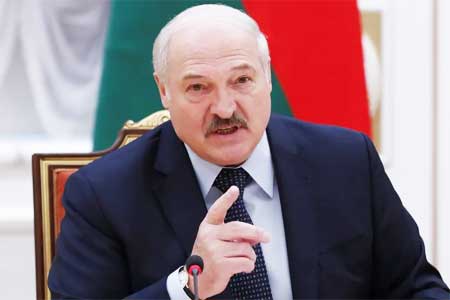 Lukashenko called for Armenia to assume the CIS presidency in 2029
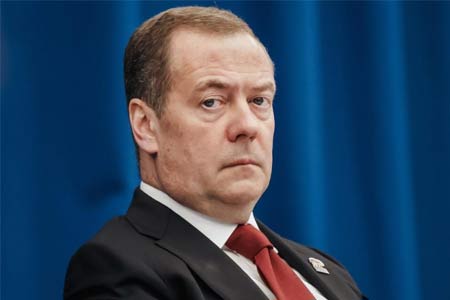 Dmitry Medvedev predicted a Ukrainian-like fate for Armenia amid the country`s shift in foreign policy
 Russian Security Council: In Armenia, they want to force Russian asset owners to dispose of their assets
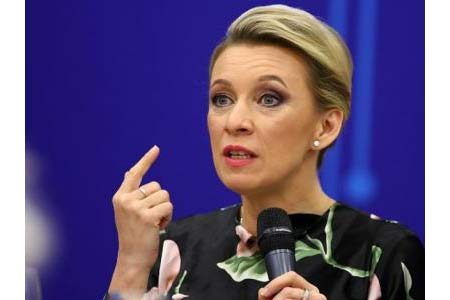 Zakharova: Russia ready to discuss with Armenia the prospects for expanding military cooperation as part of a review of bilateral ties
 Tevanyan: Armenia, like Ukraine and Moldova, is being drawn into the EU’s global war
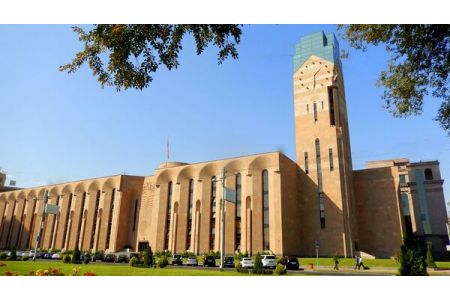 Yerevan City Hall is considering introducing a valet parking system in the city
 Expert: The circus surrounding the “Albanization” of Armenian culture in the presence of foreign ambassadors in occupied Artsakh is genocide
 Political scientist: If Russian-Armenian relations are destroyed, Turkey will take Russia`s place
 Political scientist: The Armenian public is simply obliged to significantly change the entire content of public discourse and struggle
 Cross tattoos are being removed from the skin of Christian prisoners in Azerbaijan by fire, according to a human rights activist.
 Zakharova: Armenia`s likely introduction of visas with Russia will be a step against Yerevan itself
 Putin: Armenia`s recognition of Karabakh as part of Azerbaijan in Prague has given Russia`s position on this issue an ambivalent character
 Putin: Armenia`s adoption of the law on EU accession means an announcement of its withdrawal from the Eurasian Economic Union
