

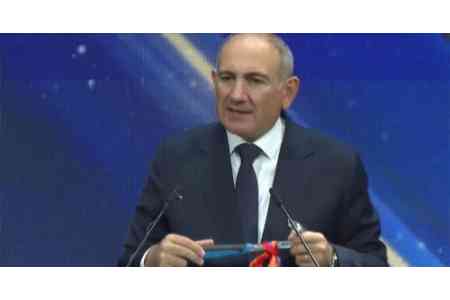
ArmInfo. At the 7th Congress of the ruling Civil Contract Party, Armenian Prime Minister Nikol Pashinyan explained why he declared in 2019: "Artsakh is Armenia, period."
"I cannot forget that in 2019, I declared: "Artsakh is Armenia, period." I have had reason to reflect on that statement, but I consider it necessary to supplement it. So why did I, who today experiences the joy of peace, make that statement in 2019? It must have a very specific reason and explanation. I made that statement for one simple reason - out of patriotism, because I was a patriot," he said.
Pashinyan wondered: "Am I not a patriot today?" "Of course I am a patriot. No more and no less. I am still the same patriot. So how can we resolve this dilemma? What is the cause of this glaring contradiction?" "The reason lies in the model of patriotism, the formula of patriotism, which I spoke about back in 2020," he continued.
Pashinyan believes that he is now a patriot who adheres to a model of patriotism "defined by Armenia's nurturing mothers."
"In 2019, I was a patriot who adhered to the only model of patriotism available in Armenia at the time. But who defined this model of patriotism, and how was it formed? This model was the model of patriotism defined by the Soviet Empire, or more precisely, by its leaders: Stalin, Khrushchev, and Brezhnev. We didn't even notice that before the emergence of a true Armenian ideology, the model of patriotism that existed in Armenia was largely based on books, songs, poems, works of art, and plays formed in the 1940s- 1980s." Our classics, of course, without a doubt, put in a lot of effort and formulated in these works many organic messages connected with the true aspirations, emotions and feelings of our people, but all of this, ultimately, whether we like it or not, whether we accept it or not, was contained in the Glavlits of the Soviet Union," he pointed out.
For the uninformed, Pashinyan explained, "Glavlit was an organization that censored all speeches, all newspaper publications, all books, paintings, films-all content-and everything that passed through this Glavlit purgatory was not published."
"Therefore, all those works on which our model of patriotism was formed, all these works and speeches, were formed under Glavlit conditions and, therefore, at least to some extent, expressed the empire's policies and were built around this axis.
That is why, in my address on the occasion of the 35th anniversary of the adoption of the Declaration of Independence, I wrote the following: "The model of patriotism that the Soviet Union formed for us, Armenians, expressed the southwestern orientation of the ambitions of the USSR, a state that had won World War II and entered into conflict with the North Atlantic Alliance," he said. This model, on the other hand, was intended to ensure the export of patriotic ideas that existed in the Armenian SSR beyond the republic's borders, preventing their local manifestation. This ideology was imposed for decades through books, films, plays, and theatrical productions, and it was precisely our social psychology, shaped in this way, that led to the Karabakh movement, Pashinyan continued.
"All of us, starting from me and going forward, were bearers of this social psychology. This social psychology, shaped by the USSR, was passed on to the generations that formed in the Republic of Armenia in the 1990s, and the deep, subconscious goal of this social psychology was the strategic impossibility of the existence of an independent state of Armenia, since a country in a conflict situation cannot build genuine independence.
Isn't it clear that organic patriotic impulses naturally existed in Armenia, and quite strong ones at that? The Soviet Union believed it was possible to combine business with pleasure. They said: "You are a patriot, very good, let's direct your patriotism outward, beyond the borders of the Armenian SSR, to the east, west, north, south." That's the whole story," the RA Prime Minister said.






 Political Scientist: As long as the opposition remains silent, Pashinyan can use Plan B and secure a constitutional majority
 US-Iranian memorandum more beneficial for Iran from political and economic perspective - expert
  Political analyst: While Pashinyan pledges peace with Azerbaijan, Baku continues promoting the "Western Azerbaijan" project
 Political analyst: In light of new realities, Yerevan may propose advancing peace process with Baku without constitutional referendum
 It`s time for South Caucasus countries to think of South Caucasus as single, unified region - RA premier
  Pashinyan: Armenia and Azerbaijan should leave each other alone
 Moscow sees situation with Armenia as attempt to attack Russia-involving integration associations - Russian presidential aid
 Zakharova: Armenia views relations with Russia as tool for financially securing reorientation toward EU
 The Armenian Minister of Justice and the EU Ambassador discussed visa liberalization issues for Yerevan.
 Azerbaijan`s aggressive plans against Armenia became possible in wake of Pashinyan`s decisions on Artsakh - expert
  Zakharova: Russia sent a note of protest to Armenia over the act of vandalism at the "Mother Armenia" memorial in Gyumri
 Samvel Karapetyan proposes creating a post-election opposition coalition
 Artsakh`s Cultural Heritage Ombudsman called on Moscow to respond to destruction of WWII monuments by Azerbaijan in occupied NKR
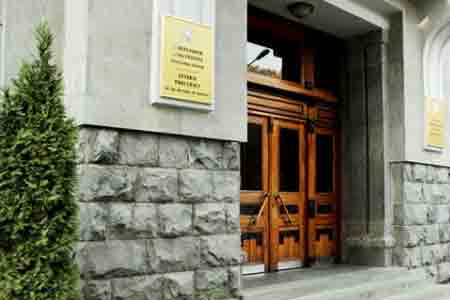 Prosecutor General`s Office petitions Central Electoral Commission for criminal prosecution of Robert Kocharyan
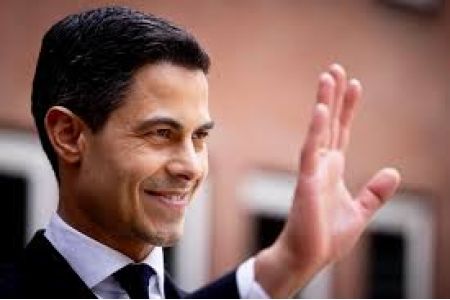 Dutch Prime Minister expresses his support for Armenia`s democratic reform and economic diversification agenda
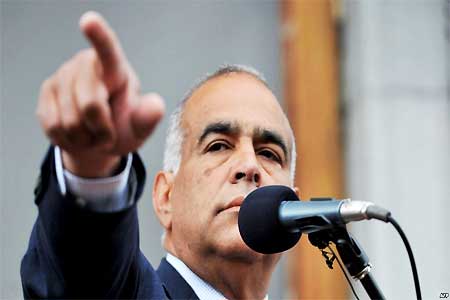 Heritage: It`s time for Armenia`s opposition to present people with legitimate alternative to power
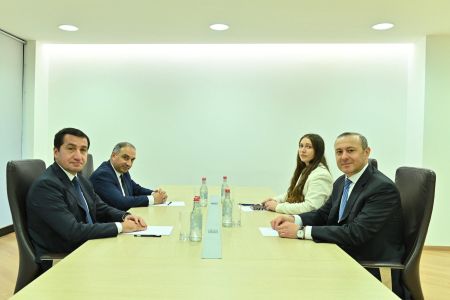 RA Security Council Sec, Assistant to President of Azerbaijan hold negotiations in Dilijan
  CEC Neutralizes PAP: Three Political Forces to Enter Armenian Parliament Following Election Vote
 Elections in Armenia were accompanied by unprecedented pressure on opposition, RF MFA spokesperson claims