

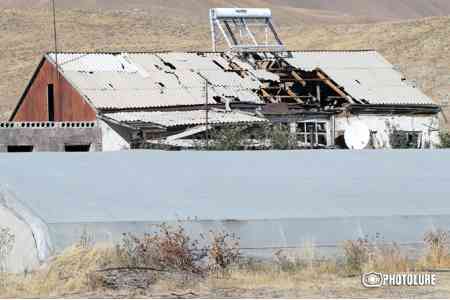
ArmInfo. Three years have passed since the September aggression by Azerbaijan against Armenia, resulting in the loss of 224 Armenian lives.
On the night of September 13, 2022, the Armed Forces of Azerbaijan began large-scale military operations on the border with Armenia using UAVs and large-caliber weapons. Armenia appealed to Russia, the CSTO and the UN Security Council in response to Azerbaijan's aggression against the sovereign territory of Armenia. During the two-day fighting, the Armenian side suffered the loss of 224 people, including women who were killed with particular cruelty. Azerbaijan confirmed the death of 80 of its servicemen.
The UN Security Council, at the suggestion of France, convened a special session on September 14-15 to address the situation on the Armenian-Azerbaijani border. Armenia called for a special session of the OSCE Council. Following the special session, the CSTO sent a mission to Armenia to prepare a report on the situation.
The Azerbaijani Armed Forces also attacked a Russian Border Guard Service post in the Gegharkunik region of Armenia. With the participation of the international community, a ceasefire agreement was reached along the entire Armenian-Azerbaijani border from 20:00 on September 14. On the evening of September 17, the Azerbaijani side returned the bodies of 32 Armenian soldiers who had lost their lives defending their homeland. It is worth noting that among them was David Gishyan, whose medical treatment by Azerbaijani soldiers was captured on camera. However, it was later revealed that they had ultimately killed the wounded soldier. Also, a video showing the brutal dismemberment of a female Armenian soldier by the Azerbaijani Armed Forces was circulated online. She was captured alive. And then she was raped and brutally murdered, with her body mutilated and violated. All this was posted with delight on the World Wide Web. These images make your blood run cold.
As a result of this enemy aggression, more than 240 square kilometers of Armenian sovereign territories were occupied in the Gegharkunik, Vayots Dzor and Syunik regions.












 Azerbaijani Studies Expert: While Azerbaijan Prepares Its Generation for War, Aliyev’s Aide Calls on Armenia to Prepare Armenian Society for “Peace”
 Turkologist: Azerbaijan will never, under any circumstances, stop pressuring the Armenian people
 Political scientist: We need to move away from the question of "when" and replace it with more important questions
 International Law Specialist: Azerbaijan intends to initiate legal proceedings against Armenia by sentencing Armenian prisoners
 Dmitry Medvedev predicted a Ukrainian-like fate for Armenia amid the country`s shift in foreign policy
 Russian Security Council: In Armenia, they want to force Russian asset owners to dispose of their assets
 Zakharova: Russia ready to discuss with Armenia the prospects for expanding military cooperation as part of a review of bilateral ties
 Tevanyan: Armenia, like Ukraine and Moldova, is being drawn into the EU’s global war
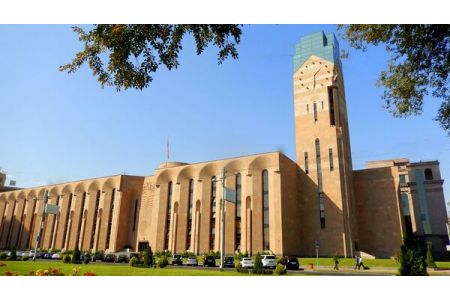 Yerevan City Hall is considering introducing a valet parking system in the city
 Expert: The circus surrounding the “Albanization” of Armenian culture in the presence of foreign ambassadors in occupied Artsakh is genocide
 Political scientist: If Russian-Armenian relations are destroyed, Turkey will take Russia`s place
 Political scientist: The Armenian public is simply obliged to significantly change the entire content of public discourse and struggle
 Cross tattoos are being removed from the skin of Christian prisoners in Azerbaijan by fire, according to a human rights activist.
 Zakharova: Armenia`s likely introduction of visas with Russia will be a step against Yerevan itself
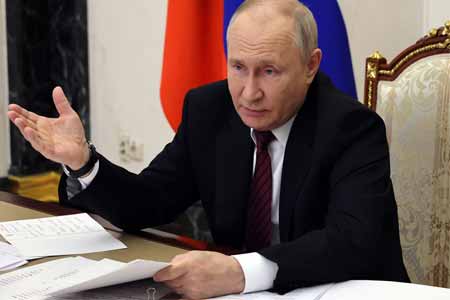 Putin: Armenia`s recognition of Karabakh as part of Azerbaijan in Prague has given Russia`s position on this issue an ambivalent character
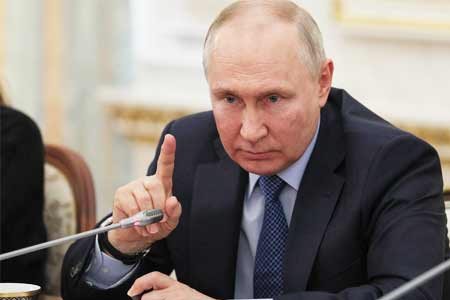 Putin: Armenia`s adoption of the law on EU accession means an announcement of its withdrawal from the Eurasian Economic Union
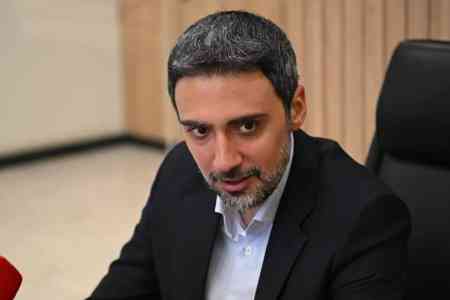 Aram Vardevanyan: Public demands solutions, not apology scandals in Parliament
 Arrested Armenian oligarch on economy and new jobs