
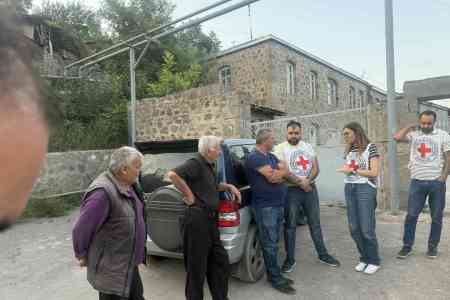
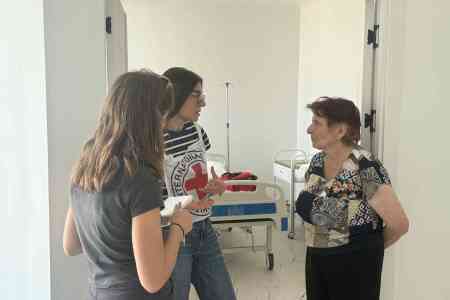
ArmInfo. The International Committee of the Red Cross (ICRC) is assisting residents of border communities in the Syunik region in adapting to the new realities that emerged after the 44-day war around Artsakh and the mass exodus of the Armenian population in the fall of 2023. The target program also includes residents of Artsakh who were left homeless as a result of forced displacement. The organization is implementing long-term projects to improve the living conditions of residents in border villages, thereby preventing their migration. For example, in the Aravus community, the ICRC built a first aid post, as it was difficult for the villagers to receive basic medical care. The village is located near the newly formed Armenian-Azerbaijani border.
Another support program implemented by the ICRC is assistance in helping individuals establish their own apiary. Thus, 50 families from Nagorno-Karabakh, who were forcibly deported, were given the opportunity to establish themselves in Armenia and solve their pressing issues through beekeeping. The organization provided each family with 4 hives with bees to kickstart their business, along with all the necessary equipment and training courses. Furthermore, the ICRC provided assistance in improving the irrigation of fields in Khnatsakh. The beneficiaries of the program were 70 families. About 80 ha of fields belonging to the community were cultivated. These lands had not been cultivated for the last 35 years due to a lack of the heavy machinery needed to plow the rocky terrain
 The head of the Khnatsakh administration, Seyran Mirzoyan, told journalists who were visiting the village as part of a press tour organized by the Yerevan delegation of the ICRC that the communal land is rocky, making it is difficult for villagers to cultivate. He also mentioned that there is a water shortage issue. All this increases unemployment and a population outflow. "They are leaving primarily due to the lack of jobs. This can be addressed by creating small enterprises. We have proposed ideas many times, but no one has listened to us yet. One of the options is to open a sewing workshop, which could provide jobs for 15-20 families. There are many ideas such as greenhouses and smart farms, but the main obstacle is the water problem. Once the water issue is resolved, we can move on," Mirzoyan noted.












 Azerbaijani Studies Expert: While Azerbaijan Prepares Its Generation for War, Aliyev’s Aide Calls on Armenia to Prepare Armenian Society for “Peace”
 Turkologist: Azerbaijan will never, under any circumstances, stop pressuring the Armenian people
 Political scientist: We need to move away from the question of "when" and replace it with more important questions
 International Law Specialist: Azerbaijan intends to initiate legal proceedings against Armenia by sentencing Armenian prisoners
 Dmitry Medvedev predicted a Ukrainian-like fate for Armenia amid the country`s shift in foreign policy
 Russian Security Council: In Armenia, they want to force Russian asset owners to dispose of their assets
 Zakharova: Russia ready to discuss with Armenia the prospects for expanding military cooperation as part of a review of bilateral ties
 Tevanyan: Armenia, like Ukraine and Moldova, is being drawn into the EU’s global war
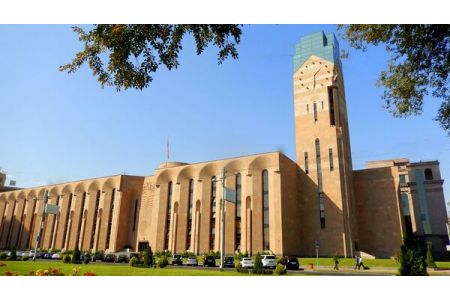 Yerevan City Hall is considering introducing a valet parking system in the city
 Expert: The circus surrounding the “Albanization” of Armenian culture in the presence of foreign ambassadors in occupied Artsakh is genocide
 Political scientist: If Russian-Armenian relations are destroyed, Turkey will take Russia`s place
 Political scientist: The Armenian public is simply obliged to significantly change the entire content of public discourse and struggle
 Cross tattoos are being removed from the skin of Christian prisoners in Azerbaijan by fire, according to a human rights activist.
 Zakharova: Armenia`s likely introduction of visas with Russia will be a step against Yerevan itself
 Putin: Armenia`s recognition of Karabakh as part of Azerbaijan in Prague has given Russia`s position on this issue an ambivalent character
 Putin: Armenia`s adoption of the law on EU accession means an announcement of its withdrawal from the Eurasian Economic Union
 Aram Vardevanyan: Public demands solutions, not apology scandals in Parliament
 Arrested Armenian oligarch on economy and new jobs