
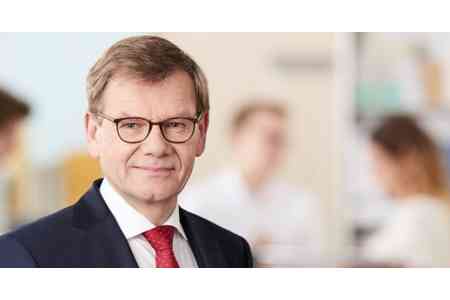
ArmInfo. Several international human rights organizations have issued a joint appeal to German Foreign Minister Johann Wadephul, calling on him to step up his efforts to promote a just peace process between Armenia and Azerbaijan. The appeal was signed by the Society for Threatened Peoples (STP), the Central Council of Armenians in Germany (ZAD), the Working Group Recognition - Against Genocide, for International Understanding (AGA), the International Society for Human Rights (ISHR), Christian Solidarity International (CSI) and the Stephanus Foundation for Persecuted Christians.
The agreement negotiated between the two states under US mediation has significant gaps. "True peace is not possible without protecting the rights and security of the Armenians who were violently expelled from Nagorno-Karabakh/Arzach. We therefore call on the German government, together with the European Union and its member states, to play an active and principled role in this crucial peace process,," the statement says. "Without clear words on the violent expulsion of over 100,000 Armenians from Nagorno-Karabakh by Azerbaijan in 2023 and a perspective for these people, there can be no lasting peace," warns Sarah Reinke, head of the human rights work at the STP.
In turn, Jonathan Spangenberg, Chairman of the Central Council of Armenians, demanded that Azerbaijan must immediately release the more than 23 Armenian civilians, prisoners of war, and former officials from Nagorno-Karabakh who are still being held in Azerbaijan. " The politically motivated trials against Armenian political leaders must be stopped!" he noted.
Tessa Hofmann, member of the working group Recognition - Against genocide, for International Understanding, pointed out that political repressions continue to intensify in Azerbaijan. " The work of non-governmental organizations is severely restricted. Around 200 people are being held as political prisoners. On June 20, 2025, eight journalists, including Bahruz Samadov, a political scientist studying for a doctorate in Prague, were sentenced to prison terms ranging from seven and a half to 15 years. His case is a prime example of the systematic criminalization of peace-oriented intellectuals," the human rights activist added.











 Armenian expert: Could modern Azerbaijan even exist without Russian and Soviet modernization?
 South Caucasus is entering a new phase of turbulence - ex-official
  Expert: Azerbaijan`s political leadership states `occupation of Armenia is their new national goal`
  Expert: Armenian society falls into security trap of totalitarianism
 Human rights activist Ruben Melikyan dismissed from YSU
 Zakharova: Armenia`s pro-EU pivot poses economic security risks to EAEU member states
 It`s time for South Caucasus countries to think of South Caucasus as single, unified region - RA premier
  Pashinyan: Armenia and Azerbaijan should leave each other alone
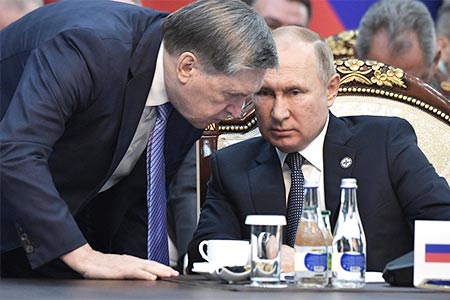 Moscow sees situation with Armenia as attempt to attack Russia-involving integration associations - Russian presidential aid
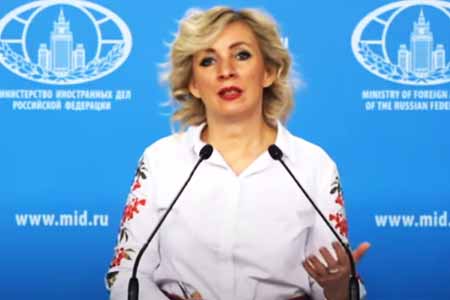 Zakharova: Armenia views relations with Russia as tool for financially securing reorientation toward EU
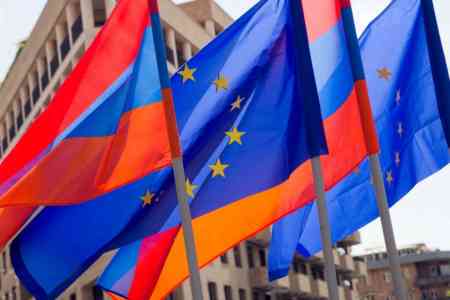 The Armenian Minister of Justice and the EU Ambassador discussed visa liberalization issues for Yerevan.
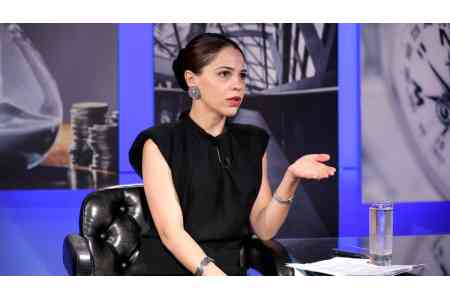 Azerbaijan`s aggressive plans against Armenia became possible in wake of Pashinyan`s decisions on Artsakh - expert
 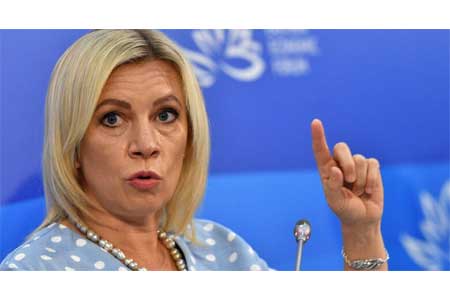 Zakharova: Russia sent a note of protest to Armenia over the act of vandalism at the "Mother Armenia" memorial in Gyumri
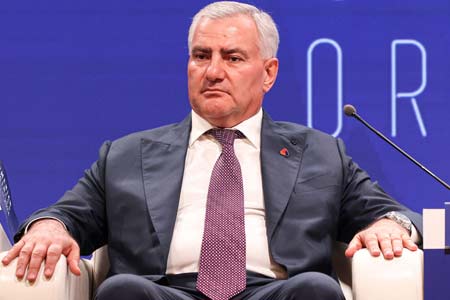 Samvel Karapetyan proposes creating a post-election opposition coalition
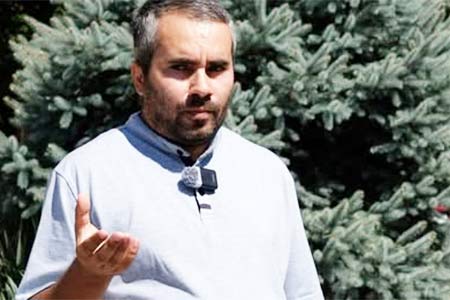 Artsakh`s Cultural Heritage Ombudsman called on Moscow to respond to destruction of WWII monuments by Azerbaijan in occupied NKR
 Prosecutor General`s Office petitions Central Electoral Commission for criminal prosecution of Robert Kocharyan
 Dutch Prime Minister expresses his support for Armenia`s democratic reform and economic diversification agenda