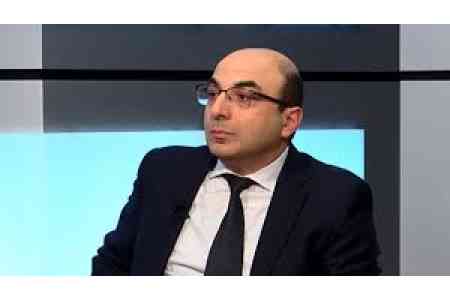
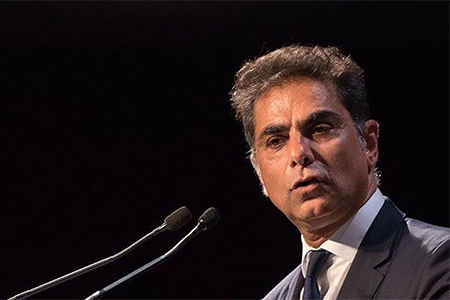
ArmInfo. "If we, the anti-Nikolian leaders, are unable to formulate the content of Armenia's post-war restoration for some time and do not go to the people with it, then our neighbors will do it for us - in their own way," wrote in a social network the head of the group Vahe Hovhannisyan,
"Yesterday, after the first announcement of the upcoming address, people were asking each other what Nikol would say. Most were alarmed, some were excited. Even smart people were discussing the most irrelevant options. Such are the times.
In the end, it turned out that Nikol said something very simple. He said something like: "I don't know what Armenia is about anymore: we took pictures, signed, shook hands, went home, and now, my dears, I don't know what will happen and what tomorrow's Armenia will be," Hovhannisyan noted.
According to him, until 2018, everyone, including Nikol Pashinyan, knew that Armenia was about the post- victory period, which was difficult and confusing. It was a very long period that required not doing much or doing much, which required doing much differently, but this period, this era, was associated with the evolutionary consolidation of a fixed victory. Another thing is that we did not understand that victory is a very complex thing and requires serious state-political thinking, the expert notes.
"Now Nikol clearly says: .
The whole tragedy is that now the anti-Nikol camp, their leaders also do not know what today's and tomorrow's Armenia is about. And if they do not know, then they cannot explain, convince, consolidate their own society," he notes.
According to him, there is no understanding of what it means to restore a country that has suffered a defeat.
"Our state-political thought does not formulate our goals, stages, and vision of post-war restoration. That is why even years after the war, our defeat continues, and we are already losing to ourselves. We do not understand this either. From now on, the Turks do not defeat us, we ourselves bring defeat to ourselves. And this will continue until any political unit, alliance or team formulates a program, stages, goals and vision of post-war restoration.
Until this is done, no one in the world is interested in us, no one needs us. Our homeland will periodically be perceived as a means of settling scores or receiving a prize by someone.
As long as we do not know what the defeat is, in a state like our state, our collective and guiding thought formulates the goals of Armenia's future, Nikol can remain in power and detain people, some of whom may not even understand why he was detained, can make speeches, make concessions and convince them that this is the joy of the world," writes Hovhannisyan.
Those who are in politics and the broad, inert layers of society need to be explained what it means to live in a country whose content and future prospects have not been formulated. This is truly frightening, Vahe Hovhannisyan believes.
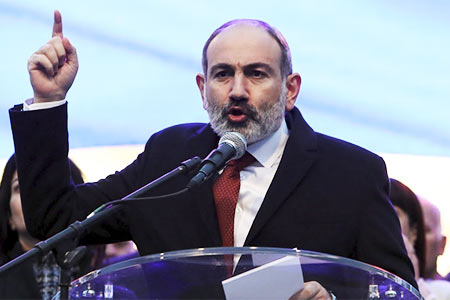
The previous evening, Armenian Prime Minister Nikol Pashinyan made a video address on his first working day after vacation and addressed the people with a number of messages. Thus, according to him, after the August 8 Washington trilateral summit, the people of Armenia live "in a new South Caucasus and in a new Republic." Then, pointing to the need to open transport routes, he said that it is necessary to complete the clarification, delimitation and demarcation of the state border. And speaking about the return of over 200 square kilometers of sovereign Armenian territories occupied by the enemy in 2021-2023, Pashinyan equated the fact of their return to Armenia with the transfer of the so-called Azerbaijani enclaves to Baku, but did not say a word about the Armenian territories occupied by the Azerbaijani side in the early 90s of the last century. "This reality must be resolved in the demarcation process. But the logic of the world, the new logic, is that when we talk about the sovereign territories of the Republic of Armenia under the control of Azerbaijan, we must also say that there are sovereign territories of Azerbaijan under our control, and this mutual issue must be resolved in the process of demarcation," Pashinyan said. The head of the Armenian government also called the idea of the return of Artsakh refugees to Nagorno-Karabakh unrealistic.











 Expert: Current process is not about peace, but implementing Azerbaijan`s wishlist
 Expert: Real peace unattainable until Armenia-Azerbaijan agreement is signed and ratified
 TRIPP`s proximity to Iranian border could slow its implementation - expert
  Aram Vardevanyan: Public demands solutions, not apology scandals in Parliament
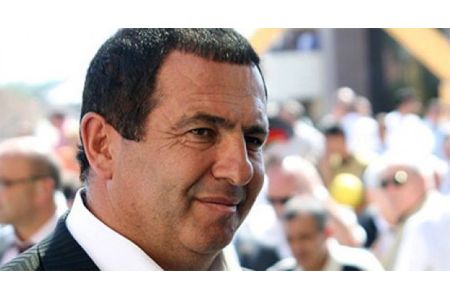 Arrested Armenian oligarch on economy and new jobs
 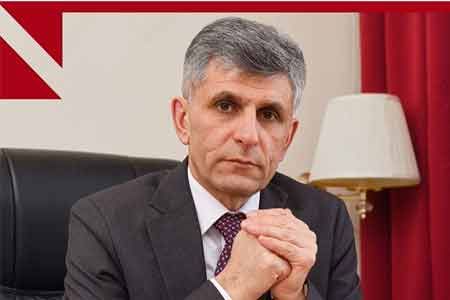 "In Baku, we gave a worthy rebuff to the false claims regarding the past and present of our people" – Former Artsakh Parliament Speaker from Baku captivity
 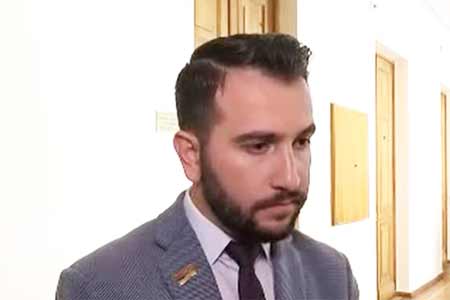 NA Vice Speaker candidate believes his wife`s salary as director of HayPost is the lowest in the company`s history
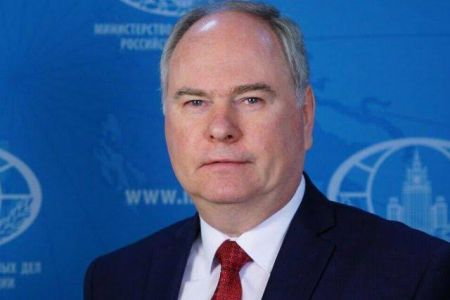 RF Permanent Representative: There is no CSTO-Armenia conflict
 Moscow: NATO seeking to "Pull" Armenia away from CSTO Allies
  Political analyst: Russia intends to determine which "Camp" Armenia will choose through a referendum
 Narek Karapetyan will give up his parliamentary salary in favor of charitable contributions.
 Armenian analyst: Developing relations with Europe and the U.S. must not jeopardize relations with regional powers
 Armenia and France discuss further development of strategic partnership and EU cooperation
  To overcome risks Armenia must reduce domestic escalation - expert
  Zatulin: Pashinyan was eager to get back to Russia because he actually lost the elections
 Human rights activist Ruben Melikyan dismissed from YSU
 Zakharova: Armenia`s pro-EU pivot poses economic security risks to EAEU member states