


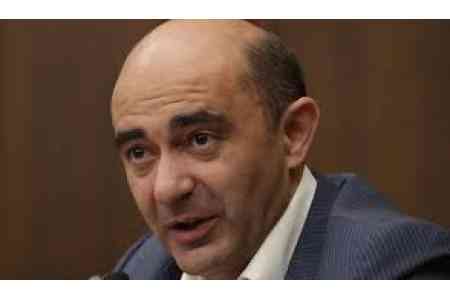
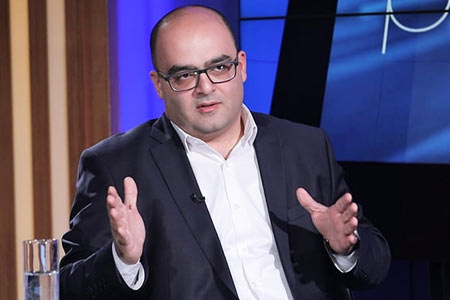
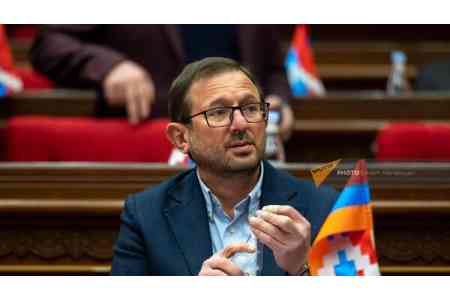
ArmInfo. "Knowing full well that we are under constant gunfire from two powerful armies, we allow ourselves to be deceived by telling tales of reciprocity," wrote Edmon Marukyan, leader of the Bright Armenia party, on his Facebook page, speaking about the documents signed in Washington.
In particular, the politician pointed to the seventh article of the "Declaration of Peace", which states that the parties will not deploy armed forces of third parties along their common border. Before the delimitation of the common border and subsequent demarcation, the parties will implement mutually agreed measures to strengthen security and trust, including in the military sphere, in order to ensure security and stability in the border areas.
"I have repeatedly referred to this article, since it was announced that the RA authorities also made this concession and included this clause in the text of the agreement. Speaking on this topic, I have always tried to explain to our compatriots that if, years later, our grandchildren or great-grandchildren decide to place a military base of any state in the border areas of our country, they will not be able to do so, since Article 7 of the Peace Agreement excludes this. In response, they said: - Yes, but this requirement will be applied reciprocally. I have always emphasized and continue to insist that Azerbaijan does not have such a problem. It has a large population, a powerful army, which is synchronized with the Turkish army. There is another important circumstance that should not be forgotten: the million-strong army of Azerbaijan's ally, Turkey, is only 40 kilometers away from us. In other words, knowing full well that we are under the constant sights of two powerful armies, we allow ourselves to be deceived by telling tales of reciprocity," the leader of the Enlightened Armenia party noted.
On August 8, Armenian Prime Minister Nikol Pashinyan and Azerbaijani President Ilham Aliyev signed a joint "Declaration of Peace" in Washington. It provides for a joint appeal to the Organization for Security and Cooperation in Europe (OSCE) to terminate the OSCE Minsk process and related structures, as well as the creation of a transport corridor through Armenian territory that will connect Azerbaijan with its Nakhchivan exclave. The TRIPP (Trump Route for International Peace and Prosperity) project, a 42-km road in southern Armenia that will hand over control of the road to the United States for 99 years, according to experts, is capable of significantly changing the geopolitical situation in the South Caucasus. On the same day, the Foreign Ministers of Armenia and Azerbaijan initialed a peace agreement, which consists of 17 articles. The preamble of the document states that the Republic of Armenia and the Republic of Azerbaijan, recognizing the urgent need to establish a just, comprehensive and lasting peace in the region, striving to promote the achievement of this goal through the establishment of interstate relations, guided by the Charter of the United Nations, the Declaration on Principles of International Law concerning Friendly Relations and Cooperation among States in accordance with the Charter of the United Nations (1970), the Final Act of the Helsinki Conference on Security and Cooperation in Europe (1975) and the Almaty Declaration of December 21, 1991, and striving to develop relations based on the norms and principles enshrined in the said documents, expressing mutual will to establish good-neighborly relations among themselves, agreed to establish peace and interstate relations.


























 Present-day geopolitical competition shifts from territorial control to infrastructure flows
 Expert: Public participation in decision-making essential for sustainable urban development
  Politician: Statement by Armenia`s third president may deprive opposition of only political basis for ousting Pashinyan
 RA Security Council Sec, Assistant to President of Azerbaijan hold negotiations in Dilijan
 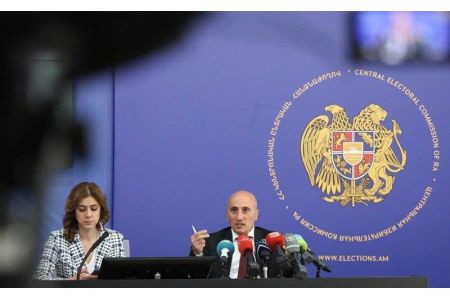 CEC Neutralizes PAP: Three Political Forces to Enter Armenian Parliament Following Election Vote
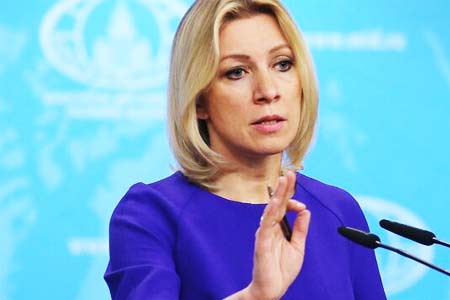 Elections in Armenia were accompanied by unprecedented pressure on opposition, RF MFA spokesperson claims
  Expert: Even OSCE observers recorded numerous violations during elections in Armenia
  Moscow to await official results of Armenian elections - Peskov
 Antonio Costa: EU to deepen its partnership with Armenia, expanding cooperation in energy, trade, and digitalization
 Israeli MFA congratulates Pashinyan
 Turkish MFA comments on results of Armenian elections
 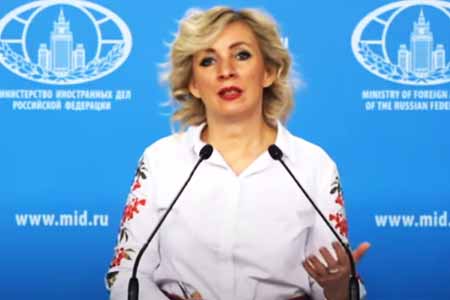 Zakharova: International observers cannot ignore `flagrant violations` in Armenian elections
 Russian Senator: Opposition complaints regarding election violations by ruling party remain unanswered
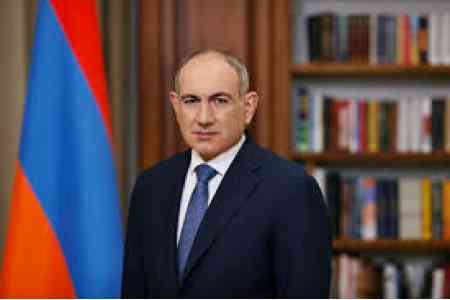 RA premier receiving congratulations on his victory in parliamentary elections
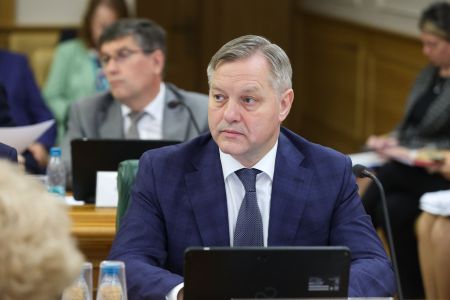 Head of IPA CIS Council Secretariat: Extremely difficult atmosphere during parliamentary elections campaign in Armenia accompanied by mass arrests
 Pashinyan`s party leads with 51.13% based on vote counts from 533 polling stations