
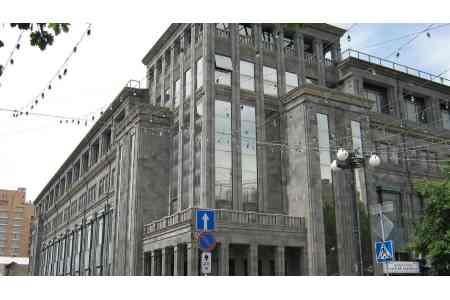
ArmInfo. The decision of the Anti-Corruption Court to seize a plot of land on Northern Avenue from the Consent Armenia company in favor of the Yerevan community will be appealed.
Recall that on July 25, the court, based on a claim by the Prosecutor General's Office, ruled to terminate the company's ownership of a plot of land with an area of more than 2,800 square meters, to invalidate its state registration, and to return the plot to the Yerevan community. We are talking about the land of the former Detsky Mir department store in the center of Yerevan, which, according to the prosecutor's office, was privatized in violation of the law. The decision comes into force one month after publication and is subject to compulsory execution in case of refusal to voluntarily comply.
According to Consent Armenia, the decision of the Anti-Corruption Court against it is related to the activities of Abramyan (the owner of Soglasie-Armenia CJSC is the president of the Union of Armenians of Russia, businessman Ara Abramyan). The company intends to appeal the decision in the appellate procedure.
"The court ignored objective data and made a decision that has no legal basis. Its justifications contradict not only the provisions of the Constitutional Court and the requirements of the Cassation Court, but also the norms enshrined in the decisions of the European Court of Human Rights>, - the company's statement notes.
Consent Armenia emphasized that the same judge had previously rejected the prosecutor's claim on another site located at a neighboring address, the owner of which is a company affiliated with the authorities. The CJSC also noted that the necessary construction work is being carried out on their part, and the reasons for the delays, difficulties and obstacles have long been addressed to the administrative bodies. Earlier, in March 2024, the court, as part of an interim measure, prohibited the company from taking actions that could lead to a change in the owner of the undeveloped land plot at 32 Arami Street. The ban will be in effect until the court decision is executed, after which it will cease to be effective.


































 Analyst: The primary issue with Armenia`s new Parliament Speaker`s speech lies is its one-sided interpretation of the causes of the political crisis
 Expert: Gagik Tsarukyan embodies post-Soviet model of big business-state relations; this model is used in many other post-Soviet countries
 Expert: Azerbaijan promoting aggressive plans against Armenia at state level
 Iranologist: Baku`s propaganda of might masks the country`s inability to provide water to its own population
 NA Vice Speaker candidate believes his wife`s salary as director of HayPost is the lowest in the company`s history
 RF Permanent Representative: There is no CSTO-Armenia conflict
 Moscow: NATO seeking to "Pull" Armenia away from CSTO Allies
  Political analyst: Russia intends to determine which "Camp" Armenia will choose through a referendum
 Narek Karapetyan will give up his parliamentary salary in favor of charitable contributions.
 Armenia and France discuss further development of strategic partnership and EU cooperation
  To overcome risks Armenia must reduce domestic escalation - expert
 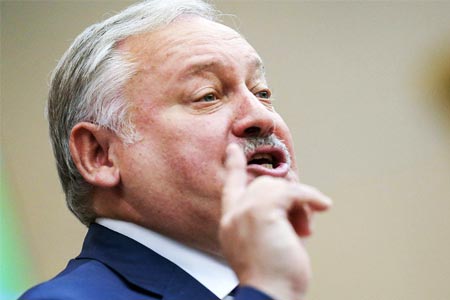 Zatulin: Pashinyan was eager to get back to Russia because he actually lost the elections
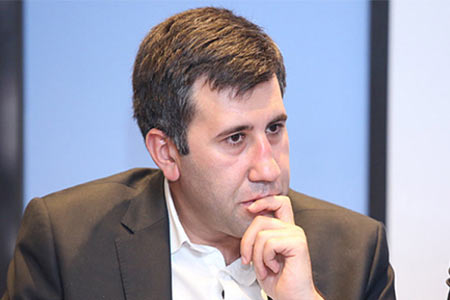 Human rights activist Ruben Melikyan dismissed from YSU
 Zakharova: Armenia`s pro-EU pivot poses economic security risks to EAEU member states
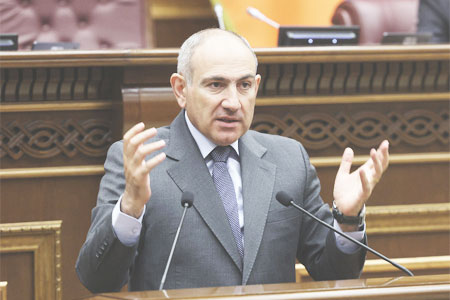 It`s time for South Caucasus countries to think of South Caucasus as single, unified region - RA premier
  Pashinyan: Armenia and Azerbaijan should leave each other alone
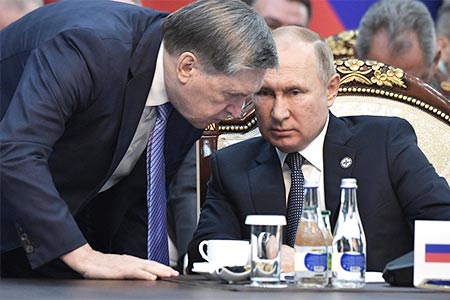 Moscow sees situation with Armenia as attempt to attack Russia-involving integration associations - Russian presidential aid