

ArmInfo. On April 30, the Cabinet of Ministers of Armenia approved the draft law of the Republic of Armenia .
The Coalition is a global partnership of national governments, United Nations agencies and programs, multilateral development banks and financial mechanisms, the private sector, educational and research institutions, aimed at promoting the resilience of infrastructure systems to climate and natural disasters, thereby ensuring sustainable development.
The Secretariat of the Coalition is located in New Delhi, India.
The Coalition is committed to rapidly scaling up and upgrading resilient infrastructure in line with the Sustainable Development Goals to expand access to basic services for all, ensure prosperity and decent work. This must be done while accelerating and scaling up climate action and disaster risk reduction, from local and national to regional and global levels.
The Coalition supports the achievement of the goals and targets set in the Sustainable Development Goals, the Paris Climate Agreement, the Sendai Framework for Disaster Risk Reduction and the United Nations 2030 Agenda to leave no one, no place and no ecosystem behind.
The Coalition's mission is to support countries in upgrading their systems to make existing and future infrastructure resilient to disasters and climate change. This support must be fully aligned with the Sustainable Development Goals, the Paris Climate Agreement and the Sendai Framework.
The mission of the Coalition will be achieved by: (i) raising awareness at all levels of the benefits of resilient infrastructure systems and building linkages with other relevant initiatives to achieve this goal; (ii) serving as a platform for generating and sharing knowledge on various aspects of disaster- and climate- resilient infrastructure; (iii) improving relevant national and regional standards, codes, specifications and guidelines for the planning, design, operation and maintenance of infrastructure systems; (iv) strengthening capacities and practices to reduce damage to infrastructure, associated losses and subsequent disruption of essential services and economic activity resulting from disasters and climate change; (v) creating an enabling environment for technological and institutional innovation to build resilient infrastructure systems; (vi) providing technical expertise to assist countries in building resilient infrastructure in accordance with their resources and risks posed by disasters and climate change; (vii) advocating for financial mechanisms, including risk transfer, that facilitate the development of resilient infrastructure; and (viii) assisting countries in adopting appropriate risk management mechanisms and resilient infrastructure strategies.
CDRI implements various programs, including technical assistance, research, advocacy campaigns and partnership facilitation. These activities are aimed at increasing resilience to natural disasters and supporting member countries in stabilizing infrastructure. Considering that contributions from members joining CDRI are voluntary and can also be made in non- financial form, in the context of modern challenges, the Republic of Armenia considers membership appropriate>, - the document says.
































 Armenian Historian: People Like Magdalena Grono Should Be Kept Away from the Thresholds of Armenian Shrines
 Azerbaijani studies expert: Armenia’s Foreign Ministry could use the ICC against Aliyev’s Armenophobic statements
 An Armenian political analyst exposed Hajiyev’s lies and attempts to mislead diplomats accredited in Azerbaijan in occupied Artsakh
 Expert: The circus surrounding the “Albanization” of Armenian culture in the presence of foreign ambassadors in occupied Artsakh is genocide
 Zakharova: Russia ready to discuss with Armenia the prospects for expanding military cooperation as part of a review of bilateral ties
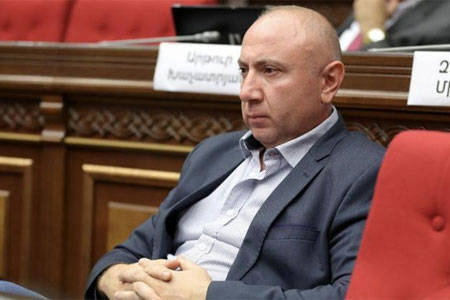 Tevanyan: Armenia, like Ukraine and Moldova, is being drawn into the EU’s global war
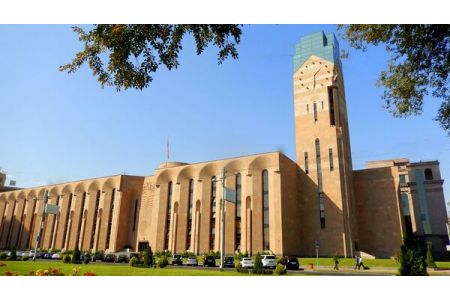 Yerevan City Hall is considering introducing a valet parking system in the city
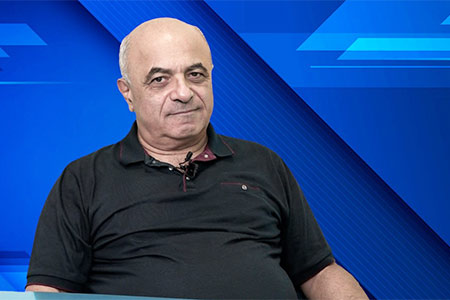 Political scientist: If Russian-Armenian relations are destroyed, Turkey will take Russia`s place
 Political scientist: The Armenian public is simply obliged to significantly change the entire content of public discourse and struggle
 Cross tattoos are being removed from the skin of Christian prisoners in Azerbaijan by fire, according to a human rights activist.
 Zakharova: Armenia`s likely introduction of visas with Russia will be a step against Yerevan itself
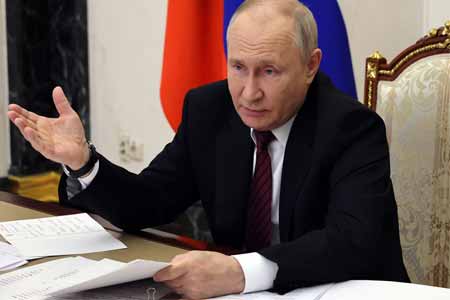 Putin: Armenia`s recognition of Karabakh as part of Azerbaijan in Prague has given Russia`s position on this issue an ambivalent character
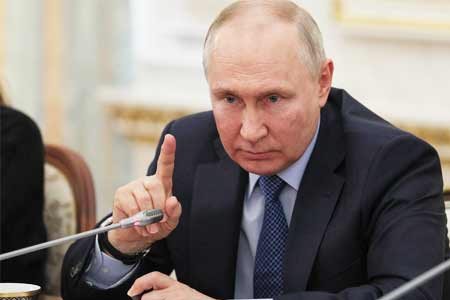 Putin: Armenia`s adoption of the law on EU accession means an announcement of its withdrawal from the Eurasian Economic Union
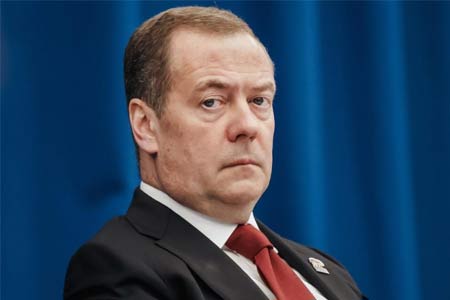 Medvedev: Yerevan will never become an EU member, but it will permanently damage relations with the Eurasian Economic Union, including with Moscow.
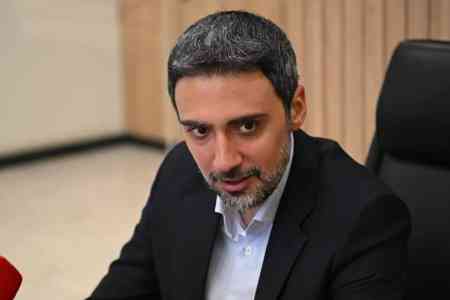 Aram Vardevanyan: Public demands solutions, not apology scandals in Parliament
 Arrested Armenian oligarch on economy and new jobs
  "In Baku, we gave a worthy rebuff to the false claims regarding the past and present of our people" – Former Artsakh Parliament Speaker from Baku captivity
  NA Vice Speaker candidate believes his wife`s salary as director of HayPost is the lowest in the company`s history