
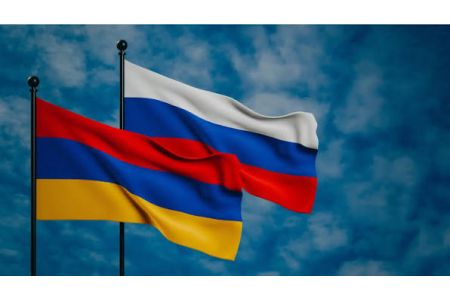
ArmInfo. If the Armenian government takes even more significant steps aimed at finally breaking off allied relations with Russia, this is unlikely to bring significant benefits even in the short term, but in the medium term it may create strategic risks for Armenia's national security and the existence of modern Armenian statehood. This is stated in the analytical report of the Primakov National Research Institute of World Economy and International Relations of the Russian Academy of Sciences "Armenia's Foreign Policy at a Crossroads: the Crisis of Multi-Vectorality".
Its authors note that underestimating the likelihood of decisive actions by Armenia's geopolitical opponents, as well as overestimating the ability of the European Union and NATO to ensure its security, combined with a complete disregard for the socio-economic consequences of such decisions, could lead to the most fatal consequences. "The choice in favor of further development based on its own cultural and historical heritage and centuries-old positive experience of relations with Russia can open up the prospect of preserving sovereignty, international political subjectivity, ensuring security and active participation in the construction of a prosperous and secure Eurasia for the Republic of Armenia. Further deterioration of relations with Armenia is not beneficial for Russia, but maintaining the current situation of sabotage of the CSTO activities in all areas and its further discrediting by a "frozen" participant is also not in its interests. The Armenian leadership has begun to curtail relations with Russia and the CSTO in the political and military-technical spheres and to comprehensively increase partnership with the United States, the EU and NATO since 2022. In March 2023, RA Prime Minister Nikol Pashinyan said that the CSTO itself "willingly or involuntarily leaves the republic." Then the Armenian government refused to hold the previously planned exercises of the Organization in the country. Yerevan did not use the Armenian quota for filling the post of Deputy Secretary General of the CSTO and recalled the representative of the Republic of Armenia to the organization. On November 24, 2023, Armenia did not take part in the annual CSTO summit for the first time. Subsequently, the Armenian leadership began to boycott all events of the Organization. In February 2024, Pashinyan officially announced the "freezing" of Armenia's membership in the CSTO. The condition for returning to the organization was the requirement to unequivocally condemn the actions of Azerbaijan as an "aggressor" during the border incidents that took place in 2022-2023 and to fully fulfill its allied duty towards Armenia as a "victim of aggression". This move by the Pashinyan government was clearly designed to solve internal political and propaganda tasks - Yerevan was well aware that, in addition to Russia, the CSTO includes other states, each of which has its own history of trade, economic and political ties with Azerbaijan. But even under these conditions, the CSTO made a number of proposals on measures to normalize the situation - sending a CSTO observer mission to the border, mediation in negotiations between Yerevan and Baku. However, these proposals were also rejected by the Armenian leadership. Cooperation with Russia in the military-technical sphere and in the field of security was also minimized," the report notes.
Its authors point out that the CSTO Charter does not provide for "freezing" membership in the Organization at the will of one of the member states. Termination of participation in events, boycott of the work of the governing bodies and termination of funding of the CSTO by Armenia violate the Charter of the Organization. Article 19 establishes the right of member states to withdraw from the Organization and determines the following procedure for its execution: official notification of withdrawal no later than 6 months before the date of withdrawal, settlement of their obligations within the Organization and approval of the termination of membership by the CSTO Collective Security Council. Article 20 stipulates that in the event of failure by a member state to comply with the provisions of the CSTO Charter, decisions of the Council and decisions of other bodies of the Organization adopted in their implementation, the Council may decide to suspend its participation or exclude it from the CSTO.
"The situation has remained uncertain for a long time: the Russian leadership and CSTO representatives continue to view Armenia as a full member in their official statements, but call on its leadership to make its "final choice" about maintaining membership or leaving the organization. In June 2024, RA Foreign Minister Ararat Mirzoyan announced the development of Armenia's relations with the United States to the level of "strategic partnership." And on January 14, 2025, he and US Secretary of State Anthony Blinken signed the Charter on Strategic Partnership between the United States and Armenia. A similar document has already been signed by the United States with Georgia (in 2009) and with Ukraine (in 2021). Georgia concluded this agreement in January 2009 at the peak of the confrontation between Mikheil Saakashvili's administration and Russia, after the five-day war of August 2008 provoked by official Tbilisi. Kyiv, which signed such an agreement in 2021, has long been pursuing an open anti-Russian policy. Armenia, however, formally remains an ally of the Russian Federation - not only within the framework of the CSTO, but also under the terms of the Treaty of Friendship, Cooperation and Mutual Assistance of August 29, 1997. Meanwhile, the Charter does not provide Yerevan with significant security guarantees and is limited to promises to continue contacts, ensure the participation of Armenian military personnel in educational programs, etc. The signing of this document was primarily of political and ideological significance for the outgoing US administration and the current government of Armenia. The Donald Trump administration can formulate new approaches in the South Caucasus and in relations with Russia. Understanding this, the Pashinyan government chose to show the population of Armenia that it had found new potential guarantors of security in the United States and NATO instead of Russia and the CSTO," the report says.
Meanwhile, the authors continued, the positions of the EU and NATO countries on Armenian-Azerbaijani relations differ significantly, which Yerevan does not like to mention. Nine EU and NATO member states (Hungary, Latvia, Lithuania, Romania, Poland, Bulgaria, Slovakia, the Czech Republic and Italy) express support for Baku's policy and have signed documents on strategic partnership with Azerbaijan. Only three EU states (France, Greece, Cyprus), which link Azerbaijan's positions and actions with Turkey's interests, facilitate the rearmament of the Armenian army and demonstrate their readiness to politically support Armenia. However, it is obvious that these states, in the event of a direct Armenian-Azerbaijani military clash, will not be able to act as reliable guarantors of Armenia's security. Their actions only convince Ankara and Baku of their ability to resolve the "Armenian problem" by force if the situation is favorable. The preconditions for this may arise in the event of an official withdrawal from the CSTO and the liquidation of the Russian military presence in Armenia, in the coming years," the document says.













 Analyst: The primary issue with Armenia`s new Parliament Speaker`s speech lies is its one-sided interpretation of the causes of the political crisis
 Expert: Gagik Tsarukyan embodies post-Soviet model of big business-state relations; this model is used in many other post-Soviet countries
 Expert: Azerbaijan promoting aggressive plans against Armenia at state level
 Iranologist: Baku`s propaganda of might masks the country`s inability to provide water to its own population
 NA Vice Speaker candidate believes his wife`s salary as director of HayPost is the lowest in the company`s history
 RF Permanent Representative: There is no CSTO-Armenia conflict
 Moscow: NATO seeking to "Pull" Armenia away from CSTO Allies
  Political analyst: Russia intends to determine which "Camp" Armenia will choose through a referendum
 Narek Karapetyan will give up his parliamentary salary in favor of charitable contributions.
 Armenia and France discuss further development of strategic partnership and EU cooperation
  To overcome risks Armenia must reduce domestic escalation - expert
  Zatulin: Pashinyan was eager to get back to Russia because he actually lost the elections
 Human rights activist Ruben Melikyan dismissed from YSU
 Zakharova: Armenia`s pro-EU pivot poses economic security risks to EAEU member states
 It`s time for South Caucasus countries to think of South Caucasus as single, unified region - RA premier
  Pashinyan: Armenia and Azerbaijan should leave each other alone
 Moscow sees situation with Armenia as attempt to attack Russia-involving integration associations - Russian presidential aid