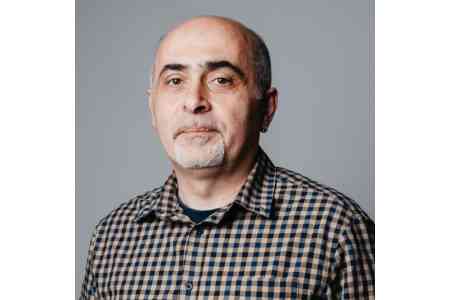
ArmInfo. Information security expert Samvel Martirosyan recalled the criminal liability for actions aimed at denying, justifying or promoting the Genocide, as established by Article 136 of the Criminal Code of Armenia.
The expert drew attention to the fact in a post on his Facebook page that acts committed on the basis of race, skin color, national or ethnic origin, as well as religious affiliation with the purpose of inciting hatred, discrimination or violence against individuals or groups are subject to punishment. "Such actions are subject to punishment by a fine of twenty or forty times the amount, up to community service for 150 to 250 hours. In addition, measures in the form of restriction of freedom for up to three years or short-term imprisonment for a term of one to two months, as well as imprisonment for a term of no more than four years are possible," the expert wrote.
At the same time, as Martirosyan emphasized, if such actions are committed publicly using the media, information technology or authority, this may entail more serious consequences. In such cases, the punishment may be imprisonment for a term of two to five years.
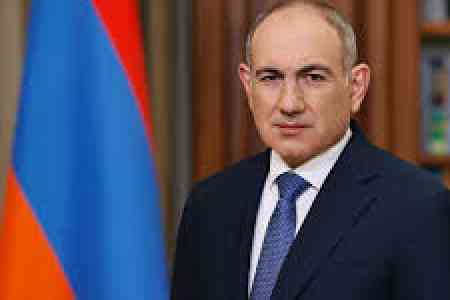
In turn, lawyer Ashot Simonyan on his Facebook page called for a criminal case to be initiated against Armenian Prime Minister Nikol Pashinyan. He also recalled the existence of criminal liability in Armenia for denying the fact of the Genocide. "This act is also criminally punishable in Switzerland. Moreover, mainly Turks by nationality have been or are being punished there for well-known reasons. Based on the above, I demand that a public criminal prosecution be initiated against Nikol Vovaevich Pashinyan and that the latter be subject to criminal liability," the lawyer wrote.
In this regard, he recalled Pashinyan's statement during his visit on January 5, 2025, when in a video released by the government, the Prime Minister questioned the fact of the Armenian Genocide in the Ottoman Empire at a meeting with representatives of the Armenian community in Switzerland. "We must understand what happened and why it happened. And how we perceived it, through whom we perceived it: how did it happen that in 1939 there was no agenda for the Armenian Genocide, but in 1950 it appeared? How this happened, we must understand or we must not understand," the Armenian Prime Minister noted. He is apparently either unaware that the term Genocide was introduced into circulation by genocide scholar Raphael Lemkin only in 1944, or he is deliberately trying to create a narrative that "this issue was artificially raised by the Soviet Union to put pressure on Turkey."
Last October, Armenian Foreign Minister Ararat Mirzoyan stated in parliament that the issue of advancing the agenda of international recognition of the Armenian Genocide in the Ottoman Empire is not the prerogative of the Armenian Foreign Ministry. He then repeated the narratives promoted by Ankara for decades that this issue should be dealt with by historians. In fact, with this statement, Mirzoyan confirmed the concerns of experts previously expressed that the current Armenian authorities will do anything to normalize relations with Turkey, while trampling on their own national interests, including in terms of international recognition of the Armenian Genocide.
The Armenian Genocide in the Ottoman Empire was the first genocide in the 20th century. Armenians remember the victims of the tragedy every year on April 24. Turkey traditionally denies accusations of mass extermination of more than 1.5 million Armenians. The fact of the Armenian Genocide has been recognized by many states and a number of authoritative international organizations. The first country to recognize the Genocide in 1965 was Uruguay. Then this fact was recognized by Cyprus, Russia, Greece, Canada, Lebanon, Belgium, France, Paraguay, Argentina, Sweden, Bolivia, Great Britain, Holland, Slovakia, Germany, Lithuania, Venezuela, Poland, Chile, Switzerland, Brazil, Luxembourg, Austria, Vatican, Czech Republic, Denmark, Portugal, as well as the provisional government of Libya, the USA, Syria, the European Parliament, the World Council of Churches.











 Political analyst: Russia intends to determine which "Camp" Armenia will choose through a referendum
 Political analyst: Pashinyan- Putin phone call confirms deepening strategic rift between Yerevan and Moscow
 Narek Karapetyan will give up his parliamentary salary in favor of charitable contributions.
 Armenia and France discuss further development of strategic partnership and EU cooperation
  To overcome risks Armenia must reduce domestic escalation - expert
  Zatulin: Pashinyan was eager to get back to Russia because he actually lost the elections
 Pashinyan removed from INNOPROM guest list
 Zakharova: Armenia`s pro-EU pivot poses economic security risks to EAEU member states
 It`s time for South Caucasus countries to think of South Caucasus as single, unified region - RA premier
  Pashinyan: Armenia and Azerbaijan should leave each other alone
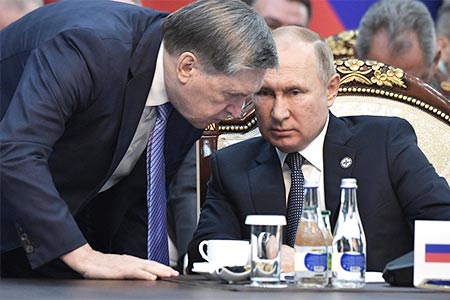 Moscow sees situation with Armenia as attempt to attack Russia-involving integration associations - Russian presidential aid
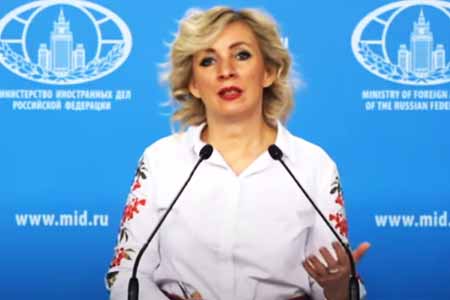 Zakharova: Armenia views relations with Russia as tool for financially securing reorientation toward EU
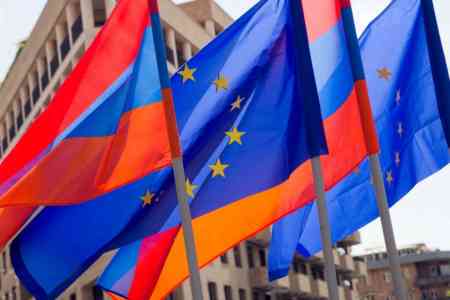 The Armenian Minister of Justice and the EU Ambassador discussed visa liberalization issues for Yerevan.
 Azerbaijan`s aggressive plans against Armenia became possible in wake of Pashinyan`s decisions on Artsakh - expert
  Zakharova: Russia sent a note of protest to Armenia over the act of vandalism at the "Mother Armenia" memorial in Gyumri