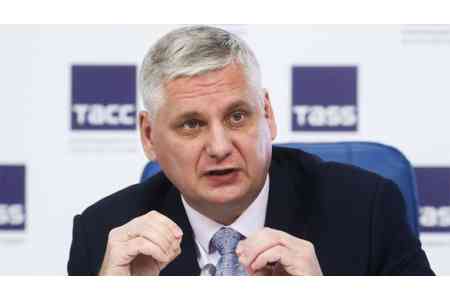
ArmInfo. Both Azerbaijan and Armenia need a peaceful and stable Georgia. This is how Russian political scientist Sergei Markedonov commented on the presidential elections in Georgia and the reaction of the leaders of Armenia and Azerbaijan to them.
According to him, the recent presidential elections in Georgia, which were held in a non-universal voting format, in the work of the Electoral College, provided experts with rich food for thought. The expert noted that many authors in Russia tend to be critical of states that are trying to "walk between the streams" on the world stage, without making a clear geopolitical choice. However, according to Markedonov, a significant (if not overwhelming) part of states, especially small and medium ones, are striving for balancing, preferring the format of "fellow travelers".
"It is noteworthy that among the first leaders of states and governments to congratulate the newly elected President Mikheil Kavelashvili were Azerbaijani President Ilham Aliyev and Armenian Prime Minister Nikol Pashinyan. Two leaders who still cannot fully agree on the text of the peace agreement (only 15 of 17 points + preamble have been agreed upon so far, there are still discrepancies in the Armenian Constitution). Why did the Georgian factor unite the leaders of two neighboring states that can hardly be called friendly? The answer is more or less obvious. Both Azerbaijan and Armenia need a peaceful and stable Georgia," the Russian political scientist believes.
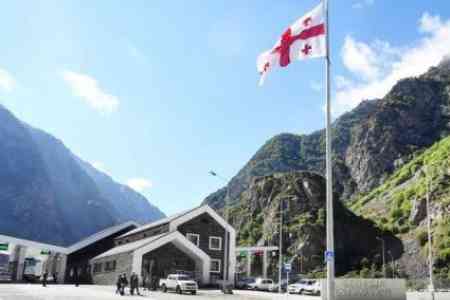
Markedonov is sure that for the Baku leadership, the factors of Georgian democracy are not important, for the Yerevan leadership, they probably have general theoretical significance, but a predictable neighbor is much more important, because 75% of Armenia's exports and imports go through the Georgian border, one of the two "windows" for the republic to the outside world.
"There are also Azerbaijani (Kvemo Kartli) and Armenian (Javakheti) communities in Georgia, and their well-being is also important for Baku and Yerevan. But if it happens that tomorrow Tbilisi suddenly decides that Kavelashvili is not legitimate and everything needs to be "like in grandma's time," Aliyev and Pashinyan will recognize the "will of the Georgian people." Because pragmatism and good neighborliness - again in a pragmatic vein - are more important to them," the expert noted.
At the same time, Markedonov noted that today there is a lot of talk about polycentrism as an ideal world order. However, according to him, in the Caucasus it is already being implemented in many ways.
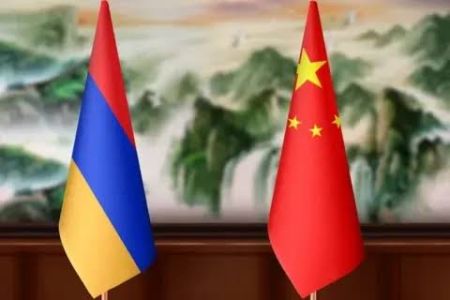
"Georgia is distancing itself from the West (but cautiously and selectively), and Armenia from Russia (less cautiously and less selectively), but they are ready to interact with each other. By the way, even at the peak of its Euro-Atlantic agenda, Tbilisi signed a Free Trade Agreement with China, and Armenia, promoting Eurasian formats, did not forget about "complementarism". Azerbaijan's foreign policy was called a "swing policy" for many years. Thus, congratulations to the newly elected Georgian president from neighbors reflect this trend," the political scientist is sure.
Markedonov noted that the countries of the region prefer to go "their own way", whose configuration does not always fit into the great powers' ideas about beauty. "By the way, Kavelashvili has already received his first invitation to a foreign visit from Serbian President Aleksandar Vucic. You may ask, what does Belgrade have to do with it? In the spring of 2023, after the vote in the Council of Europe on the Kosovo issue, Vucic named Georgia among Serbia's "best friends". Why? Because Tbilisi consistently advocates non-recognition of the independence of the former Serbian autonomous region. Symbols and rituals matter," the Russian political scientist summed up.











 Expert: Real peace unattainable until Armenia-Azerbaijan agreement is signed and ratified
 TRIPP`s proximity to Iranian border could slow its implementation - expert
  Who and why is sacrificing RA National Security Service`s reputation? - expert
  Tehran creating security environment in which sustainable shipping in Strait of Hormuz difficult to imagine without its direct participation - expert
  Arrested Armenian oligarch on economy and new jobs
  NA Vice Speaker candidate believes his wife`s salary as director of HayPost is the lowest in the company`s history
 RF Permanent Representative: There is no CSTO-Armenia conflict
 Moscow: NATO seeking to "Pull" Armenia away from CSTO Allies
  Political analyst: Russia intends to determine which "Camp" Armenia will choose through a referendum
 Narek Karapetyan will give up his parliamentary salary in favor of charitable contributions.
 Armenian analyst: Developing relations with Europe and the U.S. must not jeopardize relations with regional powers
 Armenia and France discuss further development of strategic partnership and EU cooperation
  To overcome risks Armenia must reduce domestic escalation - expert
  Zatulin: Pashinyan was eager to get back to Russia because he actually lost the elections
 Human rights activist Ruben Melikyan dismissed from YSU
 Pashinyan removed from INNOPROM guest list
 Zakharova: Armenia`s pro-EU pivot poses economic security risks to EAEU member states
 It`s time for South Caucasus countries to think of South Caucasus as single, unified region - RA premier
  Pashinyan: Armenia and Azerbaijan should leave each other alone