
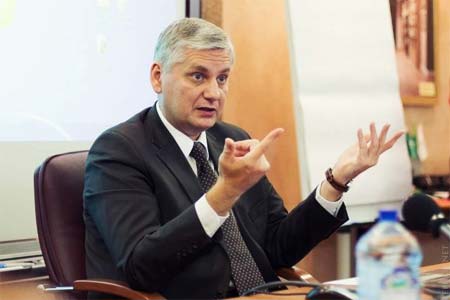
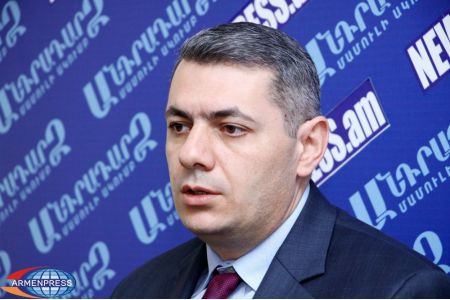
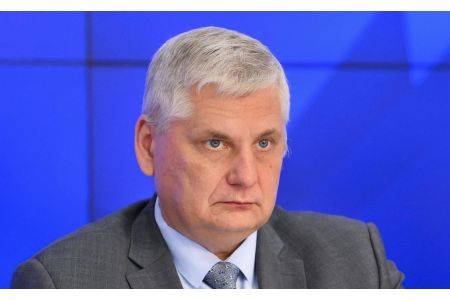
ArmInfo. Official Tehran has a fairly consistent and conservative position on the issue of revising borders. This is how Russian political scientist Sergei Markedonov commented on the speech of Iranian PresidentMasoud Pezeshkian at the UN General Assembly, analyzing Iranian approaches to the conflict in Ukraine and Eurasian security.
The expert noted that before the passions over the words of Turkish President Recep Tayyip Erdogan about supporting the territorial integrity of Ukraine had even died down, another partner of Russia, Iran, gave a new news item.
"The recently elected Iranian President Masoud Pezeshkian, on the sidelines of the UN General Assembly in New York, said: "We are ready to sit down at the same table with the Europeans and Americans for dialogue and negotiations. We have never approved of Russian aggression against Ukrainian territory," Markedonov recalled.
At the same time, the Russian political scientist believes that Pezeshkian's statement should not be viewed as a sensation or as an impromptu speech by a supposedly pro-Western politician, since Tehran has always been consistent on the issue of the inviolability of the borders of other states.
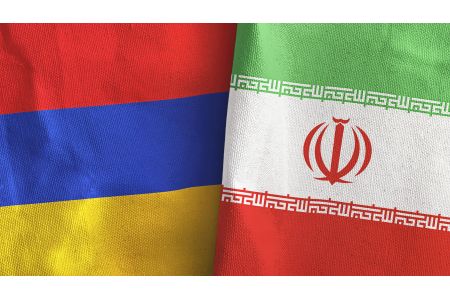
"Iran has repeatedly and publicly stated that it does not recognize the independence of Abkhazia and South Ossetia. Back in 2023, the then head of the Iranian Foreign Ministry, Hossein Amir Abdolakhian, stated that despite its friendship with Moscow, his country does not recognize Crimea, Donbass, and the "new regions" within the Russian Federation. And although relations between Tehran and Baku have always been controversial and complex, the Iranians have not even hinted at recognizing Nagorno-Karabakh, but on the contrary, supported its integration into Azerbaijan. Tehran's pathos in this direction today is as follows: do not touch the integrity and borders of Armenia. Thus, there is a consistency of principles," Markedonov noted. At the same time, the political scientist believes that Iran has a reputation as almost an enemy of the West and the "Zionist regime" number 1, but at the same time there is a demand for dialogue with the United States and its allies in society and politics. According to him, Pezeshkian, Rafsanjani, Khatami, and Rouhani wanted to speak with the West, but in the language of their national interests.
"And today Tehran would like to enter into a modus vivendi with the US and the EU. If circumstances allow, it will not ask Moscow. In 2014, the famous Iranian expert Kayhan Barzegar introduced a very precise metaphor to describe the Iranian policy towards the Ukrainian crisis - "active neutrality". As they say, receive and sign. Let's add to this the perception that Iranian politicians and diplomats have. Many in Iran consider Moscow's positions in the Caucasus and in Eurasia as a whole to be less strong than 5 or 10 years ago. It is possible not to see this, but is it useful for the present case? A rhetorical question, however," the expert added.
In conclusion, the Russian political scientist advised reading Iranian experts, noting that Moscow's constructors of meanings can talk as much as they like about Russia today as the leader of the Global South, but their Tehran colleagues think somewhat differently. "Russia (especially in historical retrospect) is viewed as an imperial offensive power. Let us recall that none other than Mahmoud Ahmadinejad, a tough opponent of the West and a conservative, demanded compensation for the joint "Soviet-British occupation" of his country. And we haven't even talked about the "constitutional revolution" of the early 20th century," Markedonov summed up.












 Expert: Official Yerevan should not base its calculations in relations with Ankara on the "crack" in the Turkish-Azerbaijani alliance
 International expert: Trump is entering a "lame duck" period of rule
 Political scientist: The failure of the mission to adopt a new Armenian Constitution could raise the question of Pashinyan`s resignation.
 Opinion: Russia`s involvement in the Organization of Turkic States may increase its international weight, but will force a redistribution of political influence within it
 Drmeyan: The ECHR rejected Azerbaijan`s appeal in the case of Artsakh Defense Army Major Hayk Toroyan
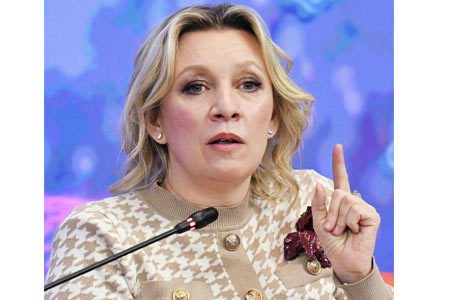 Zakharova commented on the scandalous epithets of the governor of Armenia`s Shirak region about "Ivanov"
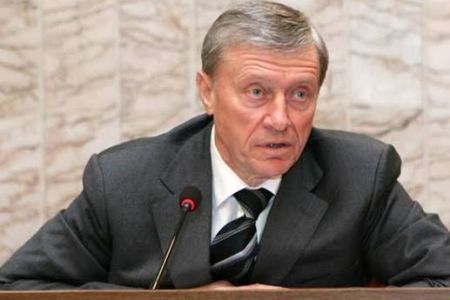 Nikolai Bordyuzha proposed excluding Armenia from the CSTO.
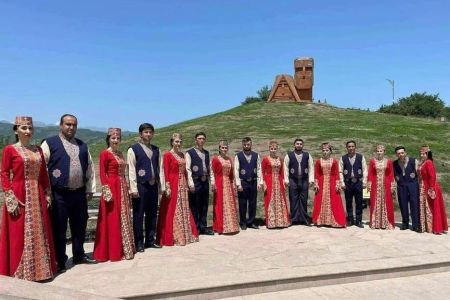 The participation of Artsakh ensembles in an international festival in Vienna was cancelled following the intervention of several foreign embassies
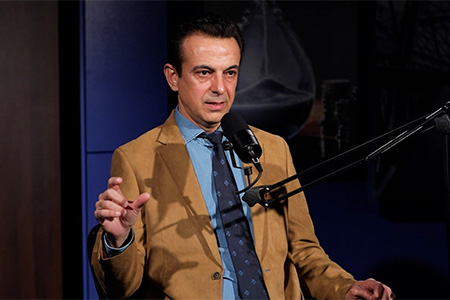 Expert: It`s time for Armenia to move away from uncertainty and choose between West and East
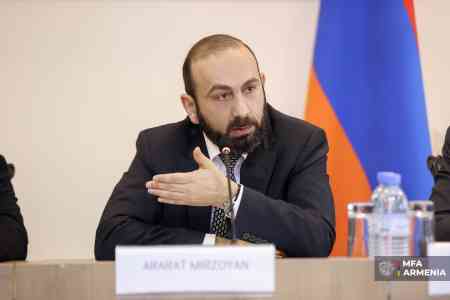 The Armenian Foreign Minister commented on the country`s return to work within the CSTO.
 The Artsakh Public Council expressed outrage at the UN Secretary-General`s behavior
 Lukashenko called for Armenia to assume the CIS presidency in 2029
 Dmitry Medvedev predicted a Ukrainian-like fate for Armenia amid the country`s shift in foreign policy
 Russian Security Council: In Armenia, they want to force Russian asset owners to dispose of their assets
 Zakharova: Russia ready to discuss with Armenia the prospects for expanding military cooperation as part of a review of bilateral ties
 Tevanyan: Armenia, like Ukraine and Moldova, is being drawn into the EU’s global war
 Yerevan City Hall is considering introducing a valet parking system in the city
 Expert: The circus surrounding the “Albanization” of Armenian culture in the presence of foreign ambassadors in occupied Artsakh is genocide