


ArmInfo.Political tensions and growing insecurity from the unresolved conflict over Nagorno-Karabakh dominated events in Armenia. international human rights organization, the Human Rights Watch (HRW), stated in the World Report 2023: Rights Trends in Armenia.
The report notes, that authorities pursued ambitious judicial, police, and constitutional reforms. Human rights problems included ill-treatment by law enforcement, interference with freedom of assembly, domestic violence, discrimination against people with disabilities, and violence and discrimination based on sexual orientation and gender identity.
"Law enforcement interfered with freedom of assembly during protests throughout the year. The Armenian Helsinki Committee, a non- governmental group, documented disproportionate use of force during opposition protests in May and June," the report notes.
At the same time, it points to an increase in violence against journalists. "Through June 2022, they documented 12 incidents with 13 victims, perpetrated by both public officials and private individuals. Most happened during various opposition protests. CPFE reported 23 cases of other types of pressure during the same period," the human rights activists of the Organization noted.
As a positive move, it is noted that Armenia decriminalized "severe insult," removing the offence from the criminal code. "Armenia increased fines for failure to provide official information upon request, but CPFE reported 69 cases of violation of the right to receive and disseminate information." However, it is stated that the Russia-brokered truce broke down several times as Azerbaijan made incursions in Nagorno-Karabakh and Armenia. "The political opposition blamed Prime Minister Nikol Pashinyan, held ongoing protests, and demanded his resignation. Armenian authorities reported that the fighting temporarily displaced more than 7,600 civilians, mostly women and children, from three regions of Armenia that border Azerbaijan and damaged or destroyed numerous residential buildings. Sporadic incidents of military hostilities continued to threaten the safety and livelihoods of civilians residing in villages in Nagorno-Karabakh and along the Armenia-Azerbaijan border," they noted.
HRW noted that Armenian authorities reported that the September 2022 fighting killed at least three civilians and temporarily displaced more than 7,600 civilians, mostly women and children, from three regions of Armenia that border Azerbaijan, and damaged or destroyed numerous residential buildings. Three ethnic Armenian civilians were also killed in Nagorno Karabakh in earlier conflict-related incidents.
"A video authenticated by Human Rights Watch showed the extrajudicial execution of at least seven Armenian soldiers, apparently by Azerbaijani forces, during the September 2022 fighting. According to Armenian lawyers, at least 30 Armenian prisoners of war (POWs) and three civilians remain captured in relation to the 2020 hostilities remain in Azerbaijani custody by October 2022. Azerbaijani authorities do not recognize any of these individuals as POWs. According to the Ombudswoman's office, as of late August, 303 people, a mix of civilians and military, remain missing from the 2020 hostilities. Lawyers and human rights groups in Armenia allege that some were last seen alive in the custody of Azerbaijani forces," the HRW report reads.






















 Azerbaijani studies expert : Ruben Vardanyan’s wife threatened with arrest if she visits Baku
 Political scientist: If Russian-Armenian relations are destroyed, Turkey will take Russia`s place
 Political scientist: The Armenian public is simply obliged to significantly change the entire content of public discourse and struggle
 Cross tattoos are being removed from the skin of Christian prisoners in Azerbaijan by fire, according to a human rights activist.
 Zakharova: Armenia`s likely introduction of visas with Russia will be a step against Yerevan itself
 Putin: Armenia`s recognition of Karabakh as part of Azerbaijan in Prague has given Russia`s position on this issue an ambivalent character
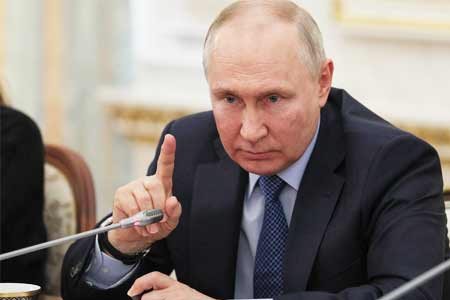 Putin: Armenia`s adoption of the law on EU accession means an announcement of its withdrawal from the Eurasian Economic Union
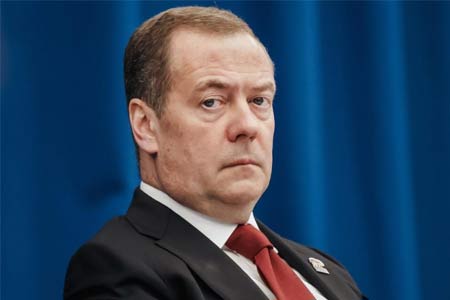 Medvedev: Yerevan will never become an EU member, but it will permanently damage relations with the Eurasian Economic Union, including with Moscow.
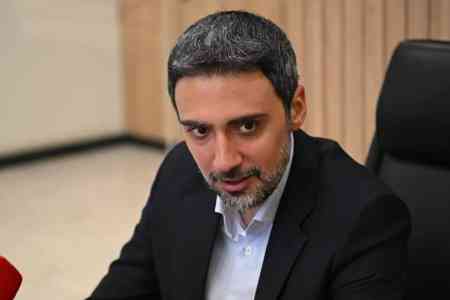 Aram Vardevanyan: Public demands solutions, not apology scandals in Parliament
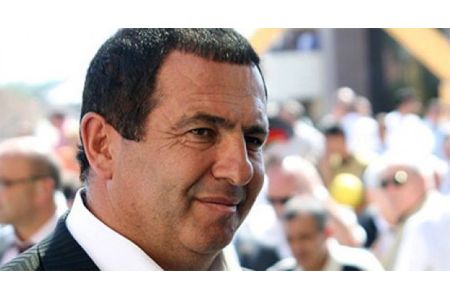 Arrested Armenian oligarch on economy and new jobs
  "In Baku, we gave a worthy rebuff to the false claims regarding the past and present of our people" – Former Artsakh Parliament Speaker from Baku captivity
  NA Vice Speaker candidate believes his wife`s salary as director of HayPost is the lowest in the company`s history
 RF Permanent Representative: There is no CSTO-Armenia conflict
 Moscow: NATO seeking to "Pull" Armenia away from CSTO Allies
  Political analyst: Russia intends to determine which "Camp" Armenia will choose through a referendum
 Narek Karapetyan will give up his parliamentary salary in favor of charitable contributions.