
ArmInfo.Russia's active mediation efforts have provided prerequisites and promising opportunities for cooperation both within the South Caucasus region and in a wider format with the involvement of existing integration structures.
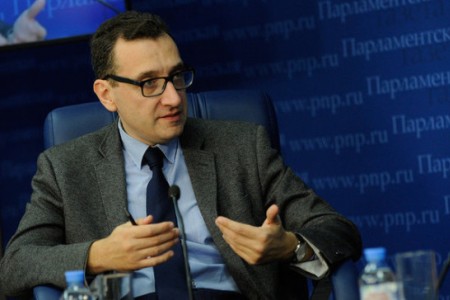
This opinion was expressed by the associate professor of the Russian State University for the Humanities Alexander Gushchin during the international round table "The South Caucasus - New Opportunities and Prospects for Cooperation", held on the initiative of the Russian Political Science Center "North - South".
"First of all, this concerns Eurasian Economic Union. The implementation of new transport projects in the region should become the basis and provide an impetus for infrastructural and social development," the Russian expert said. At the same time, he expressed his conviction that the signing on November 9, 2020 in Moscow of a trilateral agreement between Russia, Azerbaijan, Armenia on a complete cessation of hostilities in Nagorno-Karabakh and on unblocking economic transport links has significantly changed the situation in the region. In turn, Konstantin Tasits, a leading researcher at the Center for Studies of the Near Abroad of the Russian Institute for Strategic Studies, analyzing the key conditions for the stable development of the South Caucasus, taking into account the factor of Nagorno-Karabakh, identified three important aspects: taking measures to consolidate the ceasefire regime, excluding the possibility of escalation; ensuring sustainable inclusive economic development; solution of humanitarian problems - the issue of exchange of detainees, return of refugees, preservation of the historical and cultural heritage of Nagorno-Karabakh. "In this process, a special role is assigned to the institutions of the UN and other international organizations, as well as the institutions of civil society of the parties concerned. The solution of these tasks will allow moving on to negotiations on a comprehensive political settlement, to solving a particularly sensitive issue of the status of Nagorno-Karabakh acceptable to the warring parties," - Tasits remarked.
Meanwhile, director of the Baku Network Center for International Policy and Security, Gulnara Mamezade, believes that, despite the difficulties of the transition period, the new reality that is being formed in the region allows us to talk about the prospects for a restart of relations. "And the moment has come when the states of the region must formulate a positive agenda," Mamedzade said, adding that the structure she heads is working on a number of projects related to establishing communications between experts and the media communities of Armenia and Azerbaijan, including with the involvement of Russian and Georgian partners. ...
And the head of the Armenian NGO "Development and Integration" Aram Safaryan stressed that efforts to end the military confrontation in Nagorno-Karabakh showed that Russia is the most authoritative and influential player in the South Caucasus, the only country from the OSCE Minsk Group member states that can encourage active peaceful and humanitarian actions of the warring parties. According to Safaryan, this trend should be picked up by the structures of public diplomacy in Russia to create platforms for dialogue and direct contacts between representatives of expert communities, leaders of public opinion in Azerbaijan and Armenia in order to restore trust and good-neighborly relations.
Elshad Mamedov, deputy director of the Russian School of Economics, professor at AzEU, is sure that the fact of the conclusion of a trilateral agreement, the region for the first time in thirty years has got real chances for an economic breakthrough. This applies to all countries in the region, provided they are focused on deepening regional economic integration. According to the expert, Russia should act as the moderator of the process. He also emphasized the priority importance of developing not only the transport and logistics hub of the South Caucasus, but also industrial cooperation in the areas of import substitution, the development of its own high-tech potential.
In turn, political scientist, lecturer at Tbilisi State University Archil Sikharulidze explained Georgia's neutral position in the development of events in Nagorno-Karabakh by adherence to the concept of "radical Europeanization". "In recent decades, Georgia has been actively seeking to become a part of the West and turns a blind eye to what is happening in the region," he said. And expert-economist Demur Giorkhelidze, sharing his vision of the future of the region, expressed his conviction that it lies in the single economic zone of the South Caucasus. Remaining scattered, the states of the region may lose their subjectivity, Giorkhelidze is sure.
The roundtable participants agreed that the future of the South Caucasus fits into the global trend of regionalization: the countries of the region should more actively form their own agenda and, based on mutual interest, intensify economic integration and intraregional cooperation. A constructive exchange of views between leading regional experts (political scientists, economists) from Armenia, Azerbaijan, Russia and Georgia took place in an atmosphere of trust and mutual understanding. The meeting participants supported the initiative of the North-South Political Science Center to organize a dialogue platform and expressed interest in the development of professional expert communications on the current agenda of the South Caucasus.







 Armenian experts, leading Turkish think tanks discuss prospects for expanding cooperation
  Political Scientist: As long as the opposition remains silent, Pashinyan can use Plan B and secure a constitutional majority
 US-Iranian memorandum more beneficial for Iran from political and economic perspective - expert
  Political analyst: While Pashinyan pledges peace with Azerbaijan, Baku continues promoting the "Western Azerbaijan" project
 Political analyst: In light of new realities, Yerevan may propose advancing peace process with Baku without constitutional referendum
 It`s time for South Caucasus countries to think of South Caucasus as single, unified region - RA premier
  Pashinyan: Armenia and Azerbaijan should leave each other alone
 Moscow sees situation with Armenia as attempt to attack Russia-involving integration associations - Russian presidential aid
 Zakharova: Armenia views relations with Russia as tool for financially securing reorientation toward EU
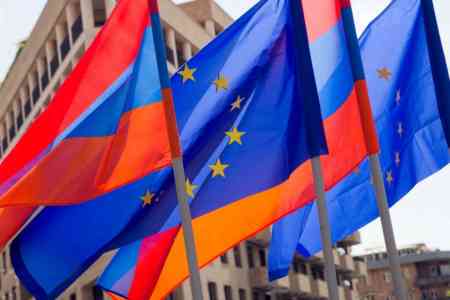 The Armenian Minister of Justice and the EU Ambassador discussed visa liberalization issues for Yerevan.
 Azerbaijan`s aggressive plans against Armenia became possible in wake of Pashinyan`s decisions on Artsakh - expert
  Zakharova: Russia sent a note of protest to Armenia over the act of vandalism at the "Mother Armenia" memorial in Gyumri
 Samvel Karapetyan proposes creating a post-election opposition coalition
 Artsakh`s Cultural Heritage Ombudsman called on Moscow to respond to destruction of WWII monuments by Azerbaijan in occupied NKR
 Prosecutor General`s Office petitions Central Electoral Commission for criminal prosecution of Robert Kocharyan
 Dutch Prime Minister expresses his support for Armenia`s democratic reform and economic diversification agenda
 Heritage: It`s time for Armenia`s opposition to present people with legitimate alternative to power
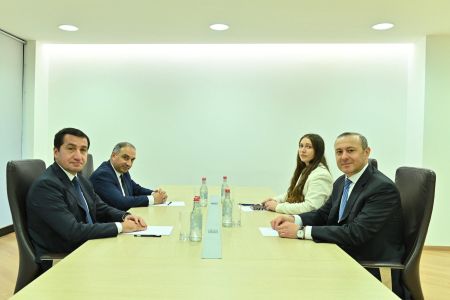 RA Security Council Sec, Assistant to President of Azerbaijan hold negotiations in Dilijan
 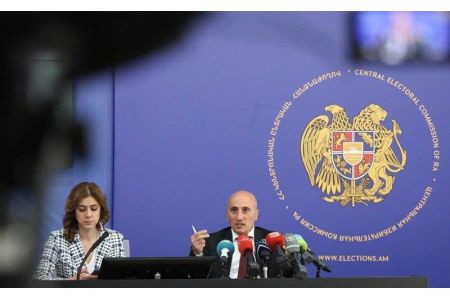 CEC Neutralizes PAP: Three Political Forces to Enter Armenian Parliament Following Election Vote
