

ArmInfo.The armed confrontation in Nagorno-Karabakh, which has not abated for a month, is accompanied by fruitless attempts by the mediators to return the parties to negotiations in order to achieve a peaceful settlement.
A similar opinion was expressed to ArmInfo by Sergei Markedonov, a leading researcher at the Institute of International Studies at MGIMO of the Russian Foreign Ministry, editor-in-chief of the journal "International Analytics".
"Note that Russia and the West have never opposed each other during the entire existence of the Karabakh conflict. And Turkey's active desire to break the political monopoly of the OSCE Minsk Group co-chairing countries, in theory, should have brought their positions closer together. At first glance, the scheme is impeccable. however, this apparent impeccability collides with some important nuances, "he stressed. On October 24, Foreign Ministers of Armenia and Azerbaijan Zohrab Mnatsakanyan and Jeyhun Bayramov at a meeting with US Deputy Secretary of State Stephen Bigan "reaffirmed their commitment to the implementation of the ceasefire agreement for humanitarian purposes." On October 25, the State Department announced the return of the parties to the conflict to a ceasefire at 08:00 on October 26. This is already the third initiative on a ceasefire for humanitarian purposes, however, according to the Artsakh Defense Army, Azerbaijan has already violated this ceasefire.
Markedonov believes that the obvious importance of the Karabakh war does not in any way cancel out the differences between Russia, France and the United States outside the framework of the Karabakh story. And such discrepancies, according to his assessments, are still quite a lot, which does not add to Moscow, Paris and Washington either mutual trust or desire for joint work. Moreover, the extensive claims of the superpowers against Turkey do not cancel their conflicting hopes regarding Turkey. In this light, the analyst highlighted Russia's desire to weaken NATO with Turkey's help, while noting the US's intention to prevent this.
According to the analyst, the aforementioned geopolitical nuances significantly complicate the possibility of a consolidated approach by the mediators to a peaceful resolution of the conflict. And according to Markedonov, the breakdown of the status quo from 1994 only complicates the situation, since the parties to the conflict themselves, before sitting down at the negotiating table, strive, on the one hand, to consolidate this breakdown, and, on the other, to return the situation to the pre-war situation.
"It is necessary to understand that the success of peacekeeping efforts should be accompanied by an interest in mutual compromises of the conflicting parties themselves. This is not observed today either in Armenia or in Azerbaijan. Nevertheless, even against such a background, political and diplomatic departure from realities is impossible. Accordingly, initiatives in The mediators need to continue the direction of peace, but continue, realizing the impossibility of achieving it quickly. Yerevan and Baku, in the first place, should rely not on external efforts, but on their own responsibility for what is happening, "Markedonov concluded.












 Expert: Economic pressure on Armenia may be virtually painless for other EAEU members, but not for Armenia itself
 Expert on protests in France: Civilizations fade when society loses a vision of the future
 Turkologist: Azerbaijan is not all-powerful—its vulnerabilities should become part of Armenia’s security strategy
 Opinion: The development of the Amulsar mine near the resort town of Jermuk is the beginning of an environmental disaster in Armenia
 Expert: The arrest of opposition figures in Armenia for social media posts is a systematic attempt to intimidate the public and suppress dissent.
 Zakharova commented on the scandalous epithets of the governor of Armenia`s Shirak region about "Ivanov"
 Nikolai Bordyuzha proposed excluding Armenia from the CSTO.
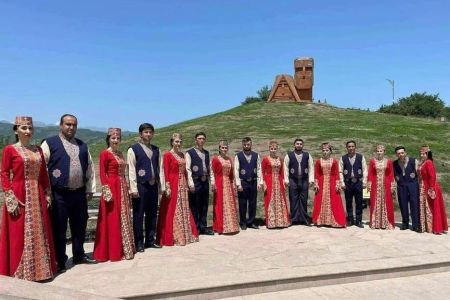 The participation of Artsakh ensembles in an international festival in Vienna was cancelled following the intervention of several foreign embassies
 Expert: It`s time for Armenia to move away from uncertainty and choose between West and East
 The Armenian Foreign Minister commented on the country`s return to work within the CSTO.
 The Artsakh Public Council expressed outrage at the UN Secretary-General`s behavior
 Lukashenko called for Armenia to assume the CIS presidency in 2029
 Dmitry Medvedev predicted a Ukrainian-like fate for Armenia amid the country`s shift in foreign policy
 Russian Security Council: In Armenia, they want to force Russian asset owners to dispose of their assets
 Zakharova: Russia ready to discuss with Armenia the prospects for expanding military cooperation as part of a review of bilateral ties
 Tevanyan: Armenia, like Ukraine and Moldova, is being drawn into the EU’s global war
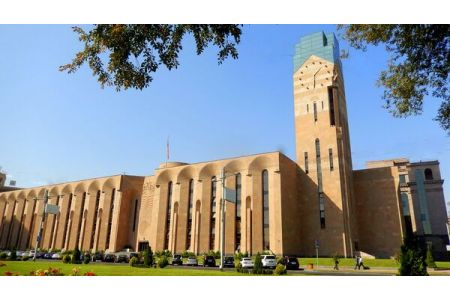 Yerevan City Hall is considering introducing a valet parking system in the city
 Expert: The circus surrounding the “Albanization” of Armenian culture in the presence of foreign ambassadors in occupied Artsakh is genocide
 Political scientist: If Russian-Armenian relations are destroyed, Turkey will take Russia`s place