

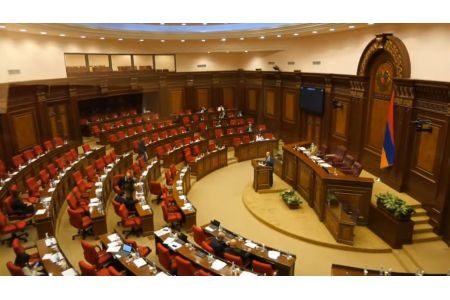
ArmInfo. Working discussions on the draft law “On Ensuring Equality and Protection from Discrimination” and the package of documents previously approved by the Government of the Republic of Armenia are being held on November 25 in the National Assembly of the Republic of Armenia’s Committee on Human Rights Protection and Public Affairs.
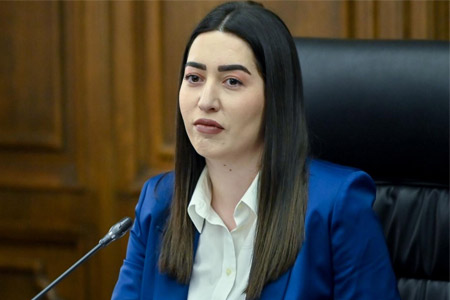
As Deputy Minister of Justice of the Republic of Armenia Anna Karapetyan noted in her speech, the proposed package is intended to close the gaps in the country’s current legislation, despite the existence of relevant provisions in the Constitution. The initiative develops constitutional guarantees of equality and non-discrimination. It was prepared taking into account public discussions launched in 2024.
The package establishes definitions of direct and indirect discrimination, harassment, incitement to discrimination, victimization, intersectional discrimination, discrimination by association or perception, as well as the denial of reasonable accommodation for people with disabilities. The list of grounds on which discrimination is prohibited is open-ended and includes, among other things, sex, race, skin color, ethnic or social origin, genetic characteristics, language, religion, beliefs, political views, membership in a national minority, property status, birth, disability, health status and sexual orientation.
The Human Rights Defender is vested with the functions of a national equality body. The Ombudsman’s mandate will include the consideration of complaints, monitoring, promotion of equal treatment and the issuance of recommendations, as well as, subject to the established conditions and written consent, filing applications with the court.
It should be noted, however, that human rights defenders and civil society welcome the fact that the reform is being advanced, but point to a number of unresolved issues. In particular, unlike the 2024 version, the package approved by the government excludes special administrative sanctions for discrimination, harassment and victimization. The package also does not establish a general rule for shifting the burden of proof to the respondent, and expressly provides for this only in cases where a violation has been established by a decision of the Ombudsman. Experts also draw attention to the limited powers of the Human Rights Defender with regard to the actions of private individuals, the lack of binding force of his decisions, as well as issues of judicial protection when challenging administrative acts and the participation of non-governmental organizations in protecting collective interests.


















 A security sphere expert commented on a video about Papikyan`s achievements during his five years as Defense Minister
 The future of the South Caucasus was discussed in the capital of a country whose problem remains unresolved — Davtyan
 An Armenian orientalist presented possible US actions against Iran
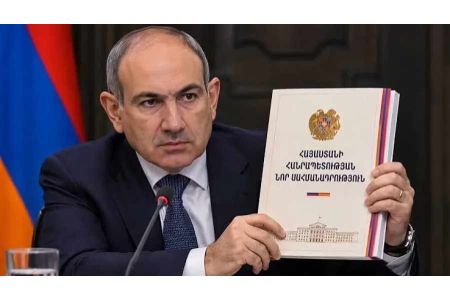 Prime Minister: The Constitution is our collective agreement on the fundamental principles of our internal and external relations
 Ultra-Orthodox Jews continue to desecrate Armenian holy sites in Jerusalem’s Armenian Quarter
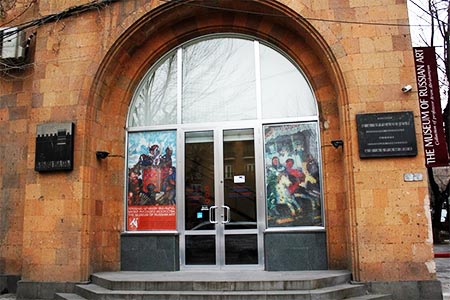 The Yerevan Museum of Russian Art Turns 42
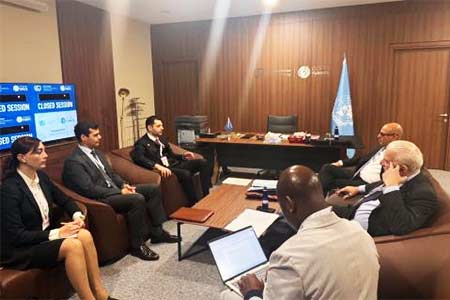 Armenia wants to host COP-34 in 2029
 Speaker: Armenia has never approached the CSTO regarding the Karabakh issue
 Lavrov: Armenia will not be expelled from the CSTO
 Drmeyan: The ECHR rejected Azerbaijan`s appeal in the case of Artsakh Defense Army Major Hayk Toroyan
 "Strong Armenia": The brawl in parliament was staged to distract public attention from Pashinyan`s failed foreign policy
 Zakharova commented on the scandalous epithets of the governor of Armenia`s Shirak region about "Ivanov"
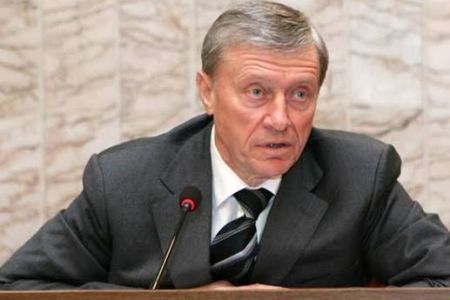 Nikolai Bordyuzha proposed excluding Armenia from the CSTO.
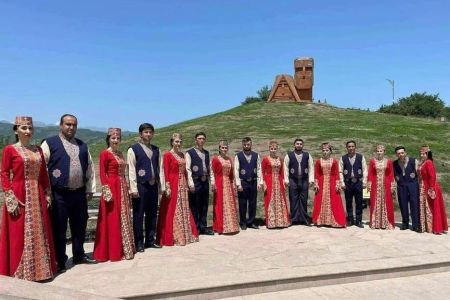 The participation of Artsakh ensembles in an international festival in Vienna was cancelled following the intervention of several foreign embassies