
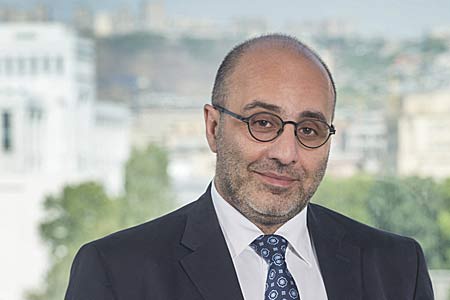
Arminfo. The key to demographics is the third child, but a third child is born only where the first and second were born with confidence. Tigran Jrbashyan, a partner at Ameria and head of the management consulting service, a well-known economist, wrote this on his Facebook page.
He noted that it is most often with the third child that a family falls below the poverty line. According to Jrbashyan, among families with three or more young children, 43% are poor—almost twice as high as the national average. In this context, he stressed that a one-time payment for the birth of a third child will not solve the problem; what is needed in this case is a system.
<A decision to have a child is made when a family is confident in the entire chain: financial support is not one-time, but provided for years, and the more children there are, the greater it is; leave that the mother and father can share without fear of losing their jobs; childcare services—nurseries, kindergartens, nannies—close to home and affordable; an employer for whom an employee’s third child is the norm, not a problem; housing with room for another crib; a school and doctor accessible to every child, not only those whose parents can pay; and most importantly, confidence that this child’s future is here, in Armenia. If one link is missing, no payment can replace it>, the expert said.
In this regard, he stressed that in the Demographic Strategy, money is not a gift for giving birth, but one of the links in the system. According to Jrbashyan, a family with children should live no poorer, but richer than a childless family, and should have the opportunity to invest in the education and health of each child. <Otherwise, the future of the children themselves will pay for the birth rate. This is less appealing than a beautiful recipe on air. But there is no other way. There is no magic button. There is work—systematic work>, he said.
It should be noted that according to data from the Statistical Committee of the Republic of Armenia, 22,759 children were born in Armenia in January–September 2026, which is 3.8% lower than the figure for the same period a year earlier (compared with a 5% decline a year ago). The birth rate per 1,000 inhabitants during the reporting period was 9.8 per mille, compared with 10.3 per mille during the same period in 2025.
It should be recalled that on August 13, 2026, the Armenian government adopted a decision stipulating that from September 1, 2026, the amount of the one-time childbirth allowance would be 500,000 drams, regardless of the child’s birth order in the family. Before the uniform allowance amount was introduced, its size depended on the child’s birth order: 300,000 drams was paid for the first and second children, 1 million drams for the third and fourth, and 1.5 million drams for the fifth and each subsequent child.




























 A security sphere expert commented on a video about Papikyan`s achievements during his five years as Defense Minister
 The future of the South Caucasus was discussed in the capital of a country whose problem remains unresolved — Davtyan
 An Armenian orientalist presented possible US actions against Iran
 Ultra-Orthodox Jews continue to desecrate Armenian holy sites in Jerusalem’s Armenian Quarter
 The Yerevan Museum of Russian Art Turns 42
 Armenia wants to host COP-34 in 2029
 Speaker: Armenia has never approached the CSTO regarding the Karabakh issue
 Lavrov: Armenia will not be expelled from the CSTO
 Drmeyan: The ECHR rejected Azerbaijan`s appeal in the case of Artsakh Defense Army Major Hayk Toroyan
 "Strong Armenia": The brawl in parliament was staged to distract public attention from Pashinyan`s failed foreign policy
 Zakharova commented on the scandalous epithets of the governor of Armenia`s Shirak region about "Ivanov"
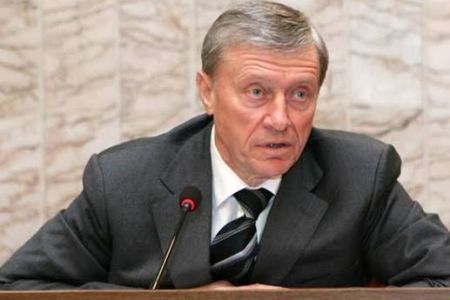 Nikolai Bordyuzha proposed excluding Armenia from the CSTO.
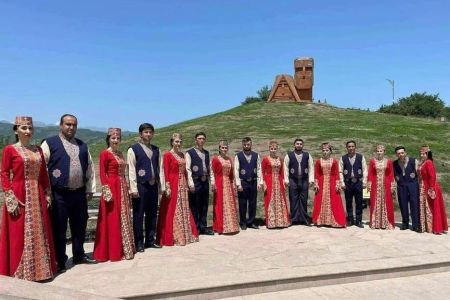 The participation of Artsakh ensembles in an international festival in Vienna was cancelled following the intervention of several foreign embassies
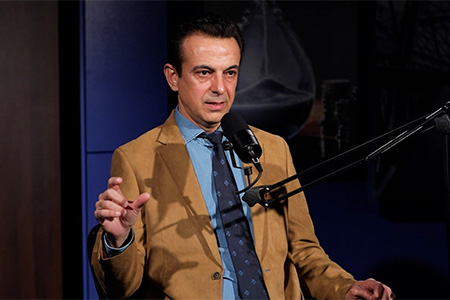 Expert: It`s time for Armenia to move away from uncertainty and choose between West and East
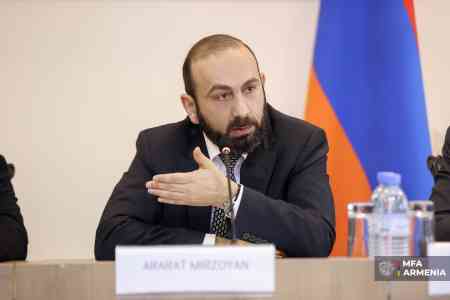 The Armenian Foreign Minister commented on the country`s return to work within the CSTO.