


Arminfo. Armenia’s ruling “Civil Contract” party has further expanded the criminal prosecution of the country’s leading opposition parties, using its almost complete control over the executive and legislative branches of government and abusing the law on pretrial detention and asset confiscation. This is stated in a report by the International Observatory for Democracy in Armenia (IODA).
In a report published today, “Law as a Weapon: Escalation of Pressure on Political Opponents in Armenia After the Elections,” IODA calls on the Armenian government to stop using the law as a political tool against the opposition. The organization also calls on relevant international institutions to make the continuation of financial and political support for Armenia conditional on strict adherence to the rule of law.
“The government punishes its political opponents under the pretext of fighting corruption, detaining them without charges being brought and confiscating their property without even minimal due process guarantees. The government’s persecution of its opponents is more indicative of a campaign to establish political dominance than of a genuine fight against corruption,” said IODA Executive Council member Sarah Lee Whitson.
The report is based on the findings of an IODA fact-finding mission to Armenia in September 2026. The mission’s objective was to examine the human rights situation following the parliamentary elections in June 2026, in which the “Civil Contract” party won 64 of the 105 seats in the National Assembly. This was IODA’s third mission to Armenia documenting the continuing deterioration of civil and political rights.
During the mission, IODA met with representatives of opposition parties, including individuals accused of committing criminal offenses, clergy involved in criminal and civil proceedings, lawyers, representatives of human rights and civil society organizations, as well as with the delegation of the European Union in Armenia. The Armenian authorities rejected IODA’s requests for a meeting with the delegation.
IODA’s research focused on the legal and factual grounds for the prosecution and detention of the leaders of the country’s three main opposition blocs, as well as senior clergymen of the Armenian Apostolic Church. The research showed that the ruling party, which effectively controls the judicial and prosecutorial systems, uses this control to deliberately and selectively prosecute opposition figures and clergy, bringing unfounded charges against them. The government broadly uses the law on pretrial detention and asset confiscation to detain political opponents and deprive them and their families of property. All of this is done without a court ruling establishing guilt and without due guarantees of compliance with procedural rules and the law.
“The documented arrests, pretrial detention decisions, cases of property confiscation without a conviction, and regulatory interference are not isolated law enforcement actions, but indicate the systematic use of administrative and judicial systems as instruments of political pressure. Every citizen of Armenia should be concerned about the selective application of the law, the undermining of judicial independence, and the continuing narrowing of the space for political pluralism,” said IODA Executive Council member Jose Maria
Among the report’s main findings is the abuse of the law on pretrial detention. It states that the prosecution has turned its pretrial detention powers into a routine tool of criminal prosecution, detaining political opponents for lengthy periods on various charges. It adds that courts generally accept practically identical, boilerplate justifications for the necessity of detention put forward by the prosecution, without assessing the factual circumstances of each case separately. “The government also abuses preventive punishment mechanisms by imposing travel bans on representatives of the political opposition and senior clergymen of the Armenian Apostolic Church, including Catholicos of All Armenians Karekin II and six bishops. According to the report, the investigations conducted against the latter are politically motivated,” the conclusion notes.
Moreover, attention is drawn to the abuse of property confiscation legislation, whereby state bodies systematically apply the mechanism of property confiscation in civil proceedings without a conviction, as well as expropriate property on the basis of “overriding public interest” in violation of the universal rights of the owner of that property.
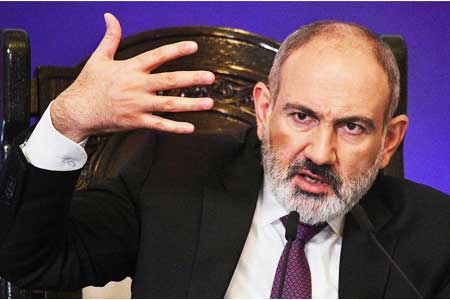
Attention is also drawn to the undermining of the independence of the judiciary and prosecution in Armenia. It is noted that the executive branch, headed by Prime Minister Nikol Pashinyan, systematically undermines the independence of the judiciary, the prosecution, and key oversight bodies, turning them into subordinate structures used for political persecution.
“The ruling ‘Civil Contract’ party appoints individuals loyal to the executive branch to key positions in formally independent bodies. Judges are subjected to serious pressure in the form of targeted disciplinary proceedings, salary cuts, and public threats of dismissal from the prime minister. Under such conditions, judges are forced to mechanically comply with prosecutorial requests for detention and asset freezes before a court decision is issued. As described in detail in the report, these mechanisms selectively targeted, among others, Strong Armenia party founder Samvel Karapetyan, Armenia’s second president and leader of the Armenia bloc Robert Kocharyan, Prosperous Armenia party leader Gagik Tsarukyan, Armenian Revolutionary Federation ‘Dashnaktsutyun’ representative Ishkhan Saghatelyan, Mother Armenia bloc leader Andranik Tevanyan, and Ayakve civil organization coordinator Avetik Chalabyan,” the conclusion further states.
It is noted that the government also continues an unprecedented campaign of criminal prosecution and pretrial detention of senior clergymen of the Armenian Apostolic Church who criticize the prime minister or are loyal to the Catholicos of All Armenians.
Based on the above, IODA called on the Armenian government to: use pretrial detention exclusively as a measure of last resort, justifying its necessity by the individual circumstances of each case rather than by general and formal arguments; thoroughly review the 2020 law on the confiscation of property in civil proceedings in consultation with the Venice Commission; guarantee the independence of the judiciary by ending pressure from the executive branch and the use of the Supreme Judicial Council as an instrument of political influence.
IODA also calls on the international community, including the European Union, the United Nations, the Council of Europe, and the Organization for Security and Co-operation in Europe (OSCE), to make financial and political support for Armenia conditional on strict adherence to the rule of law, establish mandatory quarterly monitoring mechanisms with the participation of civil society, send urgent UN and EU fact-finding missions, and publicly condemn politically motivated persecution.



















 A security sphere expert commented on a video about Papikyan`s achievements during his five years as Defense Minister
 The future of the South Caucasus was discussed in the capital of a country whose problem remains unresolved — Davtyan
 An Armenian orientalist presented possible US actions against Iran
 Expert: Official Yerevan should not base its calculations in relations with Ankara on the "crack" in the Turkish-Azerbaijani alliance
 Armenia and Germany held consultations on defense issues
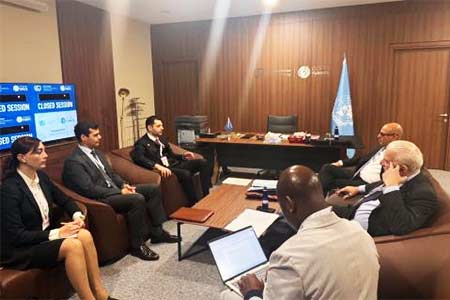 Armenia wants to host COP-34 in 2029
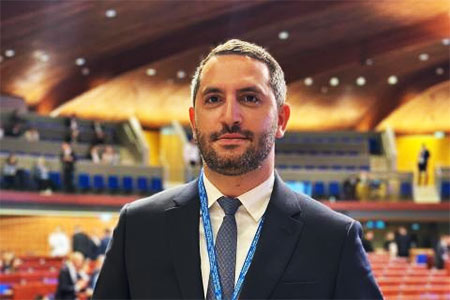 Speaker: Armenia has never approached the CSTO regarding the Karabakh issue
 Lavrov: Armenia will not be expelled from the CSTO
 Drmeyan: The ECHR rejected Azerbaijan`s appeal in the case of Artsakh Defense Army Major Hayk Toroyan
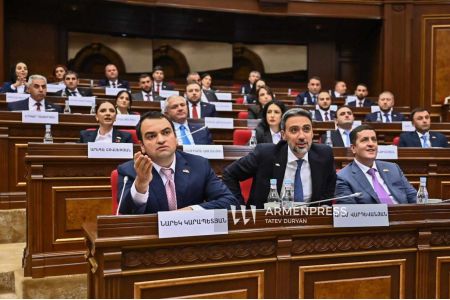 "Strong Armenia": The brawl in parliament was staged to distract public attention from Pashinyan`s failed foreign policy
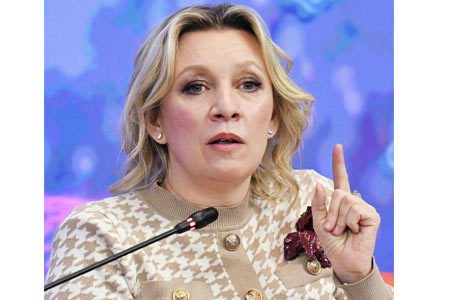 Zakharova commented on the scandalous epithets of the governor of Armenia`s Shirak region about "Ivanov"
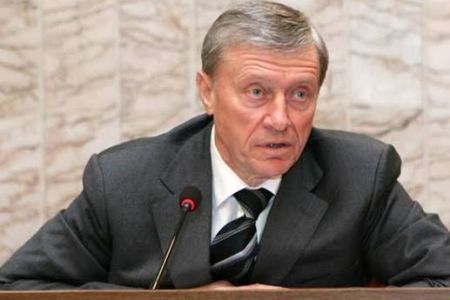 Nikolai Bordyuzha proposed excluding Armenia from the CSTO.
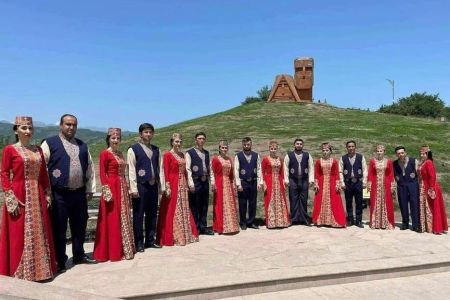 The participation of Artsakh ensembles in an international festival in Vienna was cancelled following the intervention of several foreign embassies
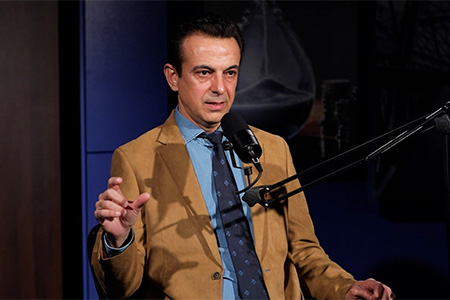 Expert: It`s time for Armenia to move away from uncertainty and choose between West and East
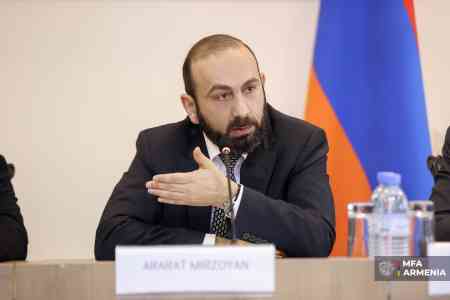 The Armenian Foreign Minister commented on the country`s return to work within the CSTO.
 The Artsakh Public Council expressed outrage at the UN Secretary-General`s behavior
 Lukashenko called for Armenia to assume the CIS presidency in 2029
 Dmitry Medvedev predicted a Ukrainian-like fate for Armenia amid the country`s shift in foreign policy
 Russian Security Council: In Armenia, they want to force Russian asset owners to dispose of their assets