


ArmInfo. Avetik Chalabyan, coordinator of the Hayakve movement, called on the opposition to come up with a legislative initiative aimed at tightening the criteria for using arrest as a preventive measure.
He made this proposal during a hearing in the Armenian parliament, drawing attention to the gaps in Article 118 of the Criminal Procedure Code of Armenia ("Specifics of the Legality of Arrest" - ed.). According to him, these gaps allow the current leadership, abusing the judicial system's dependence on political power, to widely use arrest as a preventive measure.
The coordinator of the Hayakve movement emphasized that the current legislative regulation essentially contradicts Article 73 of the Armenian Constitution, which enshrines the requirement for legal certainty in legislative norms. In his opinion, it is the lack of clear and unambiguous criteria that creates the conditions for the widespread use of arrest as a preventive measure. In this regard, he recalled that the parliamentary opposition holds one-fifth of the total number of MPs, which gives it the right to appeal to the Constitutional Court of Armenia with a demand to review the constitutionality of this article. "Furthermore, the opposition can come forward with a legislative initiative aimed at tightening the criteria for applying arrest, which would prevent the courts from resorting to this preventive measure without proper grounds. Today, we have the opportunity, without waiting for a change in power, to try to influence the resolution of such issues," Chalabyan noted.
He recalled that Article 118 stipulates that arrest is applied by a court decision in the cases and in the manner prescribed by law; arrest can only be chosen in cases where alternative preventive measures are insufficient to ensure the proper behavior of the accused; The need for arrest must be justified by the investigator or prosecutor and receive appropriate justification in the court decision. "At first glance, it seems that the content of this norm provides sufficient guarantees for the proportionate use of arrest. However, in practice, this is not the case. We see how courts, under political pressure, resort to arrest everywhere, despite the fact that the law expressly provides for its use only in exceptional cases," Chalabyan noted.
According to him, one of the main reasons for the current situation is the lack of clear criteria for assessing the risks of inappropriate behavior by the accused. In addition, as Chalabyan noted, court decisions often do not contain a justification for the chosen preventive measure. He also recalled that the current Criminal Procedure Code of Armenia provides for a number of alternative preventive measures, each of which is less strict than arrest, and when choosing a measure, priority should be given to more lenient measures, which Armenian society does not see in practice. "Unfortunately, the law does not establish clear criteria that the court should use when refusing to apply alternative preventive measures. The court is also not obligated to justify any verdict, and the law does not establish clear criteria for the proportionality of the chosen preventive measure. As a result, arrest can be applied even in cases of minor or moderate crimes, whereas in a number of other countries, more lenient preventive measures are preferred in such cases, and arrest is ruled out altogether. The law also does not provide for any procedural procedure in cases of a political nature," the opposition figure noted.
As an example, Chalabyan cited his own case, the materials of which, according to him, indicated that other preventive measures were unable to ensure his proper behavior. At the same time, as the movement coordinator noted, no explanation was given as to why these measures were insufficient.


























 The future of the South Caucasus was discussed in the capital of a country whose problem remains unresolved — Davtyan
 An Armenian orientalist presented possible US actions against Iran
 Expert: Official Yerevan should not base its calculations in relations with Ankara on the "crack" in the Turkish-Azerbaijani alliance
 Speaker: Armenia has never approached the CSTO regarding the Karabakh issue
 Lavrov: Armenia will not be expelled from the CSTO
 Drmeyan: The ECHR rejected Azerbaijan`s appeal in the case of Artsakh Defense Army Major Hayk Toroyan
 "Strong Armenia": The brawl in parliament was staged to distract public attention from Pashinyan`s failed foreign policy
 Zakharova commented on the scandalous epithets of the governor of Armenia`s Shirak region about "Ivanov"
 Nikolai Bordyuzha proposed excluding Armenia from the CSTO.
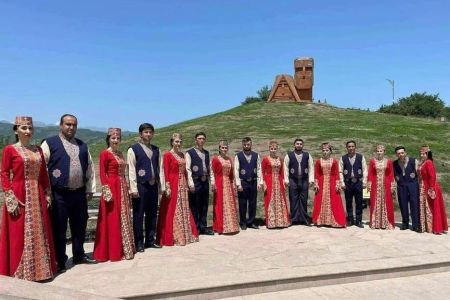 The participation of Artsakh ensembles in an international festival in Vienna was cancelled following the intervention of several foreign embassies
 Expert: It`s time for Armenia to move away from uncertainty and choose between West and East
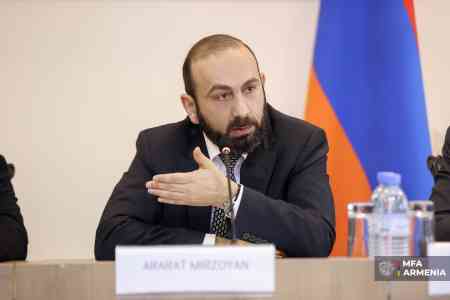 The Armenian Foreign Minister commented on the country`s return to work within the CSTO.
 The Artsakh Public Council expressed outrage at the UN Secretary-General`s behavior
 Lukashenko called for Armenia to assume the CIS presidency in 2029
 Dmitry Medvedev predicted a Ukrainian-like fate for Armenia amid the country`s shift in foreign policy
 Russian Security Council: In Armenia, they want to force Russian asset owners to dispose of their assets
 Zakharova: Russia ready to discuss with Armenia the prospects for expanding military cooperation as part of a review of bilateral ties
 Tevanyan: Armenia, like Ukraine and Moldova, is being drawn into the EU’s global war