
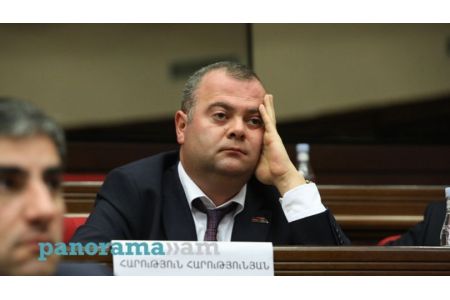
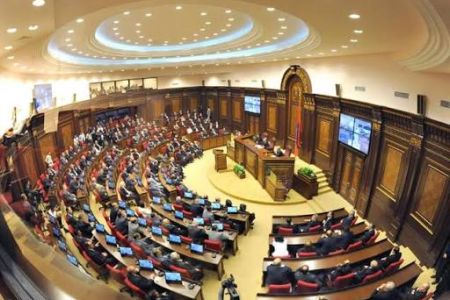
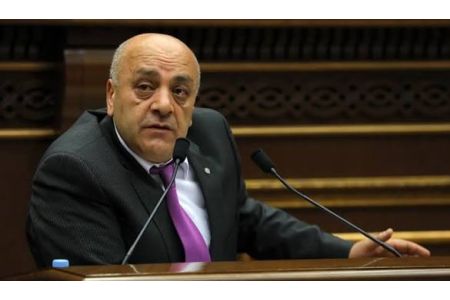
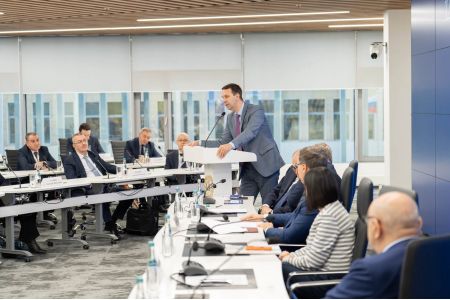
ArmInfo. When it comes to citizens' health, all disagreements between the authorities and the opposition should fade into the background. This was stated by MP Harutyun Harutyunyan, a member of the NA from the Strong Armenia opposition faction, at a November 16 meeting of the RA National Assembly Committee on Healthcare, who presented amendments to the law "On Medicines."
Earlier, the Strong Armenia faction initiated amendments to the law providing for simplified registration of European drugs and a 20% reduction in their prices.
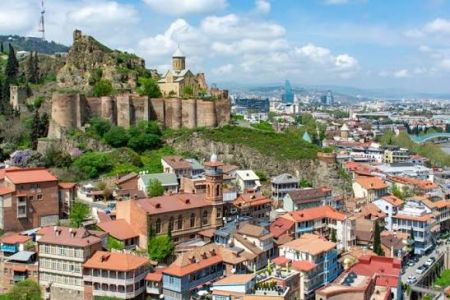
According to the parliamentarian, this concerns a citizen who visits a pharmacy not for pleasure, but as needed. about the parent who counts their last pennies for the sake of their child's health, about the pensioner who spends their meager pension on purchasing medications. Harutyunyan noted that the Strong Armenia faction is proposing very real steps aimed at importing medications from leading European manufacturers at a reduced price and simplifying the procedure for their registration in the country, which will comply with the procedures adopted in the Eurasian Economic Union. All those medications produced in the countries of the European Union and certified by authorized EU structures, being on free sale, should be automatically registered in the relevant register of the republic. The speaker cited Georgia as an example, which has a population slightly larger than Armenia's by just over 800,000. However, if we compare the number of registered drugs, Armenia has 3,397, while its neighbor has 11,056. In Europe, this figure exceeds 20,000.
The "Strong Armenia" faction proposes reducing drug prices in the country by approximately 20% and expanding their range by simplifying registration procedures and promoting competition in the pharmaceutical market. Specifically, it proposes automatically registering drugs in Armenia that have already been approved and registered in European Union countries. According to the draft law, the registration process for European drugs is proposed to be shortened to 7 days, and the state fee for this procedure is set at 50,000 drams.
The bill proposes that the state conduct direct price negotiations with large pharmaceutical manufacturers, taking into account the needs of the entire country. This should help avoid purchasing through costly intermediaries.
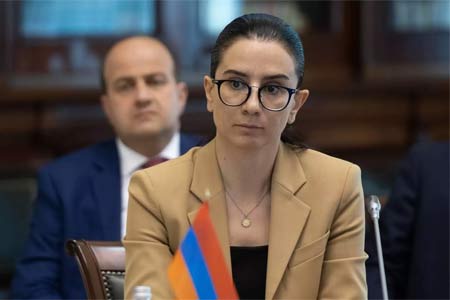
In turn, RA Minister of Health Anahit Avanesyan, representing the government's position, agreed with the keynote speaker that healthcare is above all political preferences. "The individual is the state's highest value, and the state's primary task is to ensure their primary needs," said Anahit Avanesyan, pointing in this context to the healthcare system reform that includes elements of universal health insurance. She noted that 400 new drugs have already been registered in the country since 2025. The universal health insurance system itself allows for the entry of new companies into the Armenian market, which will have the opportunity to register their drugs and revise their pricing policies. The minister noted that the state has created a system that makes drugs accessible to citizens. She noted that compared to the early 2000s, drug prices have increased by 30%, but even if VAT on imported drugs were removed, those prices would hardly decrease. At most, this would only lead to a 1-2 percent reduction. For this reason, the authorities have not pursued a tax reduction approach, but have instead implemented mechanisms for implementing a new system that will not have a significant impact on citizens' pockets. Avanesyan added that the Ministry of Health has already drafted a corresponding law, which will soon be submitted to the government, addressing the pricing issue. The minister noted that focusing solely on EU countries is not sufficient, as many EU manufacturers are redirecting production to Asian markets. Considering all the factors presented, the government deemed it inappropriate to adopt the bill proposed by Strong Armenia, but Avanesyan suggested the opposition work on solutions that would satisfy all parties, especially considering that the proposal for a 20% discount on medicines also implies the application of other laws, which the opposition did not propose.
Meanwhile, Strong Armenia faction secretary Tigran Abrahamyan pointed to a similar draft law submitted by the RA government for parliamentary discussion. Furthermore, another similar draft law, which essentially replicates the document presented by the opposition, will soon be submitted for circulation with some differences.
After nearly two hours of discussion, Harutyun Harutyunyan proposed postponing the committee's discussions and votes for two months to finalize the document.










 The future of the South Caucasus was discussed in the capital of a country whose problem remains unresolved — Davtyan
 An Armenian orientalist presented possible US actions against Iran
 Expert: Official Yerevan should not base its calculations in relations with Ankara on the "crack" in the Turkish-Azerbaijani alliance
 Speaker: Armenia has never approached the CSTO regarding the Karabakh issue
 Lavrov: Armenia will not be expelled from the CSTO
 Drmeyan: The ECHR rejected Azerbaijan`s appeal in the case of Artsakh Defense Army Major Hayk Toroyan
 "Strong Armenia": The brawl in parliament was staged to distract public attention from Pashinyan`s failed foreign policy
 Zakharova commented on the scandalous epithets of the governor of Armenia`s Shirak region about "Ivanov"
 Nikolai Bordyuzha proposed excluding Armenia from the CSTO.
 The participation of Artsakh ensembles in an international festival in Vienna was cancelled following the intervention of several foreign embassies
 Expert: It`s time for Armenia to move away from uncertainty and choose between West and East
 The Armenian Foreign Minister commented on the country`s return to work within the CSTO.
 The Artsakh Public Council expressed outrage at the UN Secretary-General`s behavior
 Lukashenko called for Armenia to assume the CIS presidency in 2029
 Dmitry Medvedev predicted a Ukrainian-like fate for Armenia amid the country`s shift in foreign policy
 Russian Security Council: In Armenia, they want to force Russian asset owners to dispose of their assets
 Zakharova: Russia ready to discuss with Armenia the prospects for expanding military cooperation as part of a review of bilateral ties
 Tevanyan: Armenia, like Ukraine and Moldova, is being drawn into the EU’s global war