
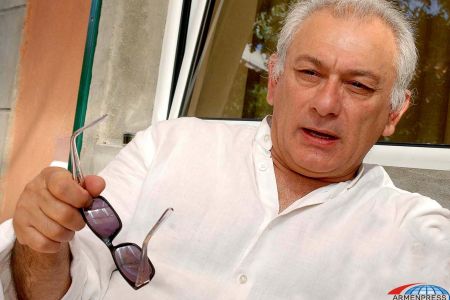
ArmInfo. A retrospective screening of short animated films by renowned French director and actor Serge Avedikian was held at the Nairi Cinema. The evening was organized by the Cinema Foundation as part of the Rea Fest International Festival of Animated Films and Comic Art.
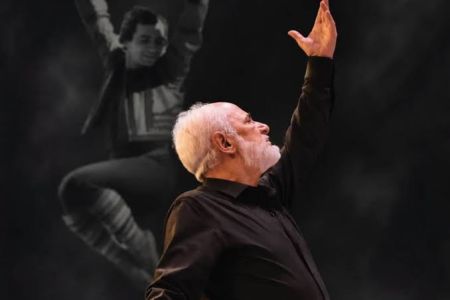
Avedikian's friends and colleagues, as well as admirers of his work, gathered in the hall. In his welcoming remarks, the director announced his intention to attend all film screenings, which will run until November 13. Avedikian admitted that he was extremely interested in answering questions and experiencing how these films "speak" to his audience. Today.
Before each screening, the director briefly introduced his work, focusing on the story and vision behind it rather than the plot.
The first audience was shown "Life Line" (Ligne de vie, 2003). He admitted that animation had never been particularly close to him, but over time he realized that certain stories could be conveyed through this genre. Initially, Avedikyan planned to make this film with the outstanding Robert Sahakyants. Sahakyants' approach was more classical, but Avedikyan wanted something broken. "I couldn't have made this film any other way; it was my first risky step into animation." The film was based on a novella about a Nazi camp, but Avedikyan adapted it slightly, centering on an artist whose hands were cut off. "If they cut off your hands to stop you from drawing, it means they forbade you from living," he said.
The second film was "One Fine Morning" (Un beau matin, 2005), which was based on Franck's well-known French novella.
Pavloff's "Brown Morning." According to Avedikyan, this book sold 1.5 million copies. He approached the author with a request to adapt this anti-fascist parable, which deals with the banning of all colors except one, into an animated film and received consent.
My approach was that what is inside us, our individuality, is being stolen from us, and we become transparent. "Fascist ideology zombifies us, steals our subjectivity, our ideas, and our views," the master noted.
The evening closed with a screening of Chienne d'histoire (A Dog's Purpose, also known as Barking Island, 2010), which won the Palme d'Or at the Cannes Film Festival for Best Short Film. The film is set in early 20th-century Constantinople, whose streets are overflowing with stray dogs. The authorities decide to get rid of all the stray dogs by sending them to an uninhabited island, effectively condemning them to starvation.
Avedikyan explained that the film is based on real events, but before making it, he read a book about three pashas—Taalat, Enver, and Djemal—who came to power in 1910, overthrew the sultan, and committed what we Armenians know well (the Armenian Genocide of 1915 in the Ottoman Empire - ed.).
The director noted that after the screening in Cannes, every media outlet wrote that the film was about the Armenian Genocide. However, Avedikyan himself doesn't entirely agree with this interpretation. He noted that the film is based on the story of people who intended to do to other people the same thing they had done to dogs. "Clear the area to prevent a return to where they lived for many years," the director said. He noted that despite never positioning himself as a fighter, a supporter of any political movements, or even a member of any party, the theme of struggle, including against fascism, runs through almost all of his works. Directly or indirectly, in his works, Avedikyan speaks of the dangers that warn us ahead or are nearby. "And if we cannot resist them, then it will all fall on our heads," the director added.
It is worth noting that representatives of the French Institute of Armenia, founder and director of Rea Fest Vrezh Kasuni, and director and artistic director of the Golden Apricot Film Festival were present at the evening of Avedikyan's films. Karen Khachatryan, Director of the Cinema Fund David Banuchyan, and filmmakers, including the prominent Ukrainian director of Armenian descent Roman Balayan, Armenian director, screenwriter, and actor Mikael Dovlatyan, and others, attended.
The head of the Cinema Fund called Avedikyan an ambassador of Armenian films in Paris. He explained that Armenian filmmakers who come to the French capital to screen their films or implement various projects turn to Avedikyan for assistance. According to Banuchyan, over the years, the director has always been helpful to anyone who approached him. Banuchyan recalled that the master organized screenings of Artavazd Peleshyan's films in Paris, assisted in their restoration, and was the one who met Parajanov in Paris and accompanied him to the Pompidou Centre. And there are many such stories. "I think we haven't yet fully read the book called 'Serzh Avedikyan,'" said the head of the Foundation. In recognition of his contribution to Armenian cinema, Banuchyan presented the director with the 'Komitas' medal. Mikael Dovltyan, in turn, called Avedikyan a hurricane, a mercury generator, a locomotive of ideas. "Because he's a man who can simultaneously promote three projects. Maybe all three won't work out right now, but they will happen anyway, because he believes. And not only in his work, but also in the people he works with. Because he loves. He has a rare quality—he still knows how to be surprised. And that means he's a man of sincerity and purity." "Keep this feeling, Serzh," the filmmaker said, addressing Avedikyan.
Rea Fest is taking place in Armenia from November 7th to 14th. During the festival's opening ceremony, Serzh Avedikyan received an award for outstanding contribution to the art of animation in Armenia.
















 Expert: Official Yerevan should not base its calculations in relations with Ankara on the "crack" in the Turkish-Azerbaijani alliance
 International expert: Trump is entering a "lame duck" period of rule
 Lavrov: Armenia will not be expelled from the CSTO
 Drmeyan: The ECHR rejected Azerbaijan`s appeal in the case of Artsakh Defense Army Major Hayk Toroyan
 "Strong Armenia": The brawl in parliament was staged to distract public attention from Pashinyan`s failed foreign policy
 Zakharova commented on the scandalous epithets of the governor of Armenia`s Shirak region about "Ivanov"
 Nikolai Bordyuzha proposed excluding Armenia from the CSTO.
 The participation of Artsakh ensembles in an international festival in Vienna was cancelled following the intervention of several foreign embassies
 Expert: It`s time for Armenia to move away from uncertainty and choose between West and East
 The Armenian Foreign Minister commented on the country`s return to work within the CSTO.
 The Artsakh Public Council expressed outrage at the UN Secretary-General`s behavior
 Lukashenko called for Armenia to assume the CIS presidency in 2029
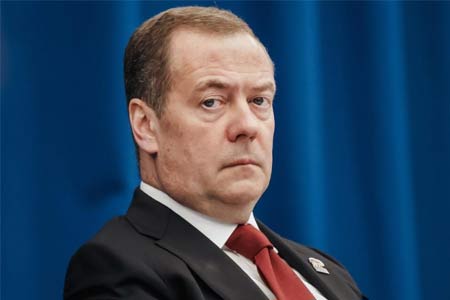 Dmitry Medvedev predicted a Ukrainian-like fate for Armenia amid the country`s shift in foreign policy
 Russian Security Council: In Armenia, they want to force Russian asset owners to dispose of their assets
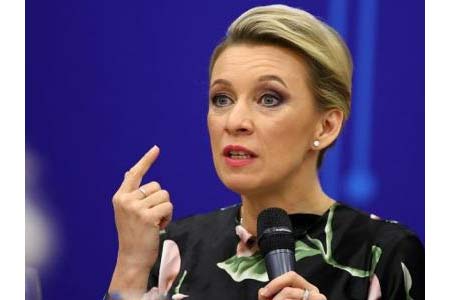 Zakharova: Russia ready to discuss with Armenia the prospects for expanding military cooperation as part of a review of bilateral ties
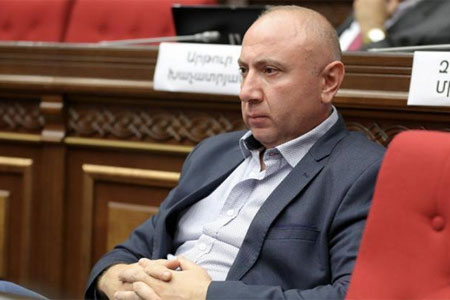 Tevanyan: Armenia, like Ukraine and Moldova, is being drawn into the EU’s global war