
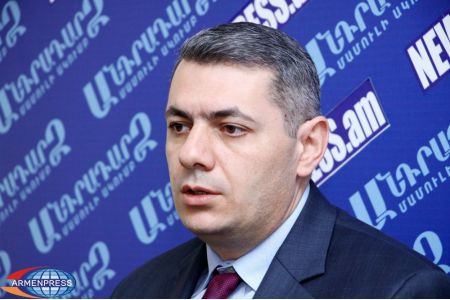
ArmInfo. The hijab crisis has become the first open political conflict between Baku and Ankara in recent years, but Armenia should not harbor any illusions, says Sergei Minasyan, deputy director of the Caucasus Institute.
The expert recalled that Turkey initially demanded that restrictions be lifted, in response to which Baku accused Ankara of interfering in its internal affairs, while Azerbaijani President Ilham Aliyev advised everyone to "know their place."
"For now, Ankara has essentially caved in." According to Turkish media, Baku demanded the resignation of Erdogan's adviser, Oktay Saral, for criticizing Baku's actions. Saral was forced to resign. Aliyev did not attend the summit of the Organization of Turkic States on October 30. However, on November 2, Erdogan, flying over Azerbaijan on his way to South Korea, congratulated it on "Victory Day." "Everything indicates that Ankara and Baku are easing the already tense dispute," Minasyan noted.
The political scientist emphasized that the hijab was merely a pretext and revealed deeper differences between Baku and Ankara. According to him, the two sides have different approaches to secularism and political Islam, Israel, and the Gaza issue.
"However, the most important question is who is whose 'big brother.' The formula 'one nation, two states,' known since the 1990s, is now being rephrased in Baku as 'two equal states.'" This also aligns with Baku's desire to portray Azerbaijan as a "medium-sized power" in the region, the Armenian expert believes.
He also noted that Azerbaijan has real leverage in this dispute, as it has invested heavily in Turkey's oil refining and petrochemical sectors. Minasyan noted that Azerbaijan supplies Turkey with approximately a fifth of its gas needs at a fixed price favorable to Ankara.
"Furthermore, it is the largest buyer of Turkish military products." Add to this Azerbaijan's transit and role as Turkey's gateway to Central Asia. The result is a reverse asymmetry: the nominally weaker partner has been able to dictate terms. Could this episode push Ankara to expedite a settlement of the dispute with Armenia against Baku's wishes, as some observers in Yerevan had hoped? "Probably not in the near future, although the situation may change in the medium term," the expert believes.
He believes that in the hijab dispute, Turkey effectively caved under pressure from Baku, and now it has no reason to create new tensions in relations with Baku. Minasyan added that the precedent of "football diplomacy" in 2009-2010 also speaks against this. Back then, a deeper crisis arose precisely because of an attempt to normalize relations with Yerevan "behind" Baku. The expert recalled that the crisis then ended with Ankara taking Azerbaijan's position into account and suspending the process.
"Therefore, Turkey will continue to develop relations with Armenia only where this does not require open disagreement with Baku. The current crisis will likely further strengthen this line. Official Yerevan shouldn't base its calculations on the "crack" that has appeared in the Turkish-Azerbaijani alliance. The differences are real, but manageable, as both sides have already demonstrated. Moreover, any public attempt to portray Armenia as the winner in this dispute will work against it. Baku will gain an additional argument against the Armenian-Turkish process, and Ankara will have to once again prove its loyalty to its ally," he believes.
The expert is confident that in the current situation, it is more expedient to consistently, albeit slowly, develop the bilateral process with Turkey. According to him, in this case, in the medium term, when a political window of opportunity opens, linking the Armenian-Turkish settlement to Baku's demands will become increasingly inconvenient for Ankara.







 Orientalist: In 2026, Baku made special efforts to achieve greater diplomatic effect on the issue of victory over Artsakh
 Expert: Official Yerevan should not base its calculations in relations with Ankara on the "crack" in the Turkish-Azerbaijani alliance
 International expert: Trump is entering a "lame duck" period of rule
 Political scientist: The failure of the mission to adopt a new Armenian Constitution could raise the question of Pashinyan`s resignation.
 Opinion: Russia`s involvement in the Organization of Turkic States may increase its international weight, but will force a redistribution of political influence within it
 Lavrov: Armenia will not be expelled from the CSTO
 Drmeyan: The ECHR rejected Azerbaijan`s appeal in the case of Artsakh Defense Army Major Hayk Toroyan
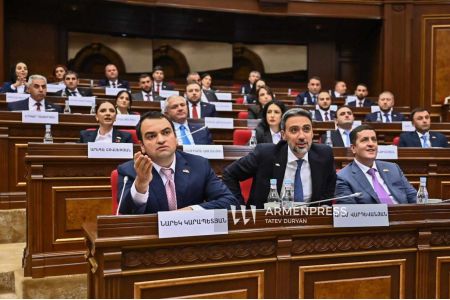 "Strong Armenia": The brawl in parliament was staged to distract public attention from Pashinyan`s failed foreign policy
 Zakharova commented on the scandalous epithets of the governor of Armenia`s Shirak region about "Ivanov"
 Nikolai Bordyuzha proposed excluding Armenia from the CSTO.
 The participation of Artsakh ensembles in an international festival in Vienna was cancelled following the intervention of several foreign embassies
 Expert: It`s time for Armenia to move away from uncertainty and choose between West and East
 The Armenian Foreign Minister commented on the country`s return to work within the CSTO.
 The Artsakh Public Council expressed outrage at the UN Secretary-General`s behavior
 Lukashenko called for Armenia to assume the CIS presidency in 2029
 Dmitry Medvedev predicted a Ukrainian-like fate for Armenia amid the country`s shift in foreign policy
 Russian Security Council: In Armenia, they want to force Russian asset owners to dispose of their assets
 Zakharova: Russia ready to discuss with Armenia the prospects for expanding military cooperation as part of a review of bilateral ties
 Tevanyan: Armenia, like Ukraine and Moldova, is being drawn into the EU’s global war
 Yerevan City Hall is considering introducing a valet parking system in the city